

Table of Contents
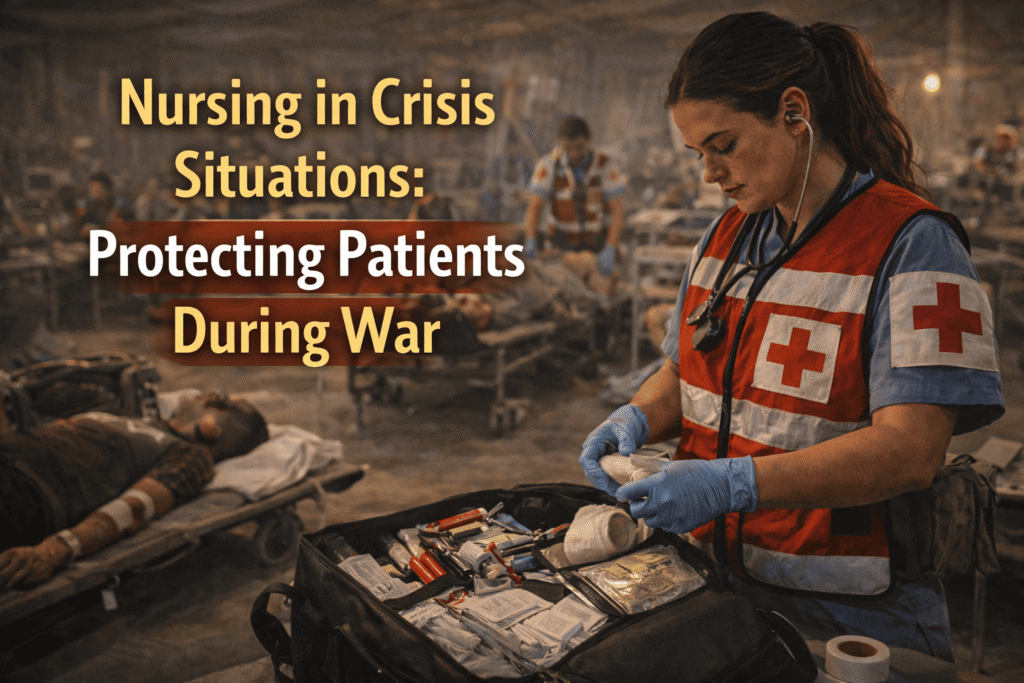
In the medical community, hospitals are usually seen as safe havens for recovery. But that haven can easily turn into a dangerous place when a nation is confronted with the grim reality of war or armed struggle. One of the most difficult career transitions for nurses and nursing students is going from “routine care” to combat nursing. The laws of the game alter during a crisis: even the most well-prepared teams may be overwhelmed by the quantity of casualties, medical supplies may run out, and electricity may go out.
It is a great goal to protect patients during a war, but doing so calls both a specific set of abilities and a “survival mindset.” If you don’t first make sure that your medical staff and yourself are safe, you can’t help your patients. Healthcare professionals can use this article as a thorough guide to manage the intricacies of conflict areas, uphold clinical excellence in the face of adversity, and consider the significant ethical burden of delivering care when resources are limited.
Prioritizing Personal Safety and Situational Awareness
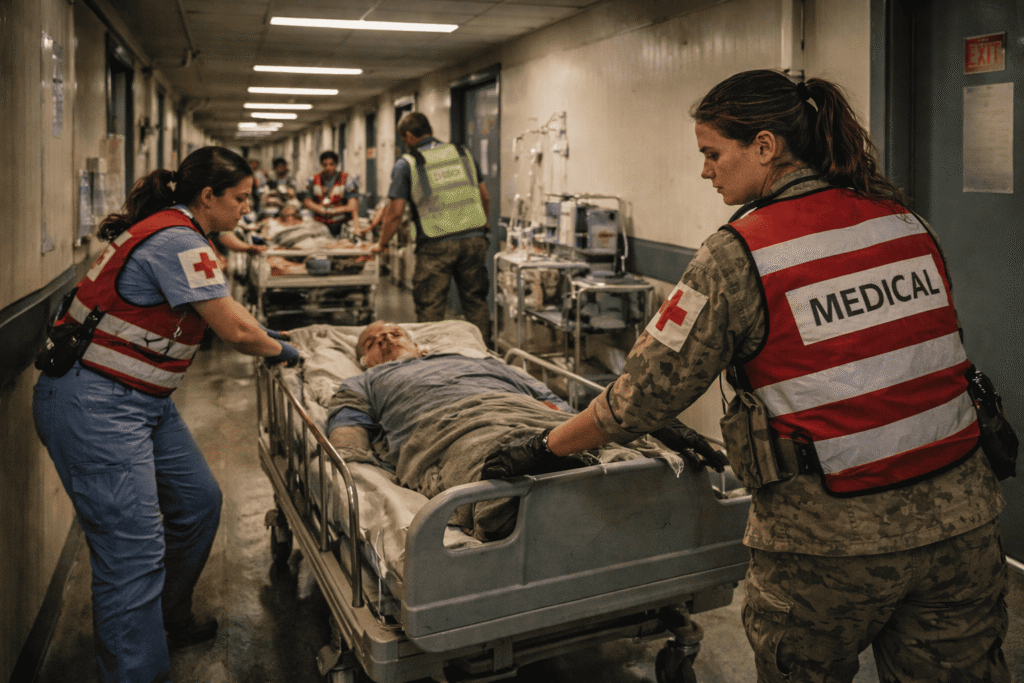
The most crucial rule in crisis nursing is that a nurse who is hurt or dead cannot rescue lives. Personal safety is a clinical necessity, not an indication of selfishness. In a conflict area, nurses need to become proficient in “Situational Awareness.” This entails continuously scanning your surroundings for potential dangers, such as the movement of armed groups close to the facility, the sound of approaching artillery, or the scent of chemical agents. Your hospital’s plan, including all emergency exits and “Hardened Zones” sections of the facility that are reinforced and away from windows must be thoroughly understood.
Medical professionals have “protected status,” which means they should never be targeted, according to the Geneva Conventions. But this is frequently overlooked in contemporary combat. As a result, nurses should always wear easily identifiable medical identification, like a white vest with a red cross or crescent on it. In order to prevent flying glass from blast waves, “Hardening the Facility” in the ward entails shifting patient beds into interior rooms or passageways. By safeguarding your “Physical Perimeter,” you can make sure that the nursing team is still operational and prepared to handle the next casualty wave.
Mastering Mass Casualty Triage and the “Ethics of Scarcity”
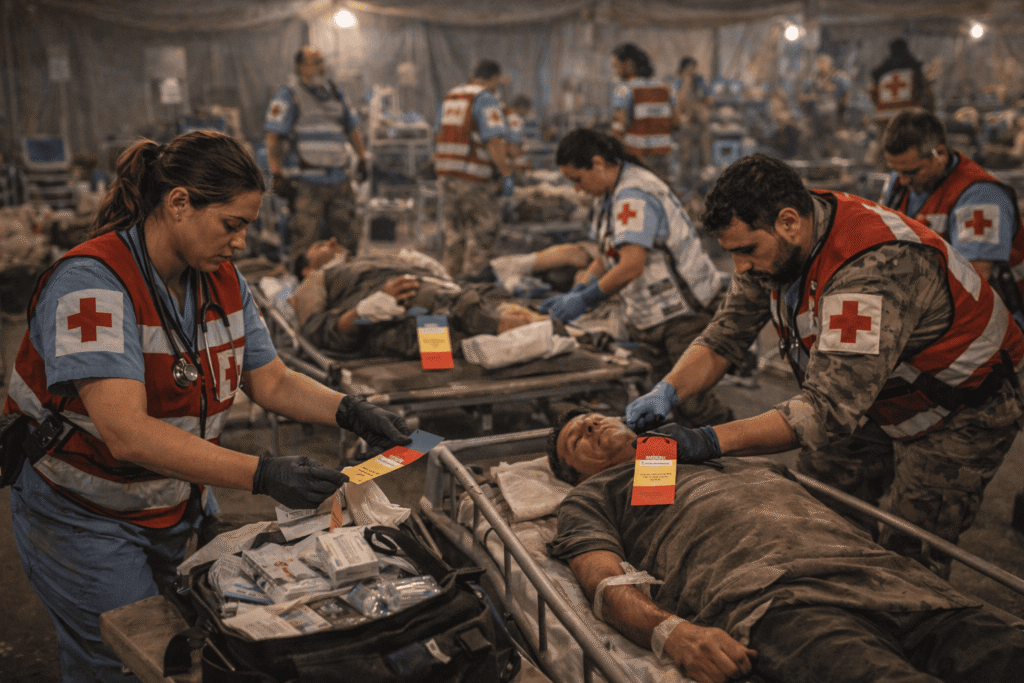
There are frequently more patients arriving at the hospital during a battle than there are nurses and beds available. We refer to this as a Mass Casualty Incident (MCI). Nurses are required to transition from “individual care” to mass casualty triage during these periods. This involves classifying patients according to the extent of their injuries and their chances of survival. Because you have to make quick, life-or-death decisions based on the limited supplies you have on hand, it is a challenging process.
The START (Simple Triage and Rapid Treatment) approach is commonly employed by nurses. Patients have color-coded tags: Green represents people with mild injuries who are able to walk, yellow represents significant but stable injuries, red represents life-threatening situations, and black represents those who have sadly passed away or whose injuries are too severe to be salvaged with the means available. “Black Tagging” a patient during a crisis is a difficult moral choice, but it’s vital to save the “Red Tags” who have a good chance of surviving if they receive emergency surgery. The nursing team may accomplish the most benefit for the largest number of patients by mastering this “Ethics of Scarcity.”
Tactical Trauma Care: Controlling Life-Threatening Bleeding
Hemorrhage (severe bleeding) is the most common cause of mortality in conflict areas. A patient may bleed to death in a matter of minutes from gunshot wounds and shrapnel from explosions. You are the first line of defense as a nurse. “Tactical Trauma Care,” which aims to avoid “preventable deaths” before the patient ever enters an operating room, requires you to be an expert. This calls for a “back-to-basics” strategy that prioritizes manual skills above costly machinery.
The MARCH protocol Massive Hemorrhage, Airway, Respiration, Circulation, and Head/Hypothermia should be committed to memory and practiced by nurses. The ability to apply a Combat Application Tourniquet (CAT) quickly is the most important skill. Even in bad light, a nurse should be able to administer a tourniquet in less than 60 seconds. “Wound Packing” with hemostatic gauze is crucial for wounds in the neck or groin when a tourniquet is ineffective. Additionally, since blood cannot clot if the body temperature falls too low, you must protect them against hypothermia. You can act as a “Safety Net” for victims of abuse by maintaining your trauma skills.
Resourcefulness: Nursing Without Electricity or Supplies
Supply chains are frequently destroyed during a conflict. You can end up in a hospital without electricity, running water, or sterile bandages. To keep the ward operating, a “Crisis Nurse” needs to be extremely resourceful and apply the concepts of Improvised Medicine. This entails coming up with inventive ways to deliver safe care in the absence of “standard” equipment. Being resourceful means coming up with quick fixes without compromising fundamental cleanliness or patient dignity.
For instance, you can brace a shattered bone with cardboard or thick magazines if you run out of prefabricated splints. For patients who are unable to breathe on their own, nurses must do “Manual Ventilation” (using an Ambu-bag) around-the-clock in the event of a power outage. Additionally, you might need to teach families how to assist with basic care, including cleaning wounds with boiled water that has been cooled. Being creative guarantees that the hospital will continue to be a place of healing and hope rather than a place of despair even in the event of a complete blockade.
Psychological Resilience and Peer Support Systems
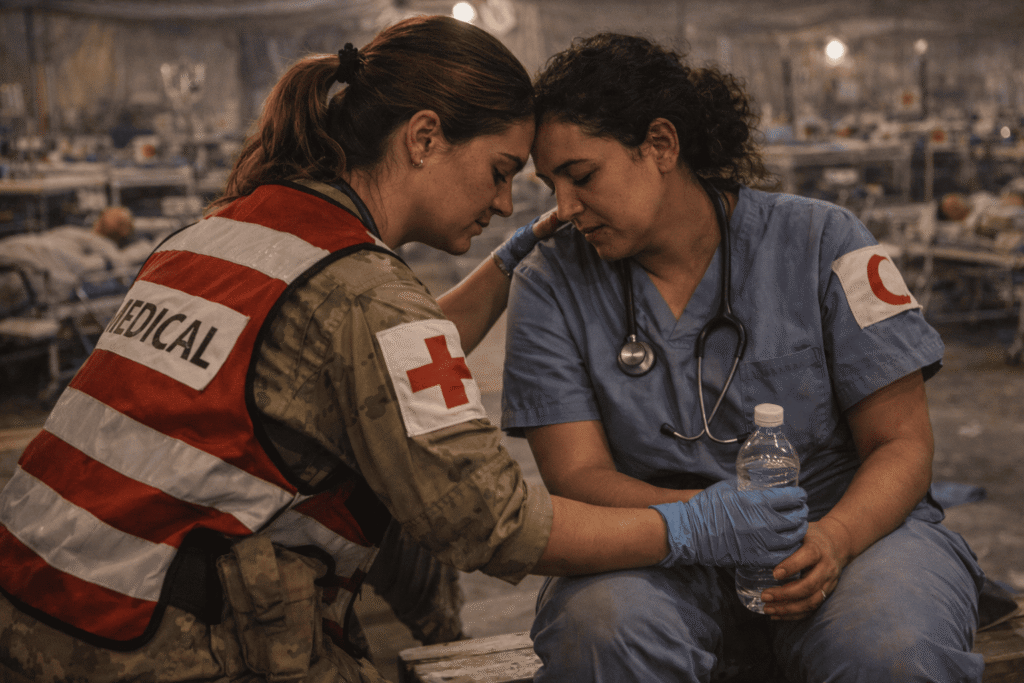
The “invisible wounds” of war have an equal impact on nurses and patients. Everyday exposure to the effects of violence increases the likelihood of moral injury and compassion fatigue. When a nurse is compelled to make choices that contradict their moral principles, such deciding which patient receives the final medication dose, moral harm occurs. You must put “Psychological Resilience” first in order to save both yourself and your patients. A burned-out nurse is more likely to make a potentially fatal clinical blunder.
One of the most effective strategies for maintaining mental toughness is the “Buddy System.” Assign one nurse to a pair and decide to keep an eye on each other during the shift. Make sure your friend eats whatever food is available, drinks water, and takes a five-minute “sensory break” to help them relax. Everyone on the team needs to practice Psychological First Aid, which focuses on remaining composed and connected. The nursing team avoids the emotional breakdown that frequently occurs after a significant crisis by sticking together and supporting one another. Keep in mind that all of your clinical talents are based on your mental wellness.
People Also Ask (FAQ)
Q: Do nurses have a legal right to be protected in a war zone?
Indeed. The Geneva Conventions classify medical workers as “non-combatants.” All parties of the war must respect and defend them as long as they are merely providing medical care and not taking part in combat.
Q: What should I do if a soldier enters my hospital with a weapon?
In order to preserve their status as a neutral haven, the majority of hospitals in war areas have a “No Weapons” policy. In order to protect all patients, you as a nurse should adhere to your hospital’s unique security policy, which typically entails asking the soldier to leave the weapon at the entry or with security.
Q: Can I use my phone to document what is happening in the hospital?
This requires extreme caution on your part. Taking pictures of patients without their permission is a privacy breach, even though recording war atrocities is crucial. Furthermore, utilizing a phone can occasionally reveal your whereabouts to GPS tracking devices. Always abide by the “Media and Security” policies of your establishment.
Q: How can I manage “Trauma” without a counselor available?
Select “Peer Support.” Discuss your observations and emotions with other nurses. One of the best methods to deal with stress during a crisis is to share the emotional burden with others who completely understand what you are going through.
Q: What happens if we completely run out of medicine?
When there is a “Total Resource Failure,” the nurse’s responsibilities change to palliative care. This entails putting the patient’s comfort first, doing the finest wound cleaning, and offering the patient and their family emotional support. The most effective medication you have left in these situations is your “Presence” as a nurse.
Useful Documents for every Nursing Student
CV Section Template for Nursing students
AHPRA – NMBA Registration Document Checklist (International Students-Graduates)
Clinical Placement Reflection Template (NMBA-aligned)
Cover Letter Template for Nursing Students
Disclaimer: “I researched this information on the internet; please use it as a guide and also reach out to a professional for assistance and advice.This information is not medical advice, so seek your medical professional’s assistance.”