


One of the most significant pillars of Australia’s healthcare system today is the aged care industry. The need for caring, competent, and well-trained nurses who can assist senior Australians in residential institutions, hospitals, and community programs is rising as the population ages and people live longer. Aged care provides a solid route into the field for many nursing students and graduates. It gives students access to clinical experience, job sponsorships, and chances to hone fundamental skills that will enable them to advance into more senior nursing positions in the future. Planning a nursing career in Australia will be significantly impacted by knowing why elderly care is in such great demand and how students can enter this field early.
Understanding the Aged Care Sector in Australia and Its Future

Millions of older persons in Australia who require help with everyday living, medical support, rehabilitation, disability care, or long-term chronic illness management are served by the aged-care industry. Palliative care facilities, disability care centers, home care services, residential aged care homes, respite programs, and hospital gerontology units are all included. Combining clinical practice with caring assistance is what sets elderly care apart. In aged-care settings, nurses do more than just administer medication and carry out clinical duties; over the course of months or even years, they develop enduring connections with patients and their families. This provides a very human and emotionally fulfilling experience for nursing students.
The primary cause of the continued growth of aged care in Australia is the country’s aging population. One in four Australians will be over 65 by 2050, according to official demographic forecasts. After the age of 70, healthcare needs increase dramatically as the baby boomer generation enters retirement. As a result, more nurses will be needed to treat long-term conditions like diabetes, heart disease, dementia, Parkinson’s disease, and arthritis. Home-care agencies will grow, residential care institutions will keep hiring, and community health services will collaborate more closely with nurses. Today’s students who pick this field are joining a labor market that is expected to be robust for decades.
The strain on Australia’s hospital system is another reason aged-care nursing is crucial for the country’s future. Hospital beds are scarce resources, especially acute and emergency beds. The system is overloaded when elderly individuals stay in hospitals for extended periods of time. Outside of hospitals, aged-care facilities offer long-term care, mobility assistance, and rehabilitation. In this sense, elderly care is an essential component of national healthcare planning rather than just a professional area. Nursing students can view aged care as a serious and steady career path rather than a side gig or fleeting opportunity when they grasp this broad picture.
Why Nursing Students Choose Aged Care Roles Early in Their Studies

Many nursing students start working in assisted living homes far earlier than they anticipate. Students pursuing a bachelor’s or diploma in nursing frequently work part-time or casually as personal care assistants, support staff, or nursing assistants. The flexibility provided by aged-care employers is one factor. In order to accommodate academic schedules, several institutions provide short weekday schedules, night shifts, and weekend shifts. In contrast to careers in hospitals, which could need extended training periods or full-time availability, elderly care offers real-world employment chances practically instantly.
The chance to gain more clinical confidence is another reason why students opt for elderly care. For instance, a student may learn how to keep correct patient notes, help with wound care, encourage mobility, and monitor vital signs. They gain knowledge of how multidisciplinary teams operate, how to interact calmly with residents, and how to communicate with physicians and nurses. These commonplace encounters are incredibly beneficial. A student has a foundation of practical experience by the time they apply to graduate programs, hospitals, or other healthcare environments. Candidates who have demonstrated commitment under duress are preferred by employers, and aged-care settings frequently exhibit this.
Additionally, aged care introduces pupils to empathy-based healthcare at a young age. A lot of young nurses assume that clinical practice will mostly involve drugs, procedures, and equipment. However, providing care for senior citizens teaches a different aspect of nursing, including cultural sensitivity, emotional intelligence, communication, and patience. Nurses are trained to assist those who are scared, confused, lonely, or vulnerable. They are aware of how aging impacts independence, memory, and physical health. They also observe how families deal with stress, guilt, and distance. Hospitals place a high priority on the maturity and compassion that these experiences foster in recent graduates.
Career Pathways for New Graduates in the Aged Care Sector
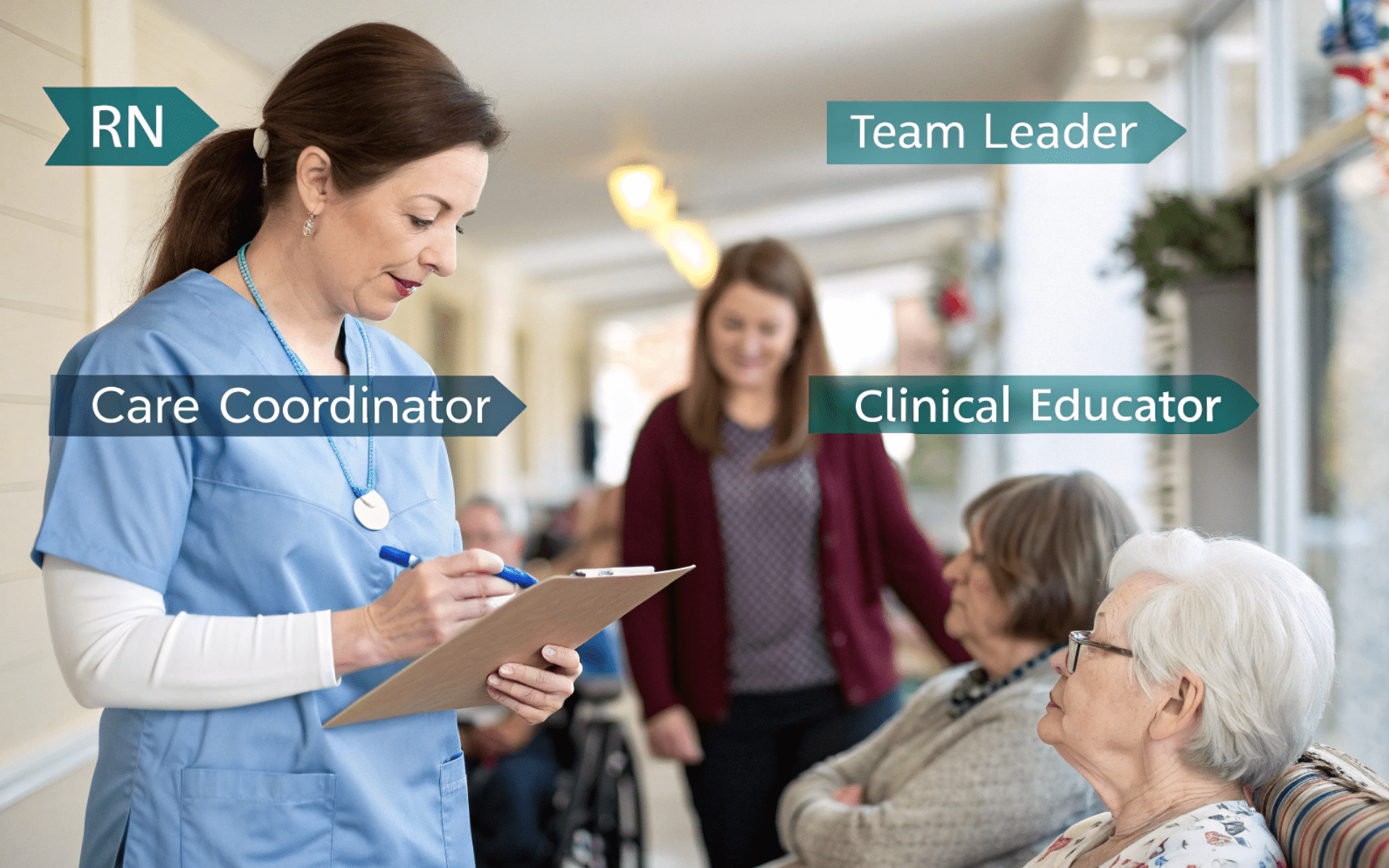
Aged care is one of the quickest and easiest ways for students to obtain registered or enrolled nursing experience after completing their nursing degree. In comparison to large urban hospitals, many facilities hire recent graduates straight into entry-level nursing positions, which are simpler to obtain in some areas. Aged-care positions give enrolled nurses vital experience with clinical handovers, report writing, medication administration, and direct resident care. This boosts their self-esteem and gets them ready to pursue a bachelor’s degree in nursing if they decide to become registered nurses.
Aged care can be a long-term job or a starting point for specialization for registered nurses. Graduates who work full-time can oversee support staff teams, plan medication rounds, handle emergencies, and interact with allied health specialists like dietitians and physiotherapists. They might eventually assume leadership positions within the unit, work as care coordinators, or transition into positions as clinical educators. Ambitious nurses frequently advance swiftly due to the sector-wide staffing need. After one or two years of experience, graduates frequently take on acting senior roles provided they show professionalism and dependability.
Additionally, some aged-care facilities assist overseas students with sponsorship or immigration procedures. Many facilities in regional areas aggressively hire international graduates to address labor shortages, while restrictions vary based on government regulation and employer eligibility. A student may apply for employer-sponsored positions, skilled migration programs, and regional visas after becoming a registered nurse with AHPRA. In Australia, aged care serves as a springboard for both long-term residency and employment. It is evident that this industry offers more than just temporary employment—it can enable entire career development—even though students should always examine the most recent visa regulations.
Skills You Gain from Aged Care Nursing That Employers Value

Many nursing students fear that working in elder care may restrict their options in the future. The reverse is actually true. Medication management and clinical reporting are two of the most in-demand skills in the healthcare sector that aged-care nurses acquire. Students gain knowledge about how to do safety checks, compute dosages, document patient observations, and adhere to stringent standards. Accuracy and accountability are strengthened by these duties, which are crucial for future hospital or community nursing roles.
Another significant advantage of working in aged care is developing communication skills. Nurses converse with residents who may experience emotional instability, chronic pain, memory loss, or trouble speaking. They gain knowledge on how to reduce anxiety, foster trust, and promote involvement in rehabilitation activities. Additionally, they have to keep in touch with physicians, facility administrators, and families—sometimes during tough times like making end-of-life decisions. Nurses are prepared for any other clinical setting by learning how to speak politely and clearly.
Working in aged care also imparts managerial skills. It is one of the rare environments where junior nurses are frequently assigned leadership roles at an early age. They oversee care aides, arrange daily activities, assign responsibilities, and make clinical decisions under pressure. They have a significant edge when applying to hospital postings or competitive graduate programs since they have learned how to lead. The leadership confidence from aged care persists even if they later transition into ICU, mental health, surgical nursing, or community health.
Challenges in Aged Care Nursing and How Students Can Overcome Them

While there are many opportunities in aged-care nursing, there are also difficulties that students need to be aware of. Emotional stress is one of the main challenges. Nurses develop strong bonds with residents whose health may progressively deteriorate. It can be emotionally taxing to deal with mortality, dementia, or chronic disease, particularly for younger nurses or those who have never encountered bereavement. A vital life skill is learning how to set limits, look for peer support, and take care of oneself. Aged-care settings offer exposure that fosters resilience, but no nursing school can adequately teach students how to deal with bereavement.
Another difficulty is the physical needs. During night shifts, aged-care nursing frequently entails lifting, helping with movement, assisting with hygiene tasks, and responding to emergencies. Pupils need to safeguard their bodies from harm and learn safe manual handling practices. Training is typically provided by facilities, but students must be mindful of their own physical limitations. As part of professional nursing practice, asking for assistance is not a sign of weakness.
Barriers to communication might also be challenging. Some people may struggle with memory, have speech problems, or speak more than one language. It becomes crucial to be patient. Nurses must slow down, give residents time to understand instructions, and adjust to their communication style rather than hurrying through chores. These little patient moments frequently make the difference between a stressful shift and a worthwhile exchange.
Students grow significantly in spite of these obstacles. They develop greater self-assurance, emotional equilibrium, and clinical competence. The skills gained in aged-care nursing are transferable to every other specialty, making students stronger and more mature professionals.
Why the Aged Care Sector Will Continue to Create Opportunities for Nursing Students

Government investment and demographic shifts will determine the future of aged care in Australia. The number of residents in need of care rises annually as Australians live longer. As a result, there are additional job prospects, facility expansions, and continuous demand for clinical personnel. Even in the face of uncertainty in other industries, nursing students entering the field now will continue to find employment for years to come.
Changes in social policy also improve aged-care nursing. Healthcare officials in Australia are realizing more and more how important it is to treat senior folks with dignity. Trained nurses are needed to carry out policies pertaining to workforce reforms, community health integration, home-care subsidies, and rehabilitation programs. As the industry develops more specialized and inventive, students who comprehend the wants of senior patients are well-positioned to advance alongside it.
The fact that aged-care nursing affects numerous other medical specializations is another factor contributing to the industry’s continued strength. Geriatric medicine, rehabilitation, wound care, dementia treatment, chronic illness, palliative care, and case coordination are among the topics covered by aged-care nurses. These abilities can be applied to advanced post-graduate studies, management positions, or hospital wards. Students are not trapped by aged care; rather, it offers doors in every direction.
Final Thoughts: Why Students Should Not Underestimate Aged Care Nursing
Aged care is often the initial step in a young nurse’s career. It offers job security, flexible work schedules, and the opportunity to obtain practical experience prior to graduation. More significantly, it fosters human abilities that cannot be imparted through lectures or textbooks, such as empathy, patience, and emotional intelligence. Although the industry might be difficult, it rewards perseverance, generosity, and dedication.
Students who take a chance on aged-care nursing frequently find a rewarding and significant profession. While some utilize the industry as a springboard for more sophisticated expertise, others remain in it permanently. Regardless of the route they take, the foundation established in aged care is still worthwhile. Lifelong lessons include managing clinical obligations, interacting with families, and comprehending residents.
Disclaimer: “I researched this information on the internet; please use it as a guide and also reach out to a professional for assistance and advice.This information is not medical advice, so seek your medical professional’s assistance.”