
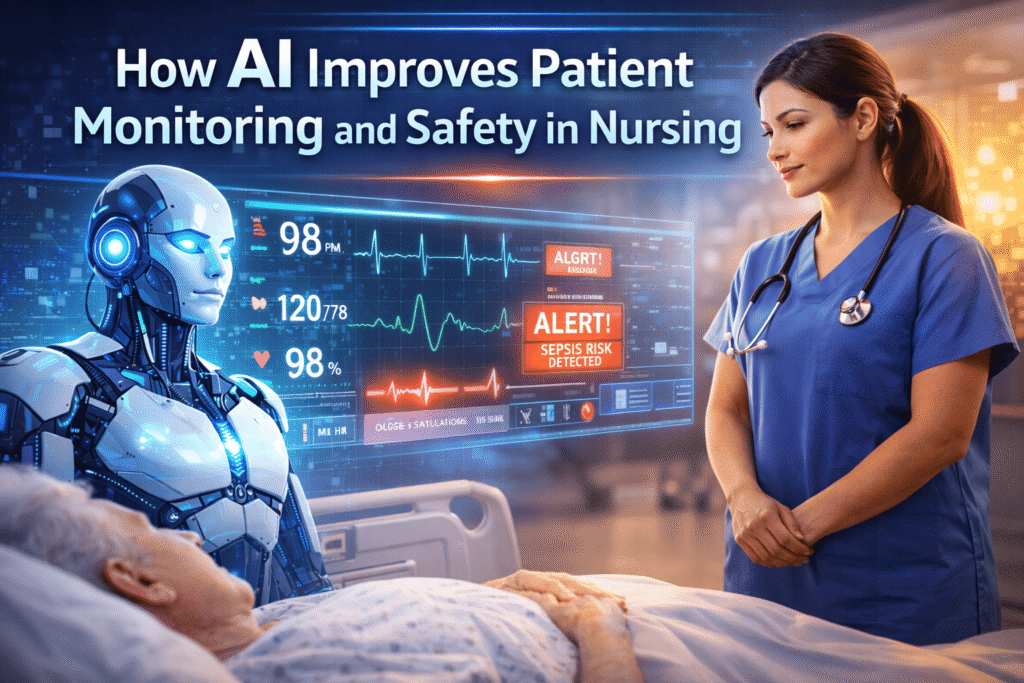

In contemporary healthcare, artificial intelligence (AI) is becoming more and more significant. Patient monitoring and nurse safety are two of the most significant areas where AI is having a significant influence. Nurses are responsible for observing patients, detecting early warning signs, and responding quickly to changes in health conditions. AI makes these tasks safer, more accurate, and more efficient for nurses.
AI-powered solutions are helping nurses by tracking vital signs, anticipating dangers, and minimizing human error as hospitals get busier and patient requirements become more complicated. This article uses straightforward language that is easy for students and novices to comprehend to describe how AI enhances patient monitoring and safety in nursing.
Understanding AI in Patient Monitoring
Computer programs that are capable of data analysis, pattern recognition, and prediction are referred to as artificially intelligent. AI is mostly utilized in nursing to continuously monitor patient health data and notify nurses of any issues.
Manual inspections are a major component of traditional patient monitoring. Because nurses check vital signs on a periodic basis, unexpected changes may occasionally go missed. This issue is resolved by AI, which offers real-time monitoring around-the-clock.
AI programs gather information from:
• Heart-rate tracks
• Devices for blood pressure
• Sensors for oxygen saturation
• Sensors of temperature
• Wearable medical equipment
This data is immediately evaluated to find anomalies and hazards.
Why Patient Monitoring Is Critical in Nursing
One of the most crucial duties of nurses is patient monitoring. Precise monitoring saves lives, lowers hospital stays, and helps avoid complications.
Key Reasons Patient Monitoring Matters
- Detects early signs of deterioration
- Prevents medical emergencies
- Supports timely treatment
- Improves patient safety
- Reduces mortality rates
AI strengthens all these areas by making monitoring more precise and reliable.
How AI Improves Real-Time Patient Monitoring
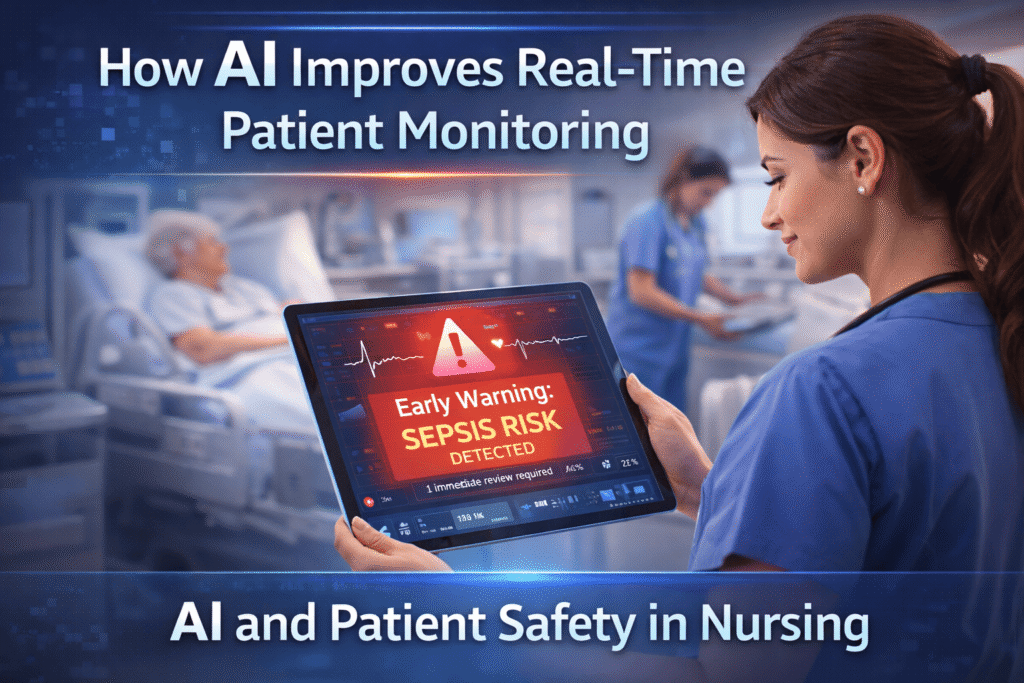
AI-powered monitoring systems can observe patient conditions continuously without fatigue or distraction.
1. Continuous Vital Signs Monitoring
AI tracks vital signs such as:
- Heart rate
- Respiratory rate
- Blood pressure
- Oxygen levels
If any value goes beyond safe limits, the system sends an alert to nurses immediately. This allows quick action before the situation becomes critical.
2. Early Warning Systems
AI can predict health problems before they happen. For example:
- Risk of cardiac arrest
- Signs of sepsis
- Respiratory failure
By analyzing patterns in patient data, AI gives nurses early warnings that help prevent serious complications.
3. Monitoring High-Risk Patients
Patients in intensive care units (ICUs), post-surgery wards, or elderly care need close observation. AI helps nurses monitor these patients without constant physical checks, saving time and effort.
Role of AI in Improving Patient Safety
Patient safety is a top priority in nursing, and AI plays a major role in reducing risks and errors.
1. Reducing Human Errors
Nurses work long shifts and handle many patients. Fatigue can lead to mistakes. AI helps by:
- Double-checking data
- Identifying unusual patterns
- Providing reminders and alerts
This reduces the chances of missed symptoms or delayed responses.
2. Preventing Falls and Injuries
AI systems can monitor patient movement and behavior. If a patient at risk of falling tries to get out of bed, the system alerts the nurse immediately.
This is especially helpful for:
- Elderly patients
- Patients with dementia
- Post-surgery patients
3. Medication Safety
AI can:
- Check medication doses
- Alert nurses about allergies
- Prevent drug interactions
This improves medication safety and protects patients from harmful errors.
How Nurses Use AI in Daily Patient Care
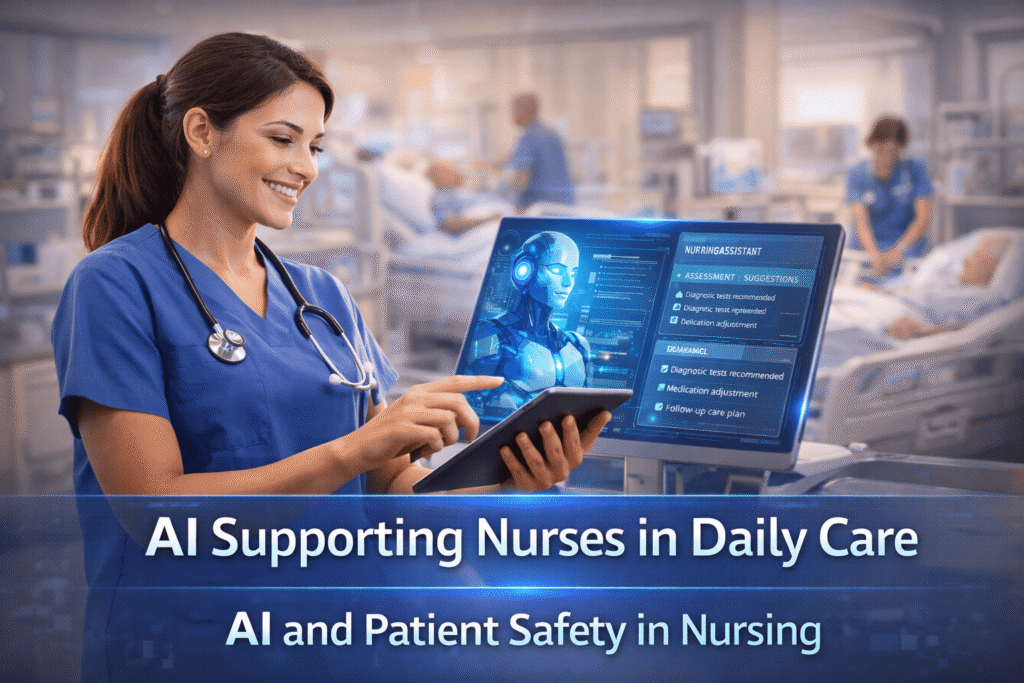
AI does not replace nurses—it works as a support tool that enhances nursing care.
1. Smart Alerts and Notifications
Instead of checking monitors manually, nurses receive smart alerts only when needed. This helps them prioritize patients who need immediate care.
2. Better Time Management
By reducing routine monitoring tasks, AI allows nurses to:
- Spend more time with patients
- Focus on critical care
- Provide emotional support
3. Supporting Clinical Decisions
AI provides data-driven insights, but nurses make the final decisions. This teamwork improves patient outcomes.
AI in Remote Patient Monitoring
AI is also transforming patient care outside hospitals.
1. Home Healthcare Monitoring
Wearable devices and mobile apps use AI to monitor patients at home. Nurses can track:
- Chronic disease conditions
- Recovery progress
- Medication adherence
This reduces hospital visits and improves long-term care.
2. Telehealth and Virtual Care
AI supports telehealth by monitoring patient data remotely and alerting nurses if intervention is needed.
This is especially useful in:
- Rural areas
- Elderly care
- Chronic disease management
Benefits of AI for Nurses and Patients
AI creates benefits for both nurses and patients.
Benefits for Nurses
- Reduced workload
- Lower stress and burnout
- Better decision support
- Improved efficiency
Benefits for Patients
- Faster response to emergencies
- Fewer complications
- Increased safety
- Better quality of care
Challenges of Using AI in Patient Monitoring
Despite its advantages, AI also has challenges.
1. Technology Dependence
Over-reliance on AI can be risky. Nurses must always use their clinical judgment.
2. Data Privacy Concerns
Patient data must be protected. Hospitals must ensure strong cybersecurity measures.
3. Training Requirements
Nurses need proper training to use AI tools effectively and confidently.
Ethical Role of Nurses in AI-Based Monitoring
Nurses play an important ethical role in AI use.
- Protect patient privacy
- Explain AI systems to patients
- Ensure patient consent
- Advocate for patient rights
AI provides data, but nurses ensure care remains ethical and patient-centered.
Future of AI in Patient Monitoring and Nursing Safety
The future of nursing will involve stronger collaboration between humans and technology.
What to Expect
- Smarter monitoring systems
- Personalized patient care
- More predictive healthcare
- Advanced wearable devices
Nurses who understand AI will be better prepared for future healthcare environments.
Conclusion
AI is significantly changing nurse safety and patient monitoring. AI assists nurses in providing safer and more efficient care by offering real-time data, early warnings, and intelligent alarms. AI is a helpful tool that improves nursing practice, not a substitute for nurses.
The best results for patients are produced when cutting-edge technology and caring nursing care are combined. Nurses who adopt AI will be crucial in creating a safer and more intelligent future for patient care as healthcare continues to change.
People Also Ask
How does AI help nurses monitor patients?
AI helps nurses by continuously tracking vital signs, sending alerts, and predicting health risks before they become emergencies.
Does AI improve patient safety in hospitals?
Yes, AI improves patient safety by reducing errors, detecting early warning signs, and supporting timely medical interventions.
Can AI replace nurses in patient monitoring?
No, AI supports nurses but cannot replace human judgment, compassion, and hands-on care.
Is AI safe to use in nursing care?
When used correctly and ethically, AI is safe and improves patient outcomes. Nurses always remain responsible for care decisions.
Do nursing students need to learn AI?
Yes, basic knowledge of AI will help nursing students adapt to modern healthcare systems and future job roles.
Useful Documents for every Nursing Student
CV Section Template for Nursing students
AHPRA – NMBA Registration Document Checklist (International Students-Graduates)
Clinical Placement Reflection Template (NMBA-aligned)
Cover Letter Template for Nursing Students