


Summary
One of the most crucial components of nursing education in Australia is clinical placements. They assist students in gaining practical hospital experience, honing critical skills, and comprehending the real-world operations of healthcare teams. However, you must be well prepared before beginning your placement, which starts with understanding what to bring, what to avoid, and how to act in a clinical setting.
To help you feel organized, confident, and prepared for your placement, this comprehensive guide covers what to bring, what NOT to bring, and how to adhere to proper hospital standards.
Why Packing Properly Matters for Nursing Students

Nursing students frequently encounter long shifts, stressful circumstances, and direct patient care for the first time during clinical placements. Your day is made easier and less stressful with a well-prepared bag. You may communicate more effectively with supervisors, stay comfortably during 8–12 hour shifts, and prevent needless errors when you bring the appropriate supplies.
Many students don’t realize how mentally and physically taxing placement may be. Nurses must move swiftly, be vigilant, and attend to patients’ needs in the fast-paced settings of hospitals. Having the proper equipment, such as a watch, penlight, or good shoes, enables you to complete activities with confidence and safety.
Additionally, Australian hospitals have requirements that nursing students must adhere to. Being ready demonstrates your regard for your managers, patients, and the medical setting. It gives a strong first impression and helps you stand out as a reliable student who is eager to learn.
Essential Clinical Placement Packing List (What You MUST Bring)
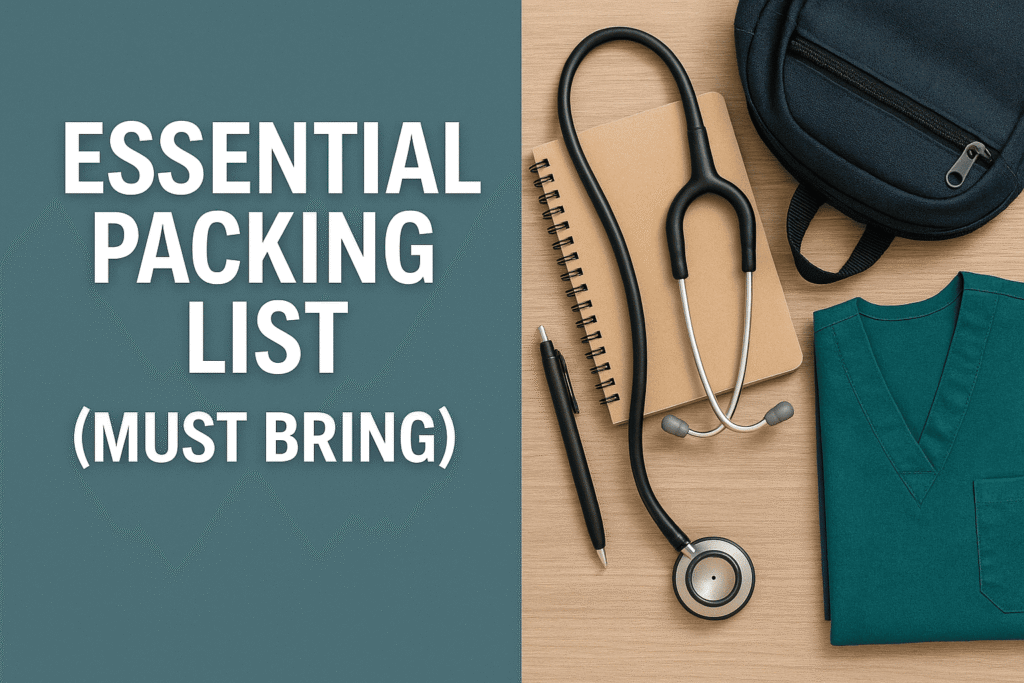
A comprehensive list of everything you need to bring for clinical assignments in Australia may be found in this section. Hospitals and institutions frequently demand these products.
Uniform (Clean & Ironed)
Your uniform is first seen by supervisors. Make sure it is clean, ironed, and free of stains. Most Australian universities offer specific colors for students pursuing a bachelor’s or diploma in nursing. Wearing the proper attire is a sign of professionalism.
Student ID Card + Hospital ID Badge
You must carry your student ID at all times. Some hospitals also give temporary access badges. Without ID, you may not be allowed into clinical areas.
Proper Nursing Shoes (Closed, Non-Slip, Comfortable)
Placement shifts can be long, and you may walk thousands of steps per day. Good shoes prevent back pain, leg pain, and injuries. Australian hospitals require:
- Closed-toe shoes
- Non-slip sole
- White or black colour
- Comfortable for long shifts
Never wear sandals, heels, or sports shoes.
Watch with a Second Hand
Time is important in nursing — for measuring respiration, taking pulse rate, and recording observations. A digital smartwatch is NOT allowed. A simple analog watch with a second hand is best.
Pen, Notebook & Pocket Organiser
You should always carry:
- 2–3 black pens
- A pocket-size notebook
- Mini folder for patient notes
Australian hospitals emphasise accurate documentation, so writing things down is essential.
Stethoscope (If Required by Your University)
Not all universities require first-year or second-year students to bring a stethoscope, but many recommend it for confidence. If you have one, bring it in a protective case.
Penlight (Small Torch)
Useful for neuro checks, pupil assessment, or dark ward areas. Lightweight and easy to carry.
Hair Ties & Grooming Items
Your hair should be tied back neatly. Bring extra hair ties, clips, or pins. Makeup should be minimal.
Hand Sanitiser & Pocket Wipes
Even though hospitals provide sanitiser, having your own helps during transport or breaks.
Water Bottle & Healthy Snacks
Placement breaks can be unpredictable. Carry light snacks such as:
- Protein bars
- Fruit
- Nuts
- Sandwich
A reusable water bottle keeps you hydrated during long shifts.
Small Personal Hygiene Kit
Include:
- Deodorant
- Hand cream
- Tissues
- Lip balm
Placements often involve long hours in air-conditioned rooms, so these items help you stay comfortable.
Folder With All Required Documents
These may include:
- Immunisation record
- National Police Check
- Working With Children Check
- Manual handling certificate
- First aid certificate
- University placement letter
Make sure you keep photocopies in case the hospital requests them.
What NOT to Bring to Clinical Placement (Strict Don’ts)

Australian hospitals follow strict safety and professional standards. Bringing certain items can cause problems, lead to warnings, or even result in placement failure.
Do Not Bring Strong Perfume or Scented Products
Many patients have allergies, breathing issues, or sensitivities. Perfumes are banned in most hospitals.
No Jewellery Except a Simple Stud
The following are NOT allowed:
- Rings
- Bracelets
- Long earrings
- Necklaces
Jewellery can cause infection risks and may get caught on equipment.
No Long or Coloured Nails
Hospitals require:
- Short nails
- No nail polish
- No acrylic or gel nails
This is part of infection control.
Avoid Bringing a Large Bag
There is limited space in staff rooms. Bring a small backpack or compact bag that fits in lockers.
Do Not Use Your Phone in Clinical Areas
You can bring your phone, but you MUST NOT use it on the ward. It must stay in your bag or locker. Phone use inside clinical areas can result in immediate disciplinary action.
No Food or Drinks Near Patients
Food should only be consumed in break rooms.
Do Not Bring Personal Medical Items (e.g., medications)
Keep your personal medicines in your bag. Do not take them out in clinical areas unless necessary.
Do’s & Don’ts for Australian Hospital Placements
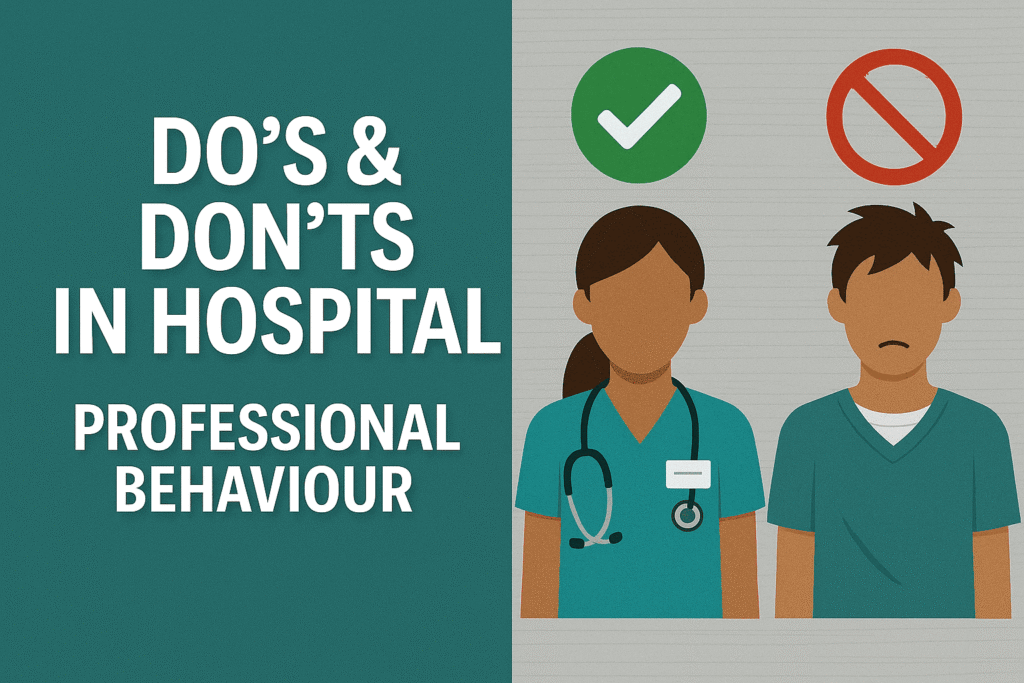
This section explains how to behave professionally to create a positive impression.
Do: Arrive Early
Plan to reach the hospital 15–20 minutes early. It helps you settle, organise your belongings, and prepare mentally.
Do: Communicate Clearly
If you don’t understand a task, ask politely. Supervisors prefer students who seek clarification instead of guessing.
Do: Follow Infection Control Rules
This includes proper:
- Hand hygiene
- Glove use
- Mask use
- Sharps disposal
- PPE protocols
Australian hospitals are very strict about infection control.
Do: Respect Every Patient
Speak gently, be patient, and listen carefully to their needs.
Don’t: Argue With Staff
Even if you disagree, stay calm and respectful. Ask questions later in private if needed.
Don’t: Ignore Your Supervisor’s Instructions
Your supervisor is responsible for your learning and safety. Follow their guidance closely.
Don’t: Break Patient Confidentiality
Never discuss patient cases outside the placement area—not even with friends or family.
How to Stay Prepared & Mentally Ready During Placement

Placements can be stressful, especially for first-year students. The best way to manage stress is to stay organised and mentally prepared.
Prepare Your Bag the Night Before
Avoid packing in the morning. Prepare everything in advance:
- Uniform
- Shoes
- Notes
- Documents
- Snacks
This avoids last-minute panic.
Sleep Early & Eat Properly
Placements often involve early morning shifts. Staying rested improves your focus and performance.
Use a Planner or Digital Calendar
Track:
- Shift times
- Transport routes
- Tasks to complete
- Reflection notes
Being organised helps you stay confident.
Take Notes Daily
After each shift, write what you learned. This helps you grow as a future nurse.
Stay Calm & Ask for Help
Nursing is a team profession. You are not expected to know everything. Communicating early prevents mistakes and builds trust.
Conclusion
Professionalism, confidence, and preparedness are essential for a successful clinical placement in Australia. Students can concentrate entirely on learning and doing well if they prepare appropriately, stay away from extraneous stuff, and abide by hospital regulations. Your future nursing career will be shaped by the communication, teamwork, discipline, and patient care skills you acquire throughout your placement.
Being well-organized makes your placement experience less stressful and more enjoyable. Your clinical placement can be one of the most fulfilling aspects of your nursing career if you prepare and have the correct attitude.
People Also Ask
1. What should I bring on the first day of nursing clinical placement in Australia?
You should bring your uniform, ID card, notebook, pens, water bottle, snacks, comfortable shoes, and any required documents.
2. Are mobile phones allowed during clinical placements?
You may carry your phone, but you cannot use it inside clinical areas. It must stay in your locker or bag.
3. Can nursing students wear makeup or jewellery on placement?
Light makeup is allowed, but jewellery should be limited to small stud earrings. Rings, bracelets, and necklaces are not allowed.
4. Do I need my own stethoscope for placement?
Some universities recommend it, but requirements vary. Check university guidelines.
5. What items are banned in Australian hospital placements?
Strong perfume, long nails, jewellery, colourful nail polish, and large bags are usually not allowed.
Useful Documents for every Nursing Student
CV Section Template for Nursing students
AHPRA – NMBA Registration Document Checklist (International Students-Graduates)
Clinical Placement Reflection Template (NMBA-aligned)
Cover Letter Template for Nursing Students
Disclaimer: “I researched this information on the internet; please use it as a guide and also reach out to a professional for assistance and advice.This information is not medical advice, so seek your medical professional’s assistance.”