

Summary
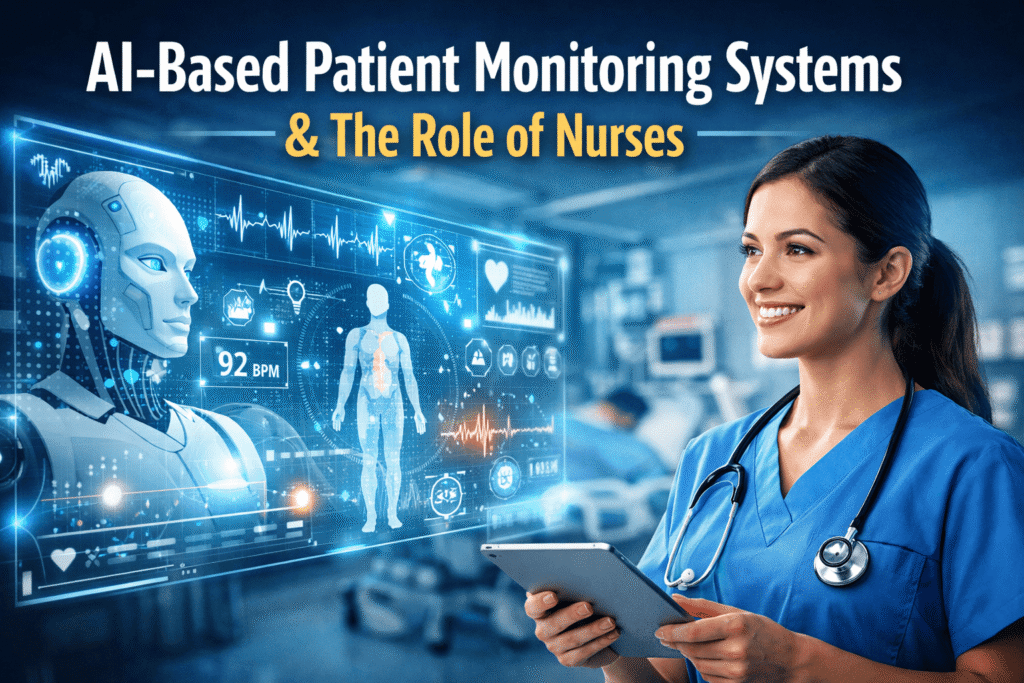
Artificial Intelligence (AI) is changing the way healthcare systems monitor patients. Hospitals and clinics around the world are now using AI-based patient monitoring systems to track vital signs, detect early warning signals, and support clinical decisions. These systems can analyse large amounts of patient data in real time and alert healthcare professionals when something goes wrong.
Because nurses are the primary caregivers who spend the most time with patients, AI-based monitoring directly affects their daily work. This raises an important question: What is the role of nurses in AI-based patient monitoring systems?
What Are AI-Based Patient Monitoring Systems?
AI-based patient monitoring systems are digital technologies that use artificial intelligence, sensors, and data analytics to observe a patient’s health condition continuously. These systems collect data such as heart rate, blood pressure, oxygen levels, temperature, breathing patterns, and movement.
Unlike traditional monitoring, which depends on periodic checks by nurses, AI systems can work 24 hours a day without stopping. They analyse trends in patient data and look for patterns that may indicate early signs of deterioration.
For example, if a patient’s heart rate slowly increases while oxygen levels drop, an AI system may detect this pattern before the situation becomes critical and alert the nurse immediately.
How AI-Based Patient Monitoring Systems Work
To understand the nurse’s role, it is important to know how these systems function.
Data Collection Through Sensors and Devices
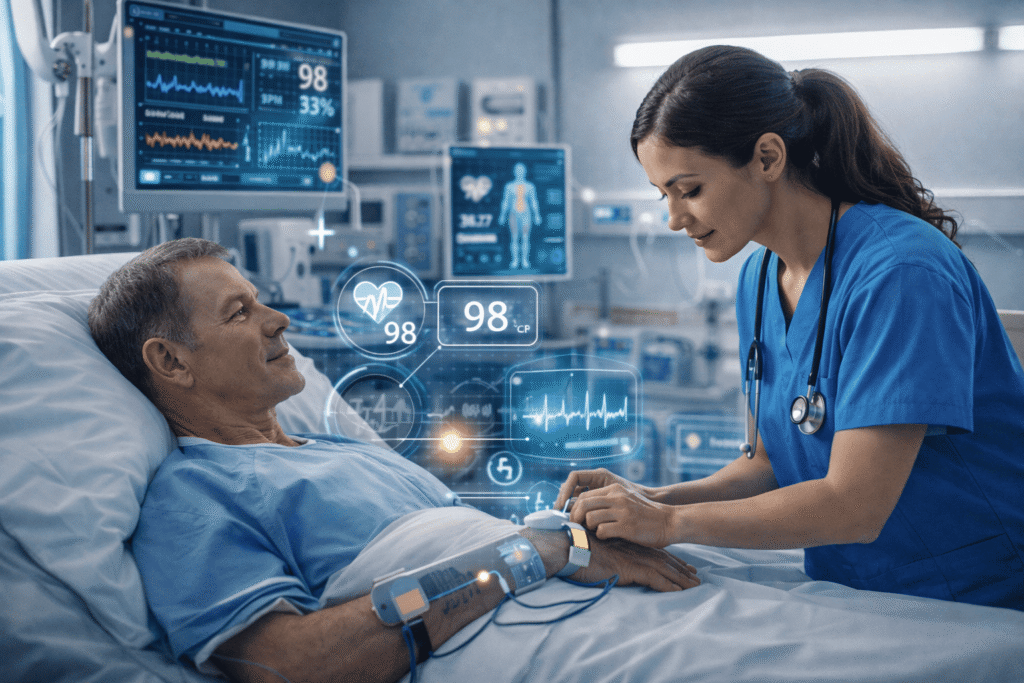
AI monitoring begins with data collection. Patients may wear devices such as smart monitors, wristbands, chest sensors, or bedside machines. These devices collect vital signs continuously and send the data to a central system.
In some cases, monitoring also includes movement tracking to detect falls or changes in activity levels.
Data Analysis Using Artificial Intelligence
Once the data is collected, AI algorithms analyse it. These algorithms are trained using large datasets from previous patients. They learn what normal and abnormal patterns look like.
AI does not “think” like a human. Instead, it compares current patient data with learned patterns to predict possible risks.
Alerts and Notifications
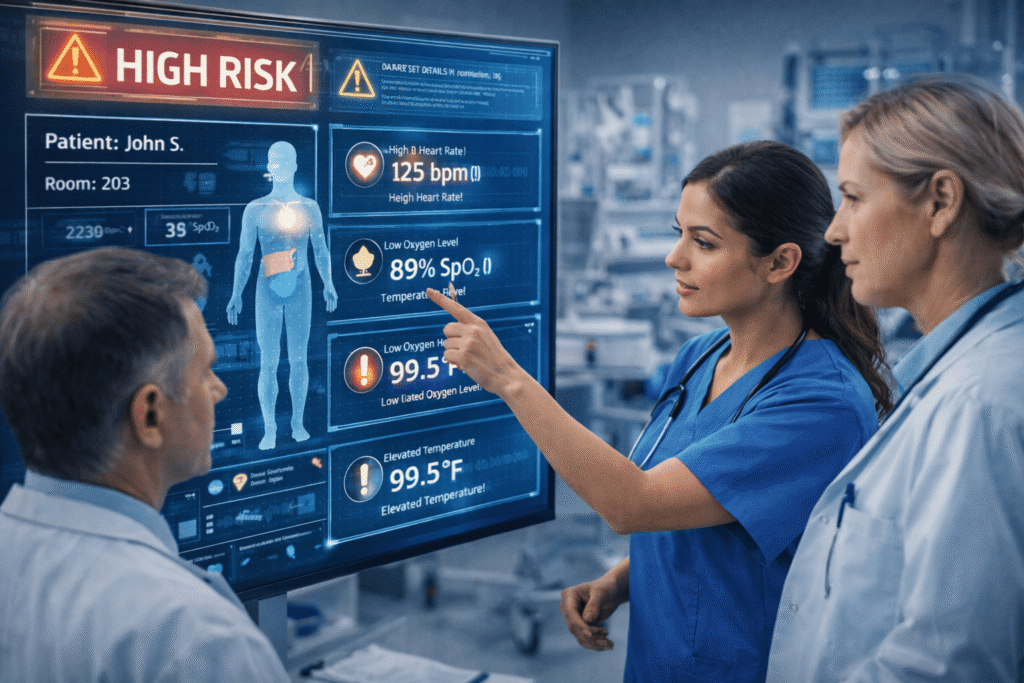
When AI detects a concerning pattern, it sends alerts to nurses through dashboards, alarms, or mobile devices. These alerts help nurses respond quickly, especially in busy clinical environments.
However, AI does not take action—it only provides information.
The Central Role of Nurses in AI-Based Monitoring
Even with advanced technology, nurses remain at the centre of patient monitoring. AI systems depend on nurses to ensure safe and effective care.
Interpreting AI Alerts
AI alerts are not medical decisions. Nurses must assess whether an alert is clinically relevant. Sometimes alerts may be false or caused by patient movement, equipment issues, or non-serious changes.
Nurses use their clinical judgment to decide:
- Is this alert urgent?
- Does the patient need immediate intervention?
- Should the doctor be informed?
Providing Human Assessment
AI can measure numbers, but it cannot assess pain, fear, confusion, or emotional distress. Nurses combine AI data with physical assessment and patient communication.
For example, a nurse may notice anxiety or shortness of breath that the system does not detect clearly.
Taking Action and Delivering Care
Only nurses can take immediate action administer oxygen, adjust patient positioning, provide reassurance, or escalate care.
AI supports these actions but does not replace them.
Benefits of AI-Based Patient Monitoring for Nurses
When used correctly, AI monitoring systems offer many benefits for nursing practice.
Early Detection of Patient Deterioration
AI systems can detect subtle changes earlier than manual observation alone. This allows nurses to intervene sooner and prevent serious complications.
Early detection improves patient safety and outcomes.
Reduced Workload and Burnout
By automating continuous monitoring, AI reduces the need for frequent manual checks. This helps nurses manage heavy workloads and focus on complex care.
Improved Accuracy and Consistency
AI systems provide consistent monitoring without fatigue. This supports nurses, especially during long shifts or in understaffed units.
Better Time Management
With AI handling routine monitoring, nurses can spend more time on patient education, emotional support, and critical tasks.
Limitations and Challenges of AI-Based Monitoring Systems
Despite their advantages, AI systems have limitations that nurses must understand.
False Alarms and Alert Fatigue
Too many alerts can overwhelm nurses, leading to alert fatigue. Nurses may become desensitised and miss important warnings.
Human judgment is essential to manage this risk.
Technical Failures
AI systems depend on electricity, internet connections, and functioning hardware. Technical failures can disrupt monitoring.
Nurses must always be prepared to rely on traditional assessment skills.
Data Quality Issues
Incorrect sensor placement or poor data quality can lead to inaccurate alerts. Nurses are responsible for ensuring devices are used correctly.
Ethical and Privacy Concerns
Patient data must be protected. Nurses play a role in maintaining confidentiality and explaining monitoring systems to patients.
Why AI Cannot Replace Nurses in Patient Monitoring
AI is a tool not a caregiver.
Lack of Emotional Intelligence
AI cannot comfort a scared patient or explain what is happening in a caring way.
No Clinical Accountability
If something goes wrong, AI cannot be held responsible. Nurses remain legally and ethically accountable.
Inability to Understand Context
AI does not understand family situations, cultural beliefs, or patient preferences. Nurses do.
Future of AI-Based Monitoring and Nursing Practice
AI will continue to improve and expand, but its role will remain supportive.
New Skills for Nurses
Future nurses will need skills in:
- Digital health systems
- Data interpretation
- Technology ethics
- Clinical decision-making with AI support
Stronger Nurse-Technology Partnership
AI will help nurses provide safer and more efficient care, but human oversight will always be required.
What Nursing Students Should Learn About AI Monitoring
Students should not fear AI. Instead, they should prepare for it.
Understand Technology Basics
Knowing how monitoring systems work will improve confidence and competence.
Focus on Human Skills
Communication, empathy, and critical thinking will always be valuable.
Stay Adaptable
Healthcare technology evolves quickly. Lifelong learning is essential.
People Also Ask
What is AI-based patient monitoring?
It is a system that uses artificial intelligence to track patient vital signs and detect health risks in real time.
Do AI monitoring systems replace nurses?
No. They support nurses but cannot replace human judgment and care.
How do nurses use AI monitoring data?
Nurses interpret alerts, assess patients, and take appropriate clinical action.
Is AI patient monitoring safe?
Yes, when used with proper nursing oversight and clinical judgment.
Will AI increase nursing job opportunities?
Yes. New roles related to digital health and monitoring are emerging.
Conclusion
AI-based patient monitoring systems are transforming modern healthcare by improving early detection, efficiency, and patient safety. However, these systems cannot function effectively without nurses.
Nurses interpret data, respond to alerts, provide emotional support, and ensure ethical care. AI enhances nursing practice but does not replace the human connection that defines quality healthcare.
For nursing students and professionals, the future lies in working alongside AI, combining technology with compassion, clinical judgment, and responsibility. Patient monitoring will continue to evolve—but nurses will always remain at the heart of patient care.
Useful Documents for every Nursing Student
CV Section Template for Nursing students
AHPRA – NMBA Registration Document Checklist (International Students-Graduates)
Clinical Placement Reflection Template (NMBA-aligned)
Cover Letter Template for Nursing Students
Disclaimer: “I researched this information on the internet; please use it as a guide and also reach out to a professional for assistance and advice.This information is not medical advice, so seek your medical professional’s assistance.”