

Many people imagine that a midwife’s day is nothing but holding newborns and celebrating with happy families. While those moments are undoubtedly the highlight of the job, the reality of life in the birth suite or the community clinic is far more complex, physically demanding, and emotionally charged. In 2026, the Australian midwifery model is built on high-level clinical decision-making, rapid triage, and deep emotional support.
If you’ve ever wondered what actually happens behind the closed doors of a maternity unit, this guide takes you through a typical 12-hour shift. From the quiet tension of a labor room to the bustling energy of the postnatal ward, here is a grounded look at a day in the life of a midwife.
06:45 – The Morning Handover
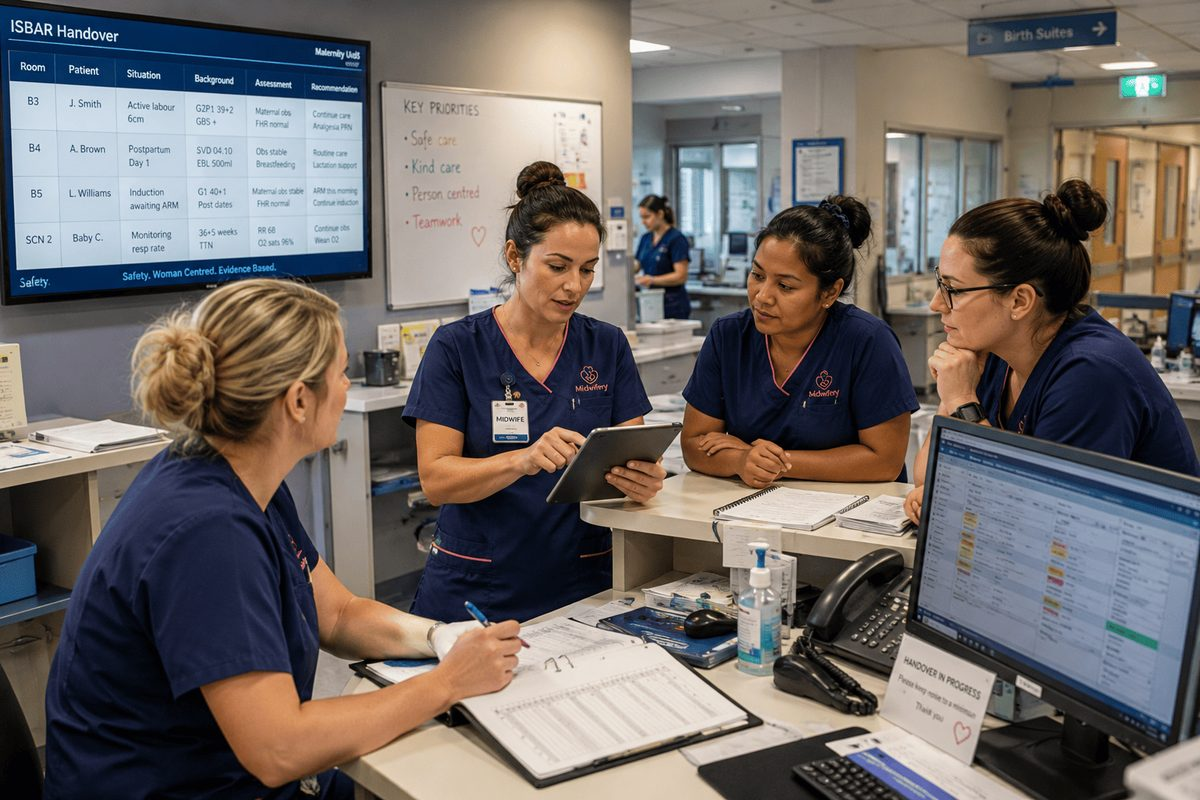
The day begins while most of the world is still asleep. In 2026, we use digital ISBAR (Introduction, Situation, Background, Assessment, Recommendation) tools to transfer patient care. The night staff are tired but focused as they update us on who is in active labor, who had a complicated birth overnight, and which newborns need extra monitoring.
As a midwife, your "Brain Sheet" becomes your lifeline. You note down who needs antibiotics, who is waiting for an induction of labor, and who might be heading home today. This 15-minute window is the only quiet time you’ll have to prioritize your tasks before the "Bells" start ringing.
09:00 – The Birth Suite: High Stakes and Holding Space
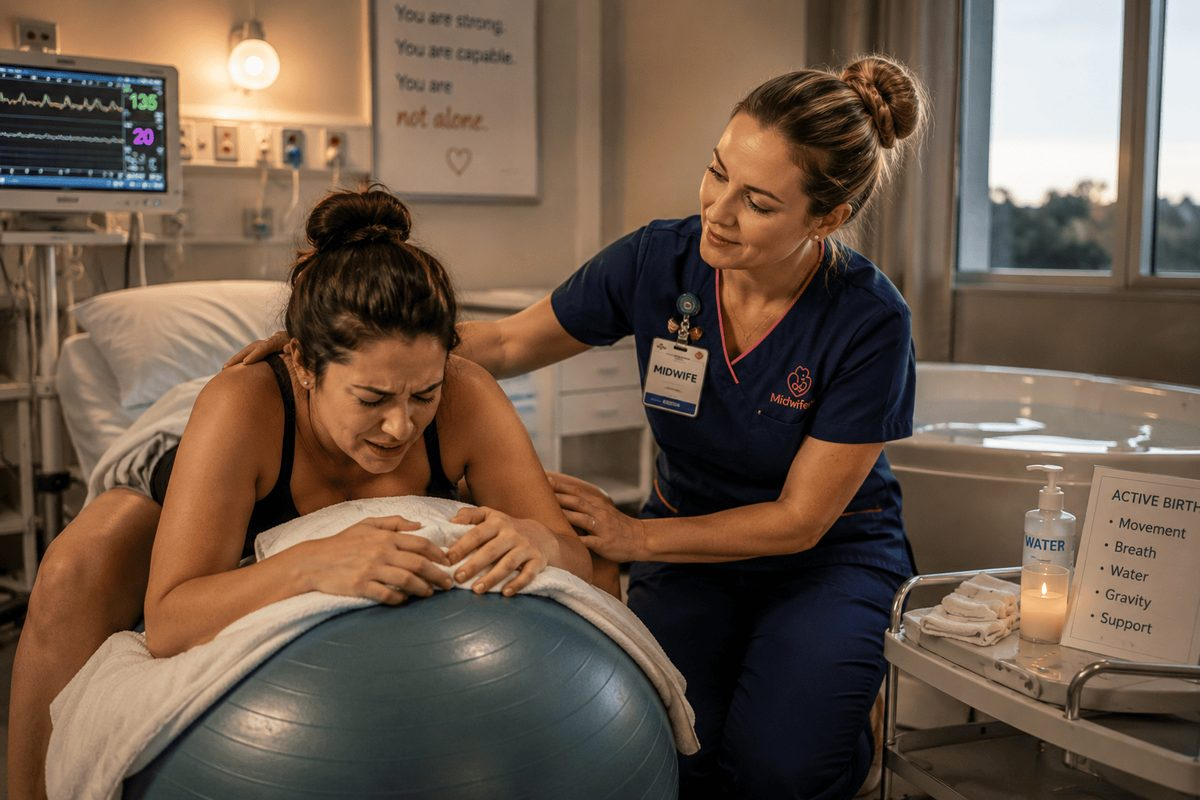
By mid-morning, you are often assigned to a woman in active labor. This is the heart of midwifery—providing "Continuous Support." In 2026, we focus heavily on "active birth" techniques, helping women use movement, water immersion, and gravity to facilitate progress.
However, you aren't just there for emotional support. You are constantly monitoring the "Clinical Picture." You are checking the fetal heart rate, assessing maternal observations, and watching for subtle signs of fetal distress. It is a delicate balance of "holding the space" for a natural process while being ready to escalate to the obstetric team at a moment’s notice if the situation changes.
13:00 – The Postnatal Ward: Education and Recovery
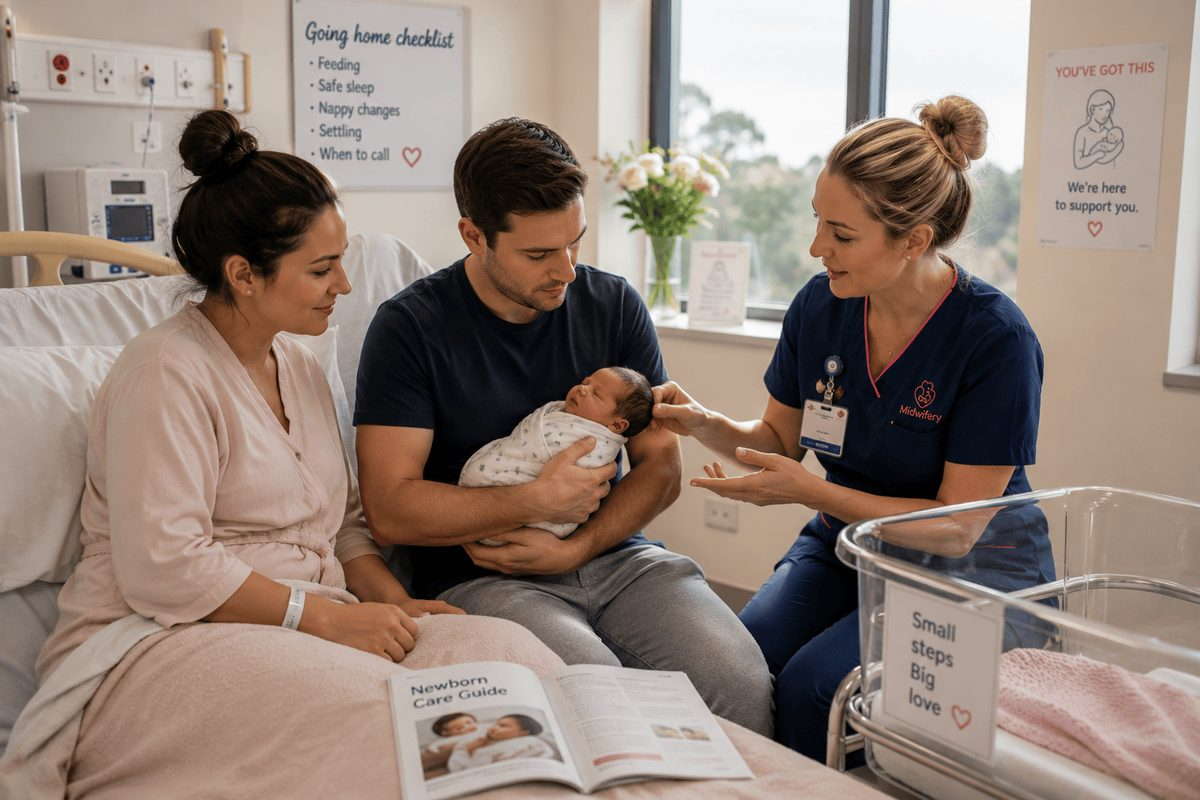
If you aren't in the birth suite, you are likely on the postnatal ward. This is where the "heavy lifting" of education happens. You aren't just checking wounds or fundal heights; you are teaching a first-time father how to safely swaddle a baby and helping a frustrated mother with a difficult breastfeeding latch.
In 2026, we emphasize "Person-Centered Care." You might be managing a mother who is recovering from a complex Caesarean section while simultaneously screening another for signs of postpartum anxiety. It requires rapid "task-switching" and immense patience. Every interaction is an opportunity to build a parent's confidence before they head home.
16:00 – Triage and Unexpected Challenges
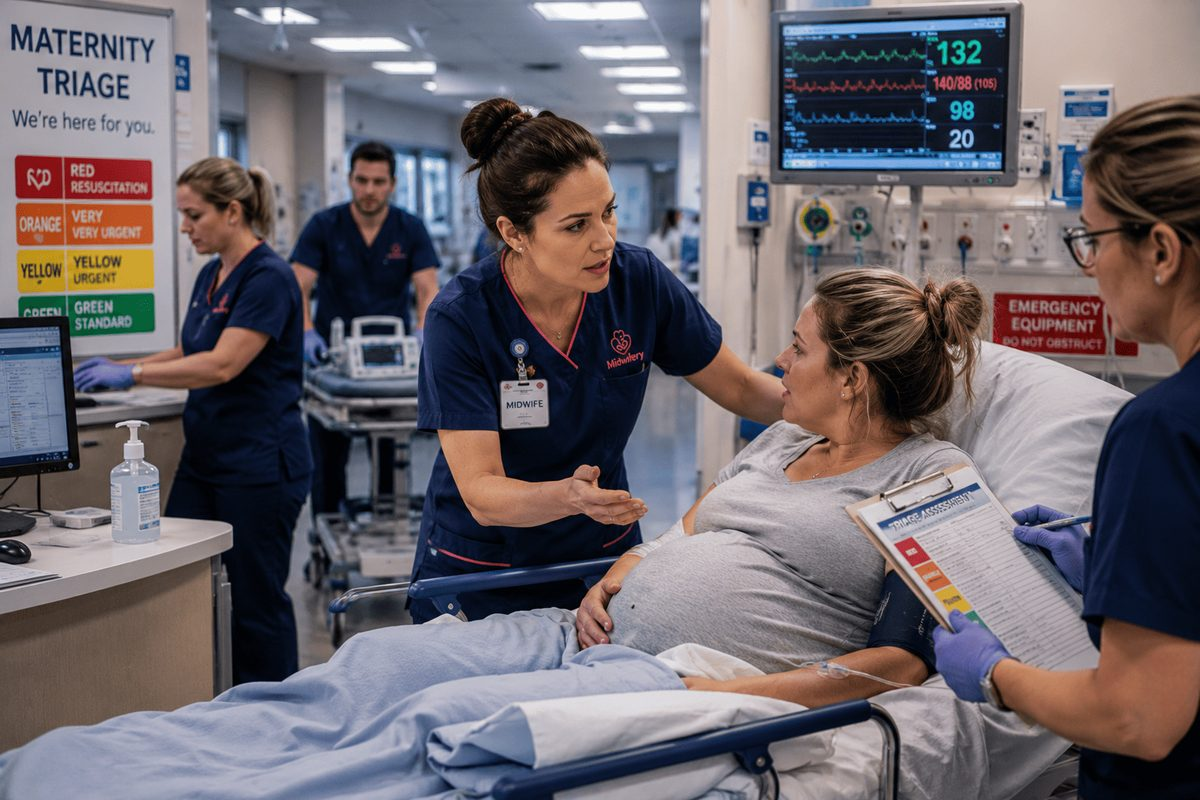
Midwifery is rarely predictable. A "Category 1" emergency can happen in seconds. You might be assisting with a routine check-up when a woman arrives in the triage area with heavy bleeding or reduced fetal movements.
The afternoon is often the busiest time for "Admissions." You coordinate with the multidisciplinary team—doctors, social workers, and lactation consultants—to ensure every family has a safe care plan. In 2026, we also manage a lot of "Digital Health" tasks, ensuring all clinical data is synced correctly so the woman’s GP and community midwife can provide seamless follow-up care.
19:00 – The Evening Handover and Reflection
As the sun sets, the night shift arrives. You provide a detailed handover, ensuring the next midwife knows exactly where each mother and baby sits on the clinical spectrum. Walking to the car at 19:30, you feel a unique kind of "Good Tired."
Some days are filled with the incredible joy of a first breath; others are spent supporting a family through their hardest goodbye. As midwives, we carry those stories with us. We don't just leave work; we process the "Emotional Labor" of the day, knowing that tomorrow, we get to do it all over again.
Frequently Asked Questions
Q: Do midwives work 12-hour shifts in Australia? A: Yes, frequently. Most major Australian hospitals in 2026 have moved to a "12-hour shift" model (e.g., 07:00 to 19:30). While long, this often allows for a "4 days on, 4 days off" roster, which helps with work-life balance.
Q: Is being a midwife physically hard? A: Absolutely. You are on your feet for most of the shift, often assisting women in various birthing positions, moving equipment, and walking several kilometers across the hospital wards. Good comfortable shoes are a midwife’s best investment!
Q: How do midwives deal with the stress of emergencies? A: We rely on "Crisis Resource Management" training. We practice emergency drills (like neonatal resuscitation or postpartum hemorrhage) regularly so that when a real emergency happens, our "Muscle Memory" takes over. Debriefing with colleagues after a shift is also vital for mental health.
Q: What is the most rewarding part of the day? A: While birth is amazing, many midwives find the most reward in the "small wins"—like a baby finally latching after hours of trying, or seeing a terrified first-time mom suddenly realize, "I can do this."