
The Australian healthcare system is built on a foundation of high standards, strict regulations, and a deep commitment to patient safety. For any nurse—from a student on their first clinical placement to a seasoned Nurse Practitioner—the threat of a legal complaint or a notification is a significant professional concern. In Australia, the legal landscape for nurses is governed by the Health Practitioner Regulation National Law, which is overseen by the Australian Health Practitioner Regulation Agency (AHPRA) and the Nursing and Midwifery Board of Australia (NMBA).
Receiving a legal complaint does not automatically mean the end of your career, but it does mark the beginning of a serious and structured process. Whether the complaint involves a medication error, a breach of privacy, or an allegation of professional misconduct, knowing exactly what happens next is essential for protecting your registration and your mental wellbeing. This article provides a comprehensive, step-by-step guide to the legal and regulatory journey that follows a complaint in the Australian nursing context.
1. The Initial Notification: Who Can Complain and Why?

In Australia, a legal or professional complaint against a nurse usually begins as a "Notification." Under the National Law, anyone can make a notification to AHPRA if they have a concern about a nurse’s health, conduct, or performance. This includes patients, their family members, employers, or even other healthcare professionals. There are two main types of notifications: Voluntary Notifications (made by the public or colleagues) and Mandatory Notifications. Mandatory notifications are legally required when a practitioner or employer believes a nurse has engaged in "notifiable conduct," such as practicing while intoxicated, sexual misconduct, or placing the public at risk of harm due to a significant departure from professional standards.
Once a complaint is lodged, AHPRA performs a "preliminary assessment" to determine if the matter falls within their jurisdiction. If the complaint is purely about a financial dispute or a minor personality clash that doesn't affect patient safety, it may be dismissed or referred to a health ombudsman. However, if the complaint suggests a risk to the public, AHPRA will formally notify the nurse. At this stage, the nurse receives a letter outlining the allegations. It is a critical "pivot point" where the nurse must immediately contact their Professional Indemnity Insurance (PII) provider or nursing union before responding, as the initial statement provided to AHPRA can influence the entire trajectory of the case.
2. The Assessment and Investigation Phase
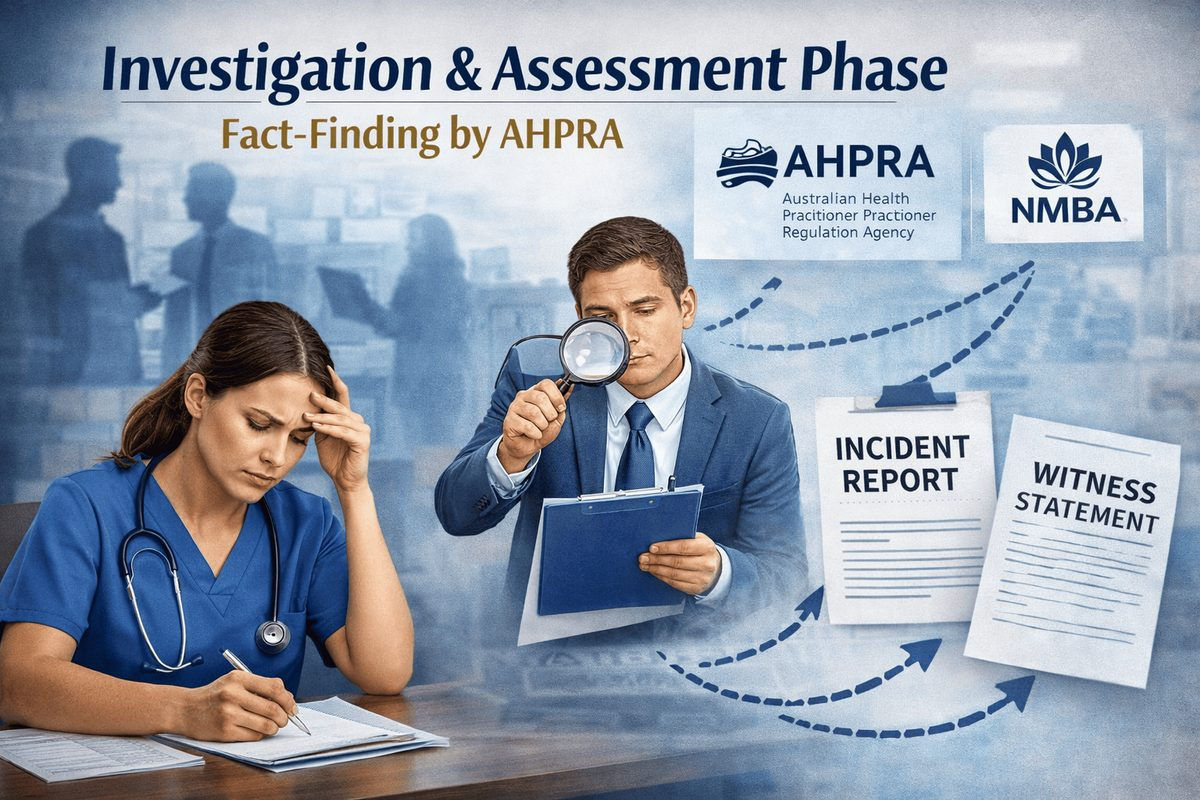
After the initial notification, the matter moves into the Assessment Phase. AHPRA, acting on behalf of the NMBA, gathers information to decide if further action is required. This often involves requesting clinical records, incident reports from the hospital, and statements from witnesses. The goal is to determine whether the nurse's actions met the NMBA Professional Standards and Code of Conduct. In Australia, this is a "fact-finding" mission rather than a trial. Investigators look at the context of the incident—for example, was the ward dangerously understaffed, or was there a failure in the hospital’s electronic medication system?
If the assessment suggests a serious issue, it may escalate to a Formal Investigation. During this time, the nurse may be required to attend a health assessment (if the complaint relates to an impairment) or a performance assessment. The investigation can be a lengthy process, often taking several months. Throughout this period, the principle of "Natural Justice" applies, meaning the nurse has the right to see the evidence against them and provide a detailed response. Detailed documentation and objective clinical notes are a nurse's best defense during this phase. AHPRA will eventually compile an investigation report, which is then presented to the Board for a decision on the outcome.
3. Immediate Action: Protecting the Public Interest
In high-risk scenarios, AHPRA and the NMBA have the power to take Immediate Action before an investigation is even completed. This occurs if the Board reasonably believes that the nurse poses a serious risk to the health or safety of the public or that it is otherwise in the "public interest" to act. Immediate action is not a final finding of guilt; it is a protective measure. The most common forms of immediate action include Suspending the nurse's registration or imposing Conditions on their practice, such as requiring them to work only under direct supervision or prohibiting them from handling specific medications.
If the Board proposes immediate action, the nurse is usually given a "Show Cause" notice, providing a very short window (often only a few days) to explain why the action should not be taken. This is a high-stakes legal moment that requires expert legal representation. The Board must balance the nurse’s right to work with the safety of the Australian public. Even if immediate action is taken, the full investigation continues to determine the final facts. Once the investigation concludes, the immediate action may be lifted, changed, or made permanent depending on the final findings of the Board.
4. Possible Outcomes: From Cautions to Tribunals
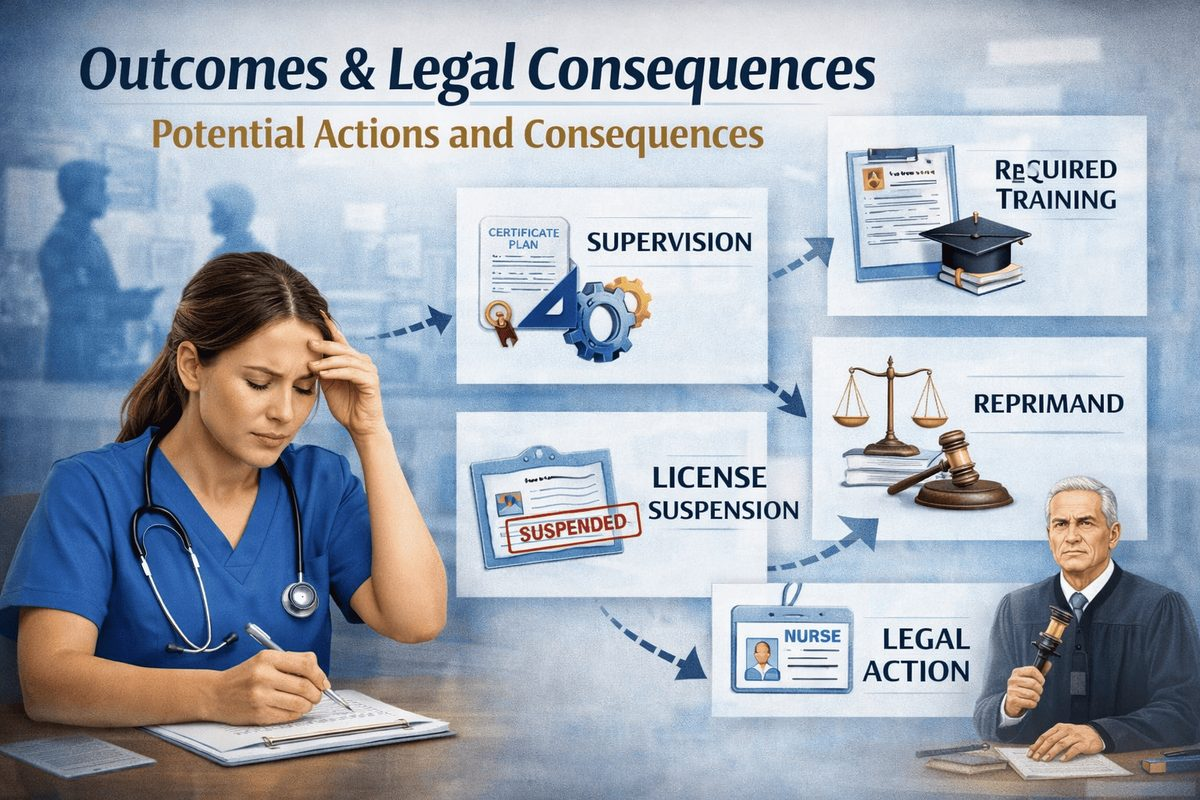
Once the investigation is complete, the NMBA meets to decide the final outcome. In Australia, the regulatory system focuses on Remediation rather than just punishment. If the Board finds that the nurse’s conduct was a minor slip in standards, they may issue a Caution (a formal warning) or take No Further Action. If there are concerns about the nurse's skills, the Board may impose Conditions on their registration, such as mandatory further education or a period of supervised practice. These conditions are often listed on the public "Register of Practitioners."
For more serious breaches, the Board may issue a Reprimand, which is a public record of the Board's disapproval. The most severe cases—those involving criminal behavior, extreme negligence, or sexual misconduct—are referred to a Responsible Tribunal (such as VCAT in Victoria or NCAT in NSW). Only a Tribunal has the power to Cancel a nurse’s registration. This means the nurse can no longer practice in Australia for a specified period, or sometimes permanently. Most cases, however, are resolved at the Board level through education and monitoring, with the goal of returning the nurse to safe, independent practice.
5. Civil Litigation: When a Patient Sues for Damages
Separate from the AHPRA regulatory process is Civil Litigation. This happens when a patient or their family sues the nurse (and usually the hospital) for "Medical Negligence." In Australia, for a negligence claim to succeed, the patient must prove three things: that the nurse owed them a Duty of Care, that the nurse Breached that duty (did not act as a reasonable nurse would), and that the breach caused the patient Harm or Loss. This is where Professional Indemnity Insurance is vital, as it covers the legal costs and any financial compensation (damages) awarded to the patient.
Most civil claims in Australia are settled out of court through mediation. During this process, lawyers for both sides review the clinical evidence to see if a settlement can be reached. It is important to know that under the principle of "Vicarious Liability," employers (like state health departments) are generally responsible for the actions of their employees. This means the hospital's insurance usually pays the damages. However, if you are a self-employed nurse or a contractor, you are personally liable, which is why having your own private insurance is a mandatory registration standard. Civil cases can be slow and stressful, but they focus on financial compensation rather than your right to hold a nursing license.
Frequently Asked Questions
Q: Do I have to tell my employer if AHPRA is investigating me?
A: Yes, usually. Many employment contracts in Australia require you to disclose if you are the subject of an AHPRA investigation or if conditions have been placed on your license. Additionally, if the Board imposes conditions on your practice, your employer will be notified by AHPRA directly.
Q: Can I use my hospital’s lawyers if a patient sues me?
A: While the hospital’s insurance usually covers the claim under vicarious liability, the hospital’s lawyers represent the hospital's interests. If there is a conflict of interest—for example, if the hospital blames you for not following their policy—you may need your own independent lawyer provided by your private insurance or union.
Q: How long does an AHPRA investigation take?
A: There is no fixed timeline, but most assessments are completed within 60 days. However, a full formal investigation can take anywhere from 6 to 18 months depending on the complexity of the medical evidence and the number of witnesses involved.
Q: What is the difference between a "Caution" and a "Reprimand"?
A: A Caution is a formal warning that is generally kept in your private AHPRA record. A Reprimand is a more serious public statement of disapproval that appears on the public Register of Practitioners, meaning anyone (including future employers) can see it.
Q: If my registration is cancelled, can I ever nurse again?
A: If a Tribunal cancels your registration, they will usually set a "disqualification period" (e.g., two years). After that time, you can apply to be re-registered, but you will have to prove to the Board that you are now "fit and proper" to practice and that you have addressed the issues that led to the cancellation.