
For any nurse or midwife in Australia, receiving a notification from the Australian Health Practitioner Regulation Agency (AHPRA) can be one of the most stressful moments of a professional career. Whether you are a seasoned Registered Nurse or a nursing student just starting your clinical placements, the word "investigation" often brings up fears of losing your registration or facing public shame. However, it is important to understand that the AHPRA investigation process is designed to be a systematic way of ensuring public safety. It is not necessarily a "guilty until proven innocent" scenario, but rather a fact-finding mission to see if a nurse’s conduct, health, or performance meets the national standards.
Understanding the timeline and the "mechanics" of an investigation is the best way to manage the stress and protect your professional future. In Australia, the Health Practitioner Regulation National Law governs how these investigations are handled. This guide breaks down the complex legal steps into a clear, step-by-step path, helping you understand what happens from the moment a complaint is made to the final decision by the Nursing and Midwifery Board of Australia (NMBA).
1. The Trigger: Receiving a Notification or Complaint
The process begins when AHPRA receives what is called a "Notification." A notification is a formal concern raised about a nurse's clinical performance, professional conduct, or health (impairment). Interestingly, anyone can lodge a notification—a patient, a family member, a fellow nurse, or even an employer. In some serious cases, such as those involving sexual misconduct, drug use, or a significant departure from professional standards, an employer or colleague is legally required to make a Mandatory Notification.
Once the notification is received, AHPRA performs an initial "screening" to see if the matter falls under their jurisdiction. If the complaint is about a refund or a rude comment that doesn't affect safety, it might be referred to a health ombudsman instead. If AHPRA decides to proceed, they will send you a formal letter. This letter is a critical document; it outlines the specific allegations made against you. The moment you receive this, you should contact your Professional Indemnity Insurance provider or your nursing union. Do not attempt to call the person who complained or write a hurried response without legal advice, as your first reaction can significantly impact the outcome of the case.
2. The Assessment Phase: Gathering the Facts
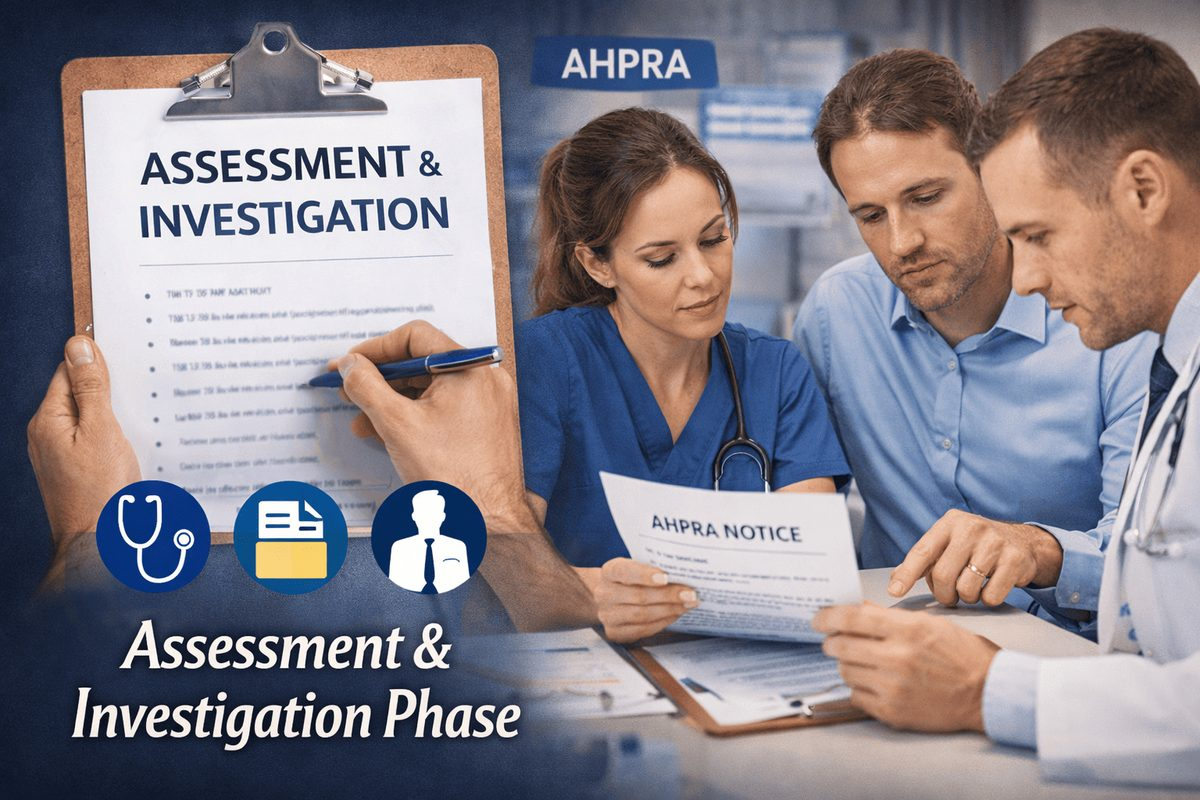
After the notification is accepted, AHPRA enters the Assessment Phase. During this stage, a team of investigators is assigned to gather all relevant information. This might include requesting your clinical notes, interviewing witnesses, or asking for a statement from your hospital manager. They are looking for a clear picture of what happened. They want to know: Did the nurse follow the NMBA Code of Conduct? Was there a breach of the Professional Standards? Or was the incident a result of a system failure in the hospital?
Nurses are usually given a chance to provide an initial written response during this phase. This is your opportunity to explain your side of the story. A well-written response should be objective, calm, and supported by evidence. For example, if you are accused of a medication error, you might provide evidence of the ward's high patient-to-nurse ratio that day or a faulty barcode scanner. AHPRA has 60 days to complete this assessment, though complex cases can take longer. At the end of this phase, they may decide that no further action is needed, or they may escalate the matter to a full investigation.
3. Immediate Action: Protecting the Public
In very serious cases, AHPRA and the National Board can take Immediate Action before the full investigation is even finished. This happens if they believe there is a "serious risk to the health or safety of the public." Immediate action is not a final punishment; it is a temporary safety measure. This could include suspending your registration immediately or placing "Conditions" on your practice—such as requiring you to work only under direct supervision or banning you from administering certain high-risk medications.
If immediate action is proposed, you are usually given a very short window (sometimes only 48 hours) to show cause why the action should not be taken. This is a high-pressure situation where having a lawyer or a union representative is essential. Many nurses find this stage the most difficult because it can mean a sudden loss of income. However, it is a key part of the Australian regulatory system’s commitment to "Public Protection." Even if immediate action is taken, the full investigation will continue to determine the long-term facts of the case.
4. The Formal Investigation: A Deep Dive into Conduct
If the matter is not resolved during assessment, it moves into a Formal Investigation. This is a much deeper dive into the nurse’s history and the specific incident. AHPRA may appoint an external investigator or a clinical expert to review your work. If the concern is about your health (for example, a struggle with mental health or substance use), you may be required to attend an Independent Health Assessment with a doctor chosen by AHPRA. If the concern is about your clinical skill, you might have to complete a performance assessment.
During the formal investigation, you have "Natural Justice" rights. This means you have the right to see the evidence against you and the right to respond to it. The investigator will compile all the findings into a report for the Nursing and Midwifery Board of Australia (NMBA). The Board members—who are a mix of experienced nurses and members of the public—then meet to decide the outcome. They look at the "Gravity" of the conduct and whether the nurse shows "Insight" (an understanding of what went wrong and how to fix it). A nurse who admits a mistake and shows they have taken a course to improve their skills is often treated more leniently than one who is defensive or dishonest.
5. Final Outcomes: From Cautions to Tribunal
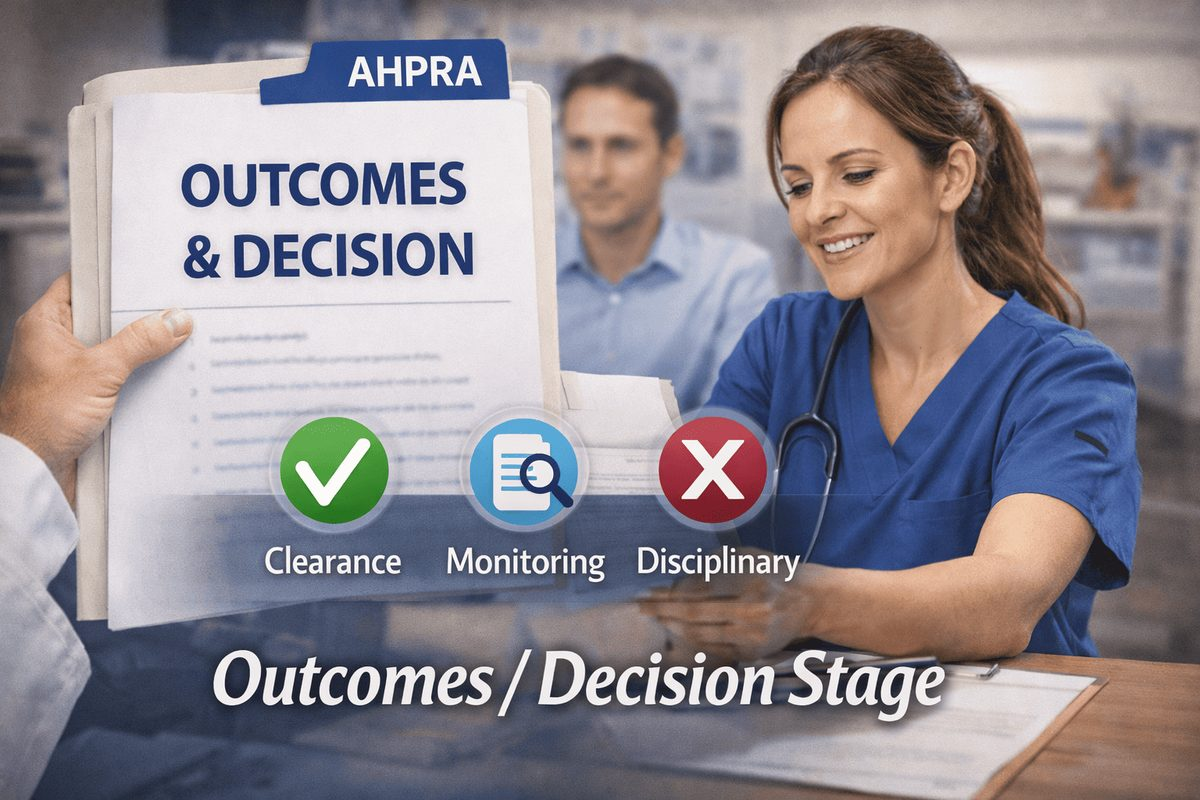
The final stage is the Board’s Decision. There are several possible outcomes depending on the severity of the findings. The Board may decide on "No Further Action" if the investigation shows you acted appropriately. If there was a minor slip in standards, they might issue a "Caution," which is like a formal warning on your record. More serious cases result in "Conditions," which are specific rules you must follow while working, such as completing a "Reflective Practice" essay or being audited by a senior nurse every month.
The most severe cases—such as those involving criminal acts or extreme negligence—are referred to a Tribunal. A Tribunal is like a court of law. Only a Tribunal has the power to cancel a nurse’s registration permanently. If your case reaches this level, it becomes public record. However, the vast majority of AHPRA notifications are resolved at the lower levels with conditions or cautions. The goal of the entire process is Remediation, not just punishment. AHPRA wants to ensure that you are safe to return to the ward so that you can continue your career while the public remains protected.
Frequently Asked Questions
Q: How long does an AHPRA investigation usually take?
A: Most assessments are completed within 60 to 90 days, but a full formal investigation can take anywhere from 6 to 18 months. The timeline depends on the complexity of the case and how quickly witnesses and hospitals provide information.
Q: Can I keep working while I am being investigated?
A: Yes, in most cases. Unless AHPRA has taken "Immediate Action" to suspend your registration, you can continue to work. However, you should check your employment contract, as some hospitals require you to notify them if you are under investigation.
Q: Will the person who complained find out the result?
A: Yes. AHPRA is legally required to inform the "notifier" of the final decision and the reasons for it. However, they do not share your private health information or sensitive personal details.
Q: Do I need a lawyer for an AHPRA interview?
A: While it is not mandatory, it is highly recommended. AHPRA investigations are legal processes. A lawyer who specializes in health law can help you avoid "self-incrimination" and ensure that your response is professional and effective.
Q: Does an AHPRA caution stay on my record forever?
A: A caution is recorded in AHPRA's internal system. While it is not always visible to the public on the "Register of Practitioners," it will be seen by the Board if you are ever investigated again in the future.