
Working in healthcare is a physically demanding profession that requires constant movement, quick thinking, and emotional resilience. For nurses and nursing students observing the holy month of Ramadan, these demands are met with the added challenge of fasting from dawn until sunset. One of the most critical aspects of maintaining your health and professional performance during this time is the management of blood sugar levels. When you are on your feet for a 12-hour shift, your body relies on a steady supply of glucose to fuel your muscles and, more importantly, your brain. If your blood sugar drops too low (hypoglycemia) or spikes too high followed by a crash (hyperglycemia), your ability to calculate medication dosages, monitor patient vitals, and respond to emergencies can be significantly impaired.
For nurses, managing blood sugar is not just about personal comfort; it is a pillar of patient safety. A “brain fog” caused by dipping glucose levels can lead to clinical errors that are entirely preventable with the right nutritional strategy. This article provides a deep dive into how the human body processes energy during a fast, the best foods to eat to maintain a “steady state” of glucose, and how to recognize the clinical warning signs that your blood sugar is reaching a dangerous level. By treating your own metabolic health with the same care you give your patients, you can thrive professionally while fulfilling your spiritual goals.
1. The Science of Glucose and Insulin During a Fast
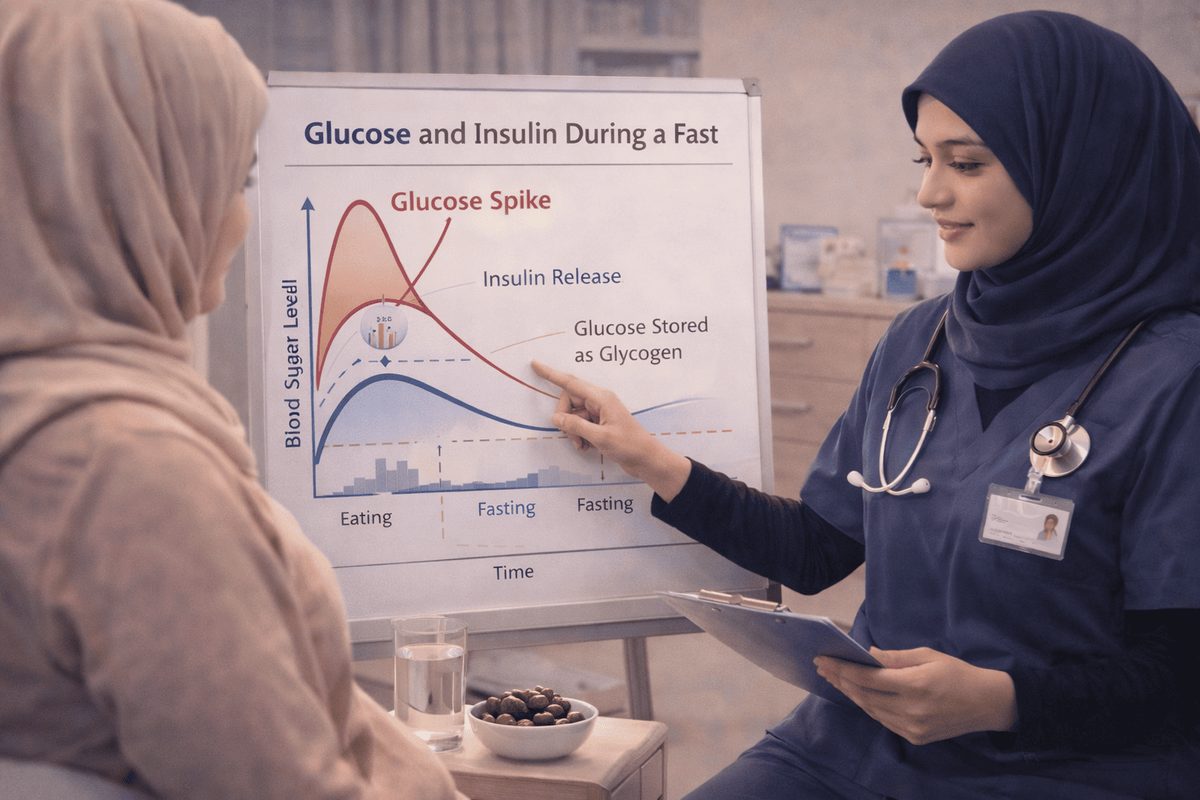
To manage your blood sugar effectively, you must first understand how your body fuels itself when you aren’t eating. Normally, when we eat, our bodies break down carbohydrates into glucose, which enters the bloodstream. The pancreas then releases insulin, a hormone that acts like a key, letting glucose into our cells to be used for energy. During Ramadan, once the glucose from your last meal is used up (usually 4 to 6 hours after Suhoor), the body enters a “fasting state.” At this point, the liver begins to release stored glucose (glycogen) to keep your levels stable.
For a nurse on a busy ward, this transition is crucial. If you eat high-sugar foods at Suhoor, you trigger a massive insulin spike. This insulin “overshoots” its job, pulling too much sugar out of the blood and causing a rapid crash. This is why you might feel energetic at 8:00 AM but completely exhausted and shaky by 11:00 AM. Understanding this cycle allows you to choose foods that prevent these extreme “peaks and valleys.” By focusing on foods that require a slow, steady release of insulin, you ensure that your liver and muscles have a sustained fuel source that lasts until the sunset Iftar.
2. Strategic Suhoor: The Foundation of Glycemic Stability
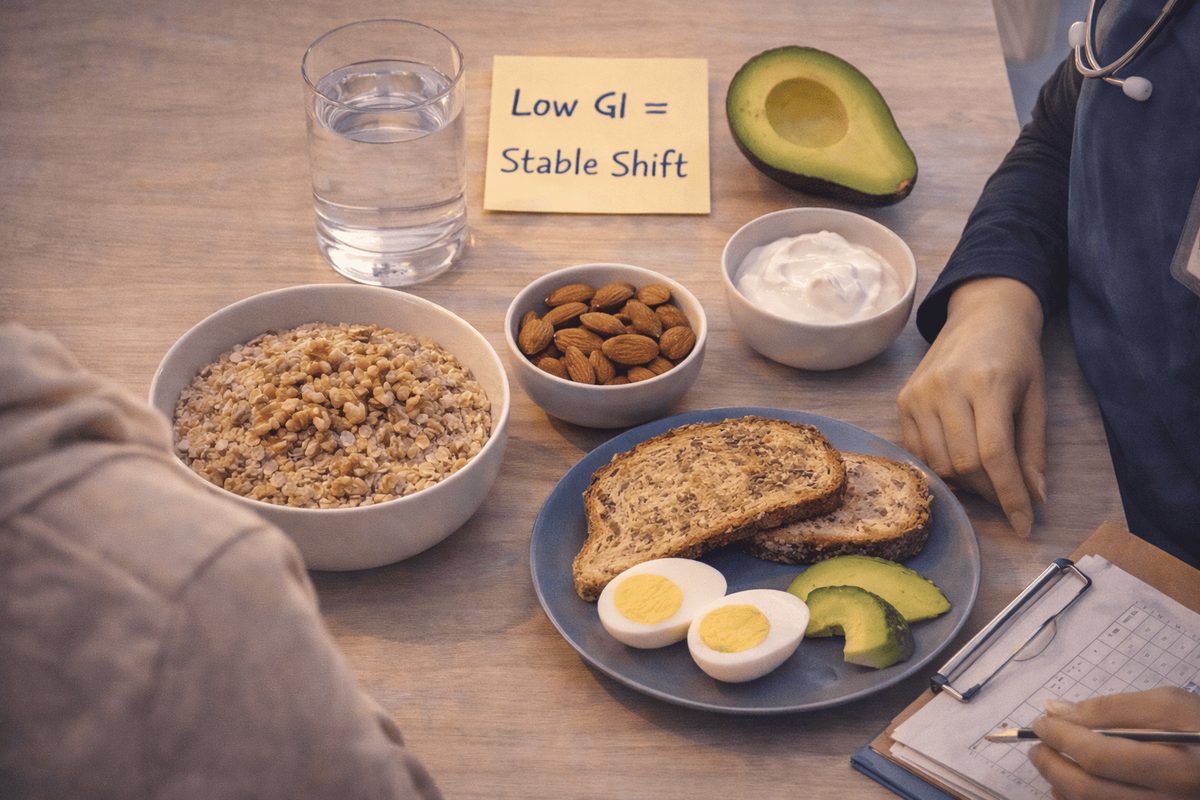
For a fasting nurse, Suhoor is the most important clinical intervention of the day. This meal acts as your “fuel tank” for the next 14 to 16 hours. To maintain stable blood sugar, you must prioritize Low-Glycemic Index (GI) foods. These are foods that break down slowly, preventing the rapid rise and fall of blood sugar. If you choose “white” carbohydrates—like white bread, sugary cereals, or white rice—you are setting yourself up for a mid-shift energy failure.
A “Nurse-Approved Suhoor” should consist of three main components: Complex Carbs, Lean Protein, and Healthy Fats. Complex carbs like steel-cut oats, barley, or whole-grain rye provide fiber that slows down digestion. Protein from eggs, Greek yogurt, or beans helps keep you feeling full and provides the amino acids needed for muscle repair. Healthy fats from avocados, nuts, or olive oil act as a “buffer,” further slowing the absorption of glucose into the blood. This combination creates a “time-release” energy effect. For example, a bowl of oatmeal topped with walnuts and a side of hard-boiled eggs is much more effective for a 12-hour shift than a plate of pancakes or sugary pastries.
3. Recognizing Hypoglycemia on the Ward
Despite your best efforts at Suhoor, the high physical activity of nursing can sometimes lead to hypoglycemia (low blood sugar). As a nurse, you are trained to recognize these signs in your patients, but it is often harder to notice them in yourself when you are focused on care. Early symptoms include shakiness, sweating, heart palpitations, and intense hunger. However, the most dangerous symptoms for a healthcare professional are cognitive: confusion, irritability, and a lack of concentration.
If you start to feel “spaced out” or find yourself re-reading a medication label multiple times because you can’t focus, your blood sugar may be dropping below the safe threshold. In a hospital environment, this is a “Red Flag.” You must have a plan in place. This includes informing a colleague that you feel unwell and taking a moment to sit down. While spiritual devotion is important, the safety of your patients is a primary ethical obligation. If your hypoglycemia is severe, you must break your fast with a quick-acting glucose source, such as a date or a small juice, followed by a protein-rich snack to stabilize the level. Recognizing your limits is a sign of professional maturity, not spiritual weakness.
4. Iftar and the “Post-Prandial” Glucose Spike
When the sun finally sets, the temptation is to consume a large, calorie-heavy meal immediately. However, for a nurse who may still be on duty or who needs to study after their shift, a “heavy” Iftar can be counterproductive. When you flood a fasted system with high-sugar or high-fat foods, your blood sugar levels skyrocket. This leads to a massive release of insulin, which causes a “rebound crash,” making you feel incredibly sleepy and lethargic—often called a “food coma.”
The best strategy is the “Two-Stage Iftar.” Stage one should be immediate: water and 2-3 dates. Dates are rich in natural fiber and potassium, providing a controlled boost to your blood sugar without the chaos of refined sugar. Stage two should happen after a short break (about 20 minutes). This meal should look like a healthy dinner: half the plate filled with vegetables (fiber), one-quarter with lean protein (muscle repair), and one-quarter with complex grains. By eating your vegetables and protein before your carbohydrates, you can actually reduce the total blood sugar spike of the meal. This keeps your mind sharp if you have to head back to the ward or finish your clinical documentation.
5. Managing Blood Sugar for Night Shift Nurses
Nurses working night shifts during Ramadan face a unique challenge. Their “eating window” happens while they are working, and their “fasting window” happens while they are sleeping. For these nurses, blood sugar management is closely tied to their circadian rhythm. The human body is naturally less efficient at processing glucose at night. This means that if a night-shift nurse eats a large, sugary meal at 2:00 AM, their blood sugar will stay elevated longer than it would during the day, which can lead to inflammation and long-term health issues.
Night-shift nurses should focus on “Light and Frequent” fueling during their shift. Instead of one massive meal at Iftar, eat smaller, protein-rich snacks throughout the night. This keeps blood sugar levels on a “level plane” rather than a roller coaster. Avoid the temptation of the “midnight pizza” or vending machine snacks often found in hospital breakrooms. Instead, bring pre-prepared meals like chicken salad, lentil soup, or apple slices with peanut butter. When it comes time for Suhoor at the end of the night shift, choose foods that will help you sleep, like a small bowl of yogurt and fruit. By matching your nutrition to your shift pattern, you protect your metabolic health and ensure you wake up for your next shift feeling refreshed rather than depleted.
Frequently Asked Questions
Q: Can I take my blood sugar with a finger-prick test while fasting? A: Yes. Most religious scholars and medical experts agree that checking your blood sugar levels via a finger-prick test does not break your fast. In fact, for nurses with conditions like pre-diabetes or diabetes, monitoring your levels during a long shift is highly recommended for safety.
Q: Why do I get a headache in the afternoon while fasting? A: While it can be caffeine withdrawal, it is often a sign of a blood sugar dip or dehydration. If the headache is accompanied by dizziness or confusion, it is a sign that your glucose levels are too low. Try to rest in a cool area and, if it persists, consider if you need to break the fast for safety.
Q: Is it okay to use “glucose tabs” if I feel shaky on shift? A: Glucose tabs are designed to raise blood sugar very quickly. If you use one, you are technically breaking your fast. However, if you are experiencing symptomatic hypoglycemia while caring for patients, you must treat it immediately. Your clinical judgment and patient safety come first.
Q: What is the best drink for staying hydrated and keeping sugar stable? A: Water is always number one. However, coconut water is an excellent choice for Iftar as it contains natural electrolytes and a small amount of sugar that helps rehydrate your cells more effectively than plain water without causing a massive sugar spike.
Q: How can I explain my need for a “glucose break” to my supervisor? A: Be proactive! Before Ramadan starts, have a quick chat with your manager. You can say: “I’ll be fasting this month, and while I plan to work my full shift, I may need a 5-minute sit-down if I feel my energy levels dipping. I’ve planned my Suhoor to stay stable, but I want to keep patient safety a priority.” Most supervisors will appreciate your transparency.