
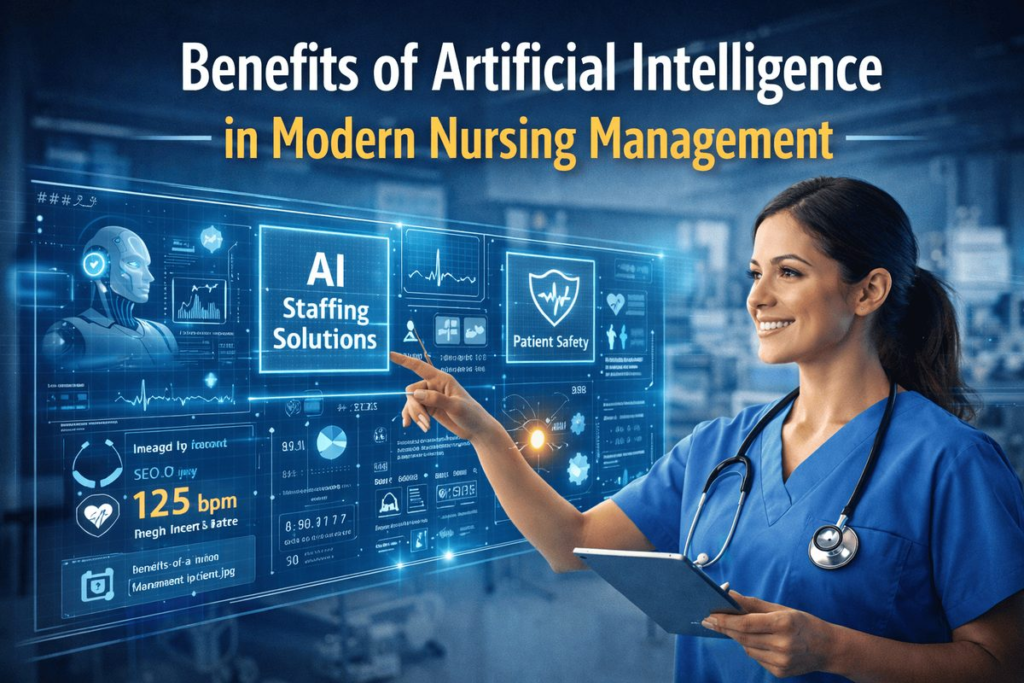
Nursing management is one of the most demanding areas in healthcare. Nurse managers are responsible for staffing, patient safety, quality of care, documentation, compliance, budgeting, and staff wellbeing—all at the same time. As healthcare systems grow more complex and patient numbers increase, traditional management methods are no longer enough.
This is where Artificial Intelligence (AI) is making a powerful impact. AI is not about replacing nurse managers or nurses. Instead, it is about supporting better decisions, saving time, reducing errors, and improving patient outcomes.
In modern healthcare settings, AI tools are now used for staff scheduling, workload management, patient flow analysis, clinical decision support, performance tracking, and predictive analytics. For nursing students and early-career nurses, understanding how AI supports nursing management is becoming an essential skill.
This article explains the key benefits of Artificial Intelligence in modern nursing management, using clear examples and simple language so students can easily understand how AI is shaping the future of nursing leadership.
What Is Artificial Intelligence in Nursing Management?
Artificial Intelligence in nursing management refers to computer systems that can analyse data, identify patterns, predict outcomes, and support decision-making in healthcare settings. These systems do not replace human judgment but enhance it.
Common AI Tools Used in Nursing Management
Smart staff scheduling software
Patient acuity prediction systems
AI-powered dashboards for workload monitoring
Automated documentation and reporting tools
Predictive analytics for staffing shortages and patient risks
These tools work by analysing large amounts of data such as patient records, staffing levels, admission trends, and clinical outcomes.
How AI Improves Staffing and Workforce Management
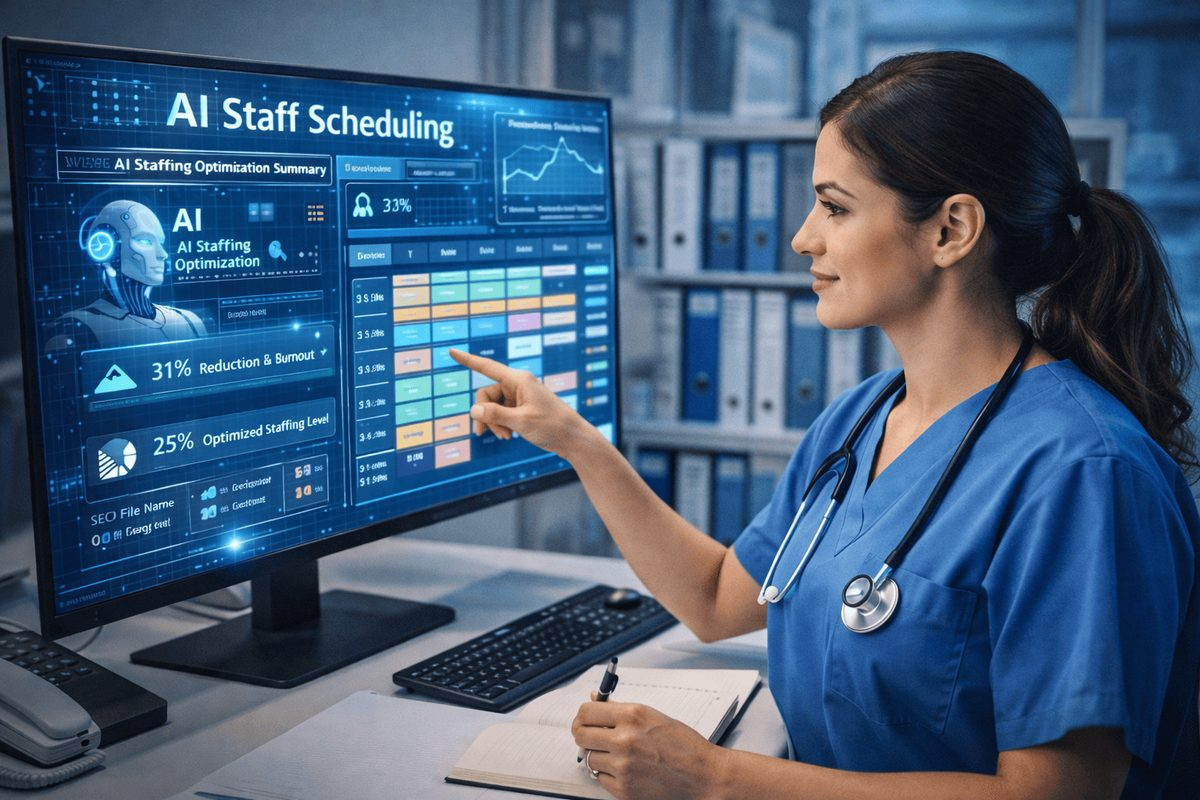
Solving One of Nursing’s Biggest Problems: Staffing Shortages
Staffing is one of the hardest challenges in nursing management. Short staffing leads to:
Nurse burnout
Increased errors
Lower patient satisfaction
Higher staff turnover
AI helps nurse managers plan staffing more accurately.
AI-Based Staff Scheduling
AI scheduling systems:
Analyse patient numbers and acuity
Predict busy periods
Match staff skills to patient needs
Reduce last-minute roster changes
Instead of relying on guesswork, nurse managers can use AI data to make fair and safe staffing decisions.
Reducing Nurse Burnout
By balancing workloads, AI helps:
Prevent nurse fatigue
Reduce overtime
Improve work-life balance
This directly improves staff retention and morale.
Enhancing Patient Safety and Quality of Care
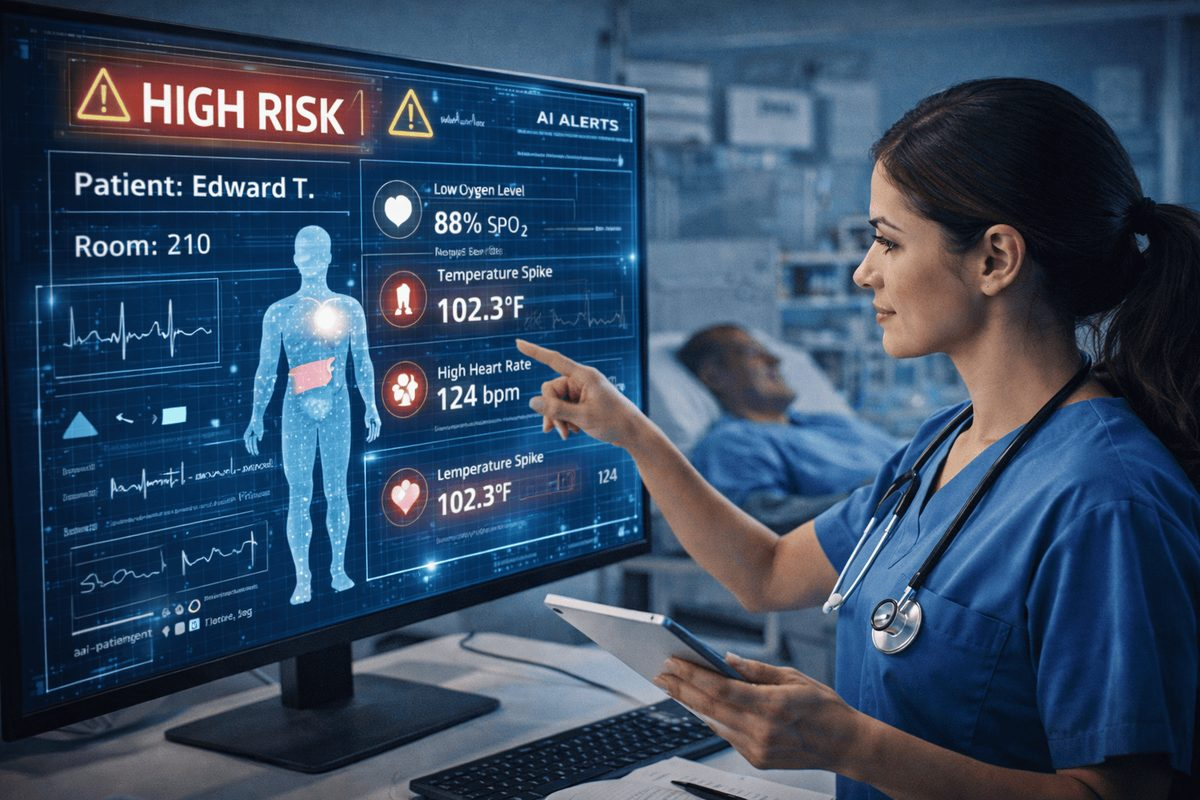
Early Detection of Patient Deterioration
AI systems can monitor:
Vital signs
Lab results
Clinical documentation
They alert nursing managers and staff when patients show early signs of deterioration. This allows:
Faster interventions
Reduced adverse events
Lower mortality rates
Supporting Evidence-Based Nursing Decisions
AI tools provide real-time insights based on:
Clinical guidelines
Past patient outcomes
Best practice standards
This helps nurse managers ensure that care remains consistent, safe, and evidence-based across all shifts.
Improving Workflow Efficiency and Time Management
Reducing Administrative Burden
Nurse managers spend a large amount of time on:
Reports
Rosters
Audits
Documentation
AI can automate many of these tasks, allowing nurse leaders to focus on:
Staff support
Quality improvement
Patient-centered leadership
Faster Decision-Making
AI dashboards provide instant access to:
Staffing gaps
Patient flow issues
Resource shortages
This reduces delays and improves overall unit performance.
Smarter Resource and Budget Management
Managing Costs Without Compromising Care
Healthcare budgets are tight, and nurse managers must use resources wisely. AI helps by:
Predicting supply needs
Reducing waste
Optimising staff allocation
Inventory and Equipment Management
AI systems can track:
Equipment usage
Medication stock levels
Supply expiration dates
This prevents shortages and reduces unnecessary spending.
Supporting Leadership and Performance Management
Monitoring Staff Performance Fairly
AI tools can track:
Attendance patterns
Skill mix
Training needs
This allows nurse managers to:
Identify learning gaps
Support professional development
Promote fairness and transparency
Identifying Training and Education Needs
AI helps highlight:
Areas where staff need more support
Skills required for future roles
This supports continuous learning and leadership development in nursing teams.
Enhancing Communication and Team Coordination
Better Shift Handover and Information Sharing
AI systems centralise information so that:
Nurses receive accurate handovers
Managers track unit performance easily
This improves teamwork and reduces miscommunication.
Supporting Multidisciplinary Collaboration
AI tools help nurse managers coordinate with:
Doctors
Allied health professionals
Administration teams
This leads to smoother patient care pathways.
Ethical and Professional Benefits of AI in Nursing Management
Supporting Safe and Ethical Practice
AI helps ensure:
Compliance with policies
Adherence to clinical standards
Consistent patient care
However, nurse managers remain ethically responsible for decisions.
Maintaining Human-Centred Care
AI supports management tasks but cannot replace compassion, leadership, or professional judgment. Nurse managers must balance technology with human values.
The Role of Nurse Managers in an AI-Driven Healthcare System
Nurses Remain Decision-Makers
AI provides recommendations, not commands. Nurse managers:
Interpret data
Apply clinical judgment
Make final decisions
New Skills for Future Nurse Leaders
Modern nurse managers need skills in:
Digital literacy
Data interpretation
Ethical decision-making
These skills are increasingly taught in nursing education.
Benefits of AI for Nursing Students and Future Leaders
For nursing students, AI:
Reduces workload stress
Improves learning through data feedback
Supports safer clinical environments
Understanding AI prepares students for leadership roles in modern healthcare systems.
Frequently Asked Questions
How does AI help nurse managers?
AI helps nurse managers with staffing, scheduling, patient safety monitoring, reporting, and decision support.
Can AI replace nurse managers?
No. AI supports decision-making but cannot replace leadership, ethics, and human judgment.
Is AI safe to use in nursing management?
Yes, when used responsibly and combined with professional oversight.
Do nurses need training to use AI tools?
Yes. Digital and data literacy are becoming essential nursing skills.
Will AI reduce nurse burnout?
AI can reduce workload stress by improving staffing and workflow efficiency.
Conclusion: The Future of Nursing Management with AI
Artificial Intelligence is transforming modern nursing management in powerful ways. It supports nurse leaders by improving staffing decisions, enhancing patient safety, reducing administrative burden, and promoting better use of resources.
However, AI is not a replacement for nurses or nurse managers. Instead, it is a tool that strengthens nursing leadership. The future of healthcare depends on nurse managers who can combine technology, compassion, and professional judgment.
For nursing students, understanding AI today means being prepared to lead tomorrow.