
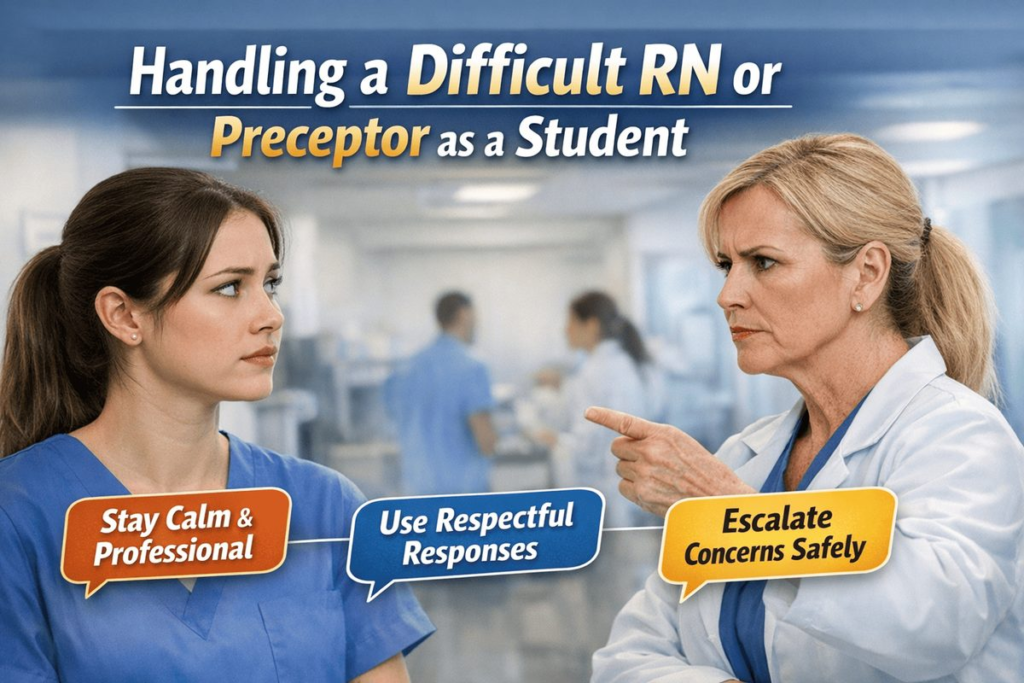
Clinical placement is one of the most important parts of nursing education. It is where students turn theory into real practice. However, not every placement experience is smooth. Many nursing students struggle with a difficult RN or preceptor who may seem impatient, dismissive, overly critical, or unapproachable. This can increase anxiety, reduce confidence, and even affect placement outcomes.
Most blogs tell students to “be professional” or “just cope,” but they rarely explain how to respond in the moment, what language to use, or how to raise concerns without creating conflict. This article is written specifically for nursing students who want to protect their placement, their learning, and their mental wellbeing, while still showing respect.
You will learn what makes an RN or preceptor seem difficult, exact scripts you can use on the ward, and how to escalate concerns calmly and safely if the situation does not improve.
Understanding Why an RN or Preceptor May Seem Difficult
Before reacting, it is important to understand that a “difficult” RN is not always a bad person. Many registered nurses work under extreme pressure. They manage high patient loads, staff shortages, time constraints, and emotional stress. Sometimes this pressure shows up as impatience or blunt communication.

However, understanding stress does not mean accepting unsafe or disrespectful behaviour. There is a clear difference between a busy RN and one who consistently undermines, ignores, or intimidates a student. As a student, your responsibility is not to diagnose their behaviour, but to respond professionally and protect patient safety and your learning.
Recognising this difference helps you stay calm and choose the right response instead of reacting emotionally.
Common Behaviours Students Find Difficult
Many students describe similar patterns when dealing with a difficult RN or preceptor. These include being spoken to harshly in front of patients, having questions ignored, being expected to “just know” things, or being criticised without guidance. Some students feel constantly watched but never supported. Others feel completely ignored and unsafe to ask questions.
These behaviours can make students doubt themselves. Over time, this stress can affect performance, communication, and confidence. Knowing that these experiences are common helps students realise they are not weak or failing — they are facing a challenging learning environment.
Professional Response Scripts Students Can Use on the Ward
One of the hardest parts of placement is knowing what to say in the moment. Students often freeze or stay silent, then regret it later. Having simple, respectful scripts prepared can make a huge difference.
When an RN seems impatient and you need help, you can calmly say:
“I want to make sure I do this safely. Could you please guide me through this step?”
This shows awareness of safety, not incompetence.
If an RN dismisses your question, you can respond with:
“I understand you’re busy. This is new for me, and I want to make sure I’m doing it correctly.”
This keeps the focus on learning and patient safety, not personal feelings.
If you are spoken to harshly, a respectful boundary-setting script is:
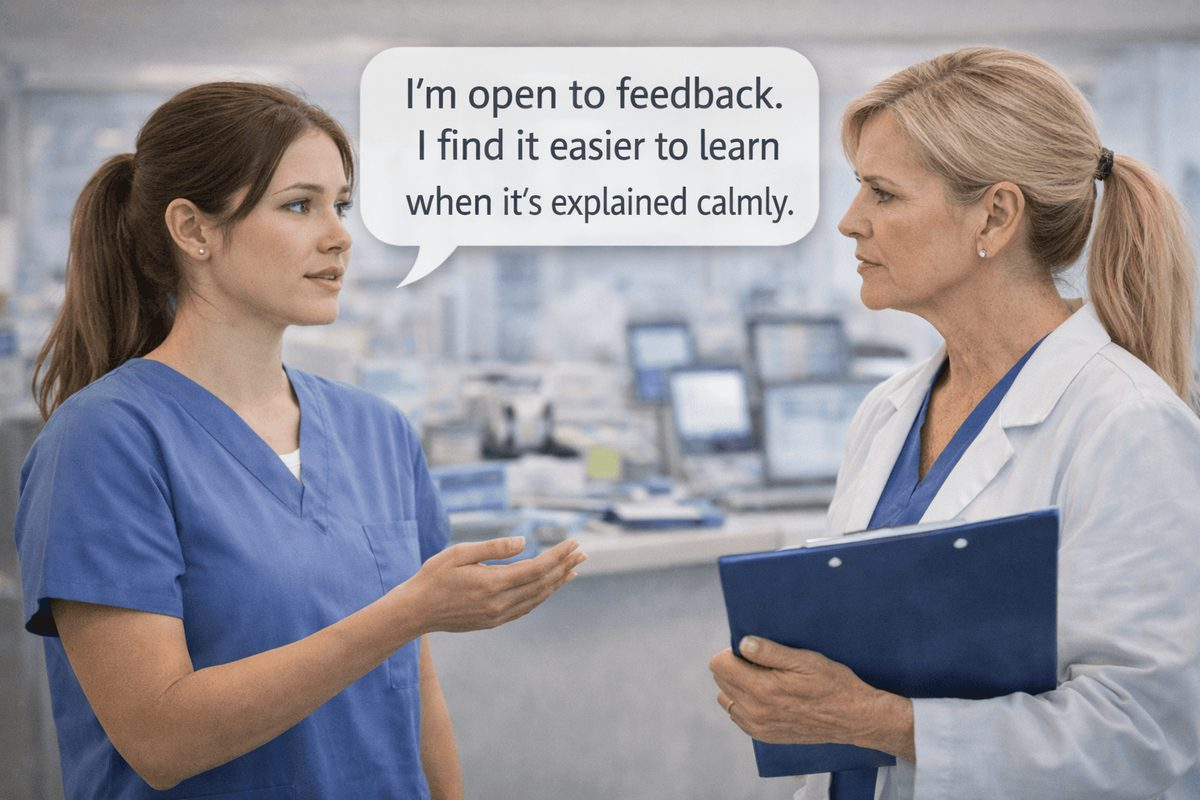
“I’m open to feedback. I find it easier to learn when it’s explained calmly.”
This is professional, non-accusatory, and appropriate.
When an RN expects you to perform beyond your scope, you can say:
“I’m not competent with that yet. I’m happy to observe or assist under supervision.”
This protects both you and the patient.
How to Stay Professional When You Feel Intimidated
Feeling intimidated is common, especially for first-year or international students. The key is to separate emotions from actions. You may feel nervous inside, but your outward response should stay calm, respectful, and clear.
Avoid raising your voice, arguing, or becoming defensive. These reactions can be misinterpreted as unprofessional, even if the situation feels unfair. Instead, slow your speech, keep your tone neutral, and use safety-focused language.
Remember that professionalism does not mean silence. It means choosing words carefully and focusing on patient safety and learning.
Escalation Without Conflict: When and How to Speak Up
If respectful communication does not improve the situation, escalation may be necessary. Escalation does not mean complaining or blaming. It means seeking support to ensure safe learning.
The first step is usually your clinical facilitator. When speaking to them, describe behaviours, not personalities. For example, instead of saying “The RN is rude,” say:
“I’m finding it difficult to ask questions, and I’m concerned this is affecting my learning and safety.”
This keeps the conversation factual and professional.
If needed, you may also escalate through your university placement coordinator. Again, focus on specific incidents, how they affect learning or safety, and what support you are seeking — not punishment.
Escalation is most effective when done early, calmly, and with documentation of dates or examples.
What Not to Do With a Difficult Preceptor
Many students unintentionally make situations worse by withdrawing completely, gossiping with other students, or trying to “push through” unsafe situations alone. Avoid complaining loudly on the ward, posting about the RN on social media, or copying the RN’s negative behaviour.
These actions can reflect poorly on you, even if your concerns are valid. Staying professional protects your reputation and your assessment.
How Assessors View Student–RN Conflict
Assessors understand that not every RN is a perfect teacher. What they assess is how you handle challenges. Students who communicate respectfully, seek help appropriately, and prioritise safety are viewed positively — even in difficult placements.
Students who stay silent, become defensive, or continue unsafe practice to avoid conflict are at greater risk of placement issues.
Handling a difficult RN well can actually demonstrate maturity and readiness for professional practice.
Building Confidence for Future Placements
Every challenging placement teaches important skills. Learning how to communicate under pressure, set boundaries respectfully, and escalate concerns safely will benefit you throughout your nursing career.
Confidence does not come from never struggling. It comes from knowing how to respond when things are hard.
Final Thoughts for Nursing Students
You do not need to tolerate disrespect to be professional. You also do not need to confront aggressively to be heard. Respectful communication, clear scripts, and calm escalation allow you to protect yourself while maintaining professionalism.
A difficult RN does not define your ability as a future nurse. How you respond to difficulty, however, helps shape the nurse you will become.
📦 SUMMARY BOX (Heading-by-Heading Guide)
Introduction Summary:
Explains why difficult RN or preceptor relationships affect students and placements.
Understanding Difficult Behaviour Summary:
Explains stress factors without excusing unsafe behaviour.
Common Behaviours Summary:
Describes patterns students commonly experience.
Professional Response Scripts Summary:
Provides exact respectful language students can use.
Staying Professional Summary:
Explains emotional control and professional communication.
Escalation Summary:
Outlines how to raise concerns safely and without conflict.
Assessor Perspective Summary:
Explains how educators judge student responses.
Conclusion Summary:
Reinforces confidence, safety, and professionalism.
🔍 People Also Ask