


Summary
Being a nurse is a tough job that calls for a lot of physical endurance, emotional fortitude, and acute mental focus. The holy month of Ramadan complicates an already hectic schedule for Muslim nurses and nursing students. When working 8- or 12-hour shifts and fasting from sunrise to sunset, “business as usual” isn’t always the wisest course of action. How well you organize your shifts, control your sleep, and fuel your body during the non-fasting hours will determine how successful you are this month.
For nursing professionals and students, this article offers a thorough road map for completing their work rotations while maintaining their health and vitality. By being aware of the significance of strategic diet and the science behind sleep, you can continue to provide excellent patient care without sacrificing your spiritual goals.
Master Your Sleep Schedule: The Key to Clinical Safety

Sleep is not merely a luxury in the nursing field; it is essential for patient safety. Lack of sleep can cause mistakes when administering medications and reduced reaction times. Your sleep is naturally disturbed during Ramadan because you have to remain up for Taraweeh (nightly prayers) and wake up for Suhoor (the pre-dawn meal). Unpredictable shift patterns make things more difficult for nurses.
You need to prioritize regular naps and “sleep banking” in order to sustain your energy levels. Try to get to bed as soon as you can after Iftar and your night prayers if you work a day shift. Before Suhoor, even a 4- to 5-hour block of uninterrupted sleep is preferable to several scattered naps. Consider taking a 20–30 minute power sleep during your lunch break if you are a student participating in clinical rotations. This is the ideal moment to close your eyes in a quiet office or in your car because you aren’t eating. You may “reset” your brain and get through the last few hours of your shift by taking this brief break.
The approach is reversed for people who work night shifts. During the day, your “night” occurs. To guarantee that your daytime sleep is of the highest quality, use earplugs and blackout curtains. After finishing your shift, try to obtain a good night’s sleep so you can wake up in time for Iftar. Your best friend is consistency. To avoid totally confusing your body’s internal clock, strive to maintain somewhat consistent sleep schedules even on your days off.
Strategic Shift Planning and Communication

Being proactive with your clinical lead or nursing supervisor is one of the best strategies to handle Ramadan. Religious observances are welcomed in many healthcare settings, but they can only assist if they are aware of your needs. Small changes that might have a big impact on your energy levels can be made possible by early communication.
Ask to avoid “clustering” too many lengthy shifts during the first week of Ramadan, if at all feasible. Your body is still getting used to the new rhythm during this time, therefore headaches from exhaustion are most likely to occur. Try moving the most physically taxing chores, such lifting a patient or changing dressings for an extended period of time, to when you are most aware if you can. This occurs early in the morning, immediately following Suhoor, for many people.
Additionally, talk to your team about your Iftar break. At sundown, when you need to break your fast, things can get chaotic in the nursing profession. Your coworkers can “cover” you for ten to fifteen minutes while you hydrate and have a little food if you let them know ahead of time. The ward as a whole benefits from the friendly, mutually beneficial environment created when you offer to do the same for them during their regular lunch break.
Nutritional Fueling for 12-Hour Rotations
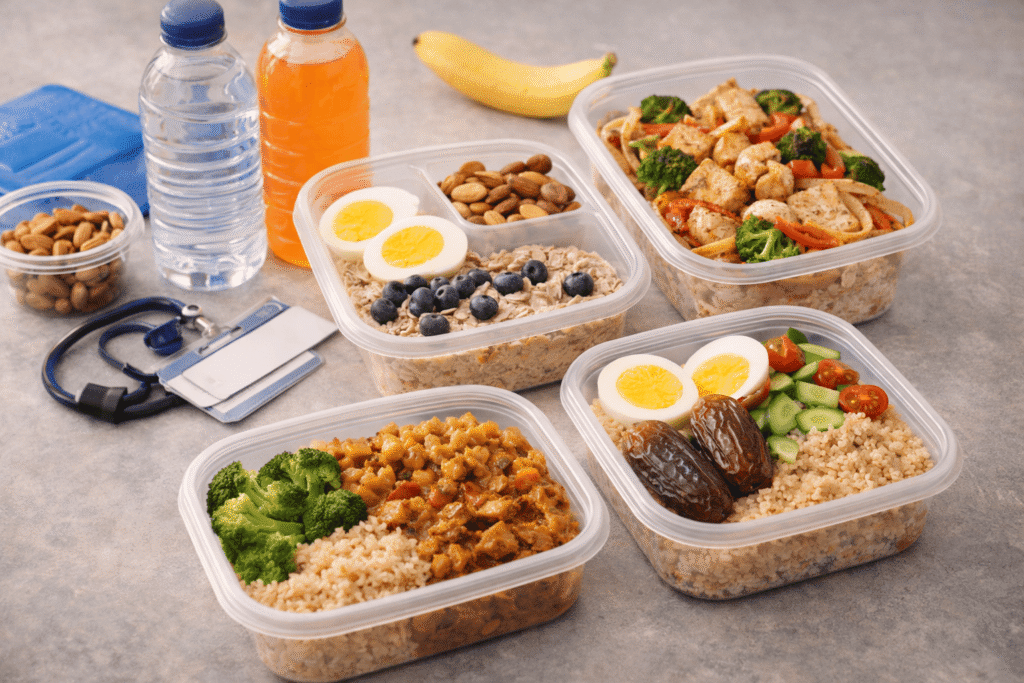
What you eat at Suhoor and Iftar affects how you feel at hour 10 of your 12-hour shift when you are standing all day. A nursing practitioner wants long-lasting vitality, not a short-term sugar rush. You will feel lightheaded and drowsy while on duty because high-sugar foods cause your insulin to surge and then crash.
Pay attention to complex, slow-release carbohydrates for Suhoor. Quinoa, brown rice, oats, and whole-wheat bread are all great options. To stay fuller for longer, combine these with high-quality proteins like eggs, Greek yogurt, or beans. Additionally, healthy fats like those found in avocados or a handful of nuts are vital since they offer a substantial amount of calories that the body burns slowly throughout the day.
Steer clear of the temptation to overeat fried or highly salted dishes during Iftar. The next day, too much salt will leave you extremely thirsty, which is a big issue in dry medical settings. After breaking your fast with water and dates, eat a well-balanced dinner that is high in lean protein and lots of veggies. After a long day of exploring the hospital corridors, this guarantees that you receive the vitamins and minerals required for muscle repair.
Hydration Management in Dry Hospital Environments
During Ramadan, dehydration poses a serious risk to nurses. Since hospitals frequently have climate control, the dry air can hasten fluid loss through respiration and skin evaporation. You have to be a “hydration strategist” at night because you aren’t allowed to sip water during your shift.
At Suhoor, it’s important to avoid consuming two liters of water at once. Only 200 to 300 milliliters of water can be absorbed by the human body each hour; any additional water is often simply digested by the kidneys and swiftly eliminated. Instead, drink regular, tiny sips of water from the water bottle you brought from Iftar until you go to bed. This “steady drip” technique guarantees that the moisture is truly being absorbed by your cells.
Think about incorporating electrolytes into your water. Your body retains water more efficiently when electrolytes like potassium, magnesium, and salt are present. These can be obtained by basic electrolyte supplements, watermelon, or coconut water. Additionally, watch out for caffeine. Although it may seem important to start a night shift with a cup of coffee, caffeine is a diuretic. To avoid a dehydration headache later in the day, if you do have coffee, make sure to pair it with an additional glass of water.
Recognizing Fatigue and Prioritizing Safety
Your patients’ safety is your top priority as a healthcare provider. It’s critical to be self-aware and identify any instances in which your clinical judgment may be affected by your fasting. Islam emphasizes the preservation of life and health, but Ramadan is also a time for spiritual discipline.
Recognize the early warning signs of hypoglycemia (low blood sugar) or severe dehydration. Extreme shakiness, disorientation, impaired vision, or a beating heart are a few examples. Safety must come first if you can’t concentrate while figuring out a pharmaceutical dosage or if you think you might pass out during a procedure. It’s not a failure to sit down, tell a coworker, and break your fast if medically required; it is a responsible clinical decision.
It is beneficial to keep in mind that providing care for the sick is also an act of worship, even if nurses frequently experience “spiritual guilt” if they are unable to fast flawlessly while at work. You can continue to provide your patients with the kindness and quality they deserve if you look after yourself. Take breaks when you can, eat healthily when you can, and don’t be scared to ask your colleagues for assistance.
The Shift-Friendly Meal Prep Guide for Fasting Nurses
A full hour of rest is rarely your “break” as a nurse or other healthcare professional. Before the next call bell rings, you frequently have just fifteen minutes to take a seat, regain your breath, and recharge. This brief interval becomes even more valuable during Ramadan. Food that is quick to consume, easy to digest, and full of long-lasting energy is what you need to avoid feeling exhausted before your shift is over.
This approach focuses on “Grab-and-Go” nourishment that is appropriate for the hectic setting of a clinic or hospital ward.
1. The “Protein Power” Snack Box
Avoid heavy, oily foods that require a microwave and a fork when you only have a few minutes to eat. Make a “Bento-style” snack box instead, so you can rapidly nibble on it. This method allows you to get a balance of macros without feeling uncomfortably full.
• Packing essentials: two Medjool dates, a handful of almonds, two hard-boiled eggs (peeled and prepped), and a few cheese slices.
• Why it works: The dates provide you an instant glucose rush that sharpens your mind for medicine calculations, and the eggs and cheese deliver high-quality protein for muscle restoration. The energy from the dates lasts for hours instead of minutes thanks to the good fats in the almonds.
• Five minutes to eat.
2. The 60-Second “Liquid Suhoor” Smoothie
It can be challenging for many nursing students to get up at 4:00 AM and eat a complete meal. While getting dressed or on your way to your clinical rotation, you can eat a nutrient-dense smoothie, which is frequently simpler to digest than solid food.
• The recipe calls for two tablespoons of quick oats, half a cup of frozen berries, one tablespoon of peanut butter, one scoop of protein powder, and one cup of milk (or oat milk).
• The fact that this is a full dinner in a bottle explains why it works. The protein keeps your muscles from becoming tired from lengthy walks, the berries supply antioxidants to help your body cope with the stress of a hectic shift, and the oats provide you the fiber you need for slow-release energy.
• It takes two minutes to drink.
3. “No-Heat” Quinoa or Pasta Salads
Your entire fifteen-minute break may be wasted standing in line for the shared microwave in the break room. Making “cold” grain salads, which offer complex carbohydrates and taste better at room temperature, is the answer.
• Packing suggestions: Whole-wheat spaghetti or precooked quinoa combined with feta cheese, sliced cucumbers, chickpeas, and a lemon-olive oil vinaigrette.
• The reason it works is that quinoa and chickpeas are “low-glycemic” foods, which means they won’t result in a sugar crash. Since you are unable to consume water all day, the cucumbers provide an additional layer of hydration, which is essential.
• You have eight minutes to eat.
4. The Hydration “Pre-Game” Strategy
Maximizing fluid absorption during your break is your aim if your shift begins after Iftar. A lot of nurses make the error of consuming a liter of water in five minutes, which typically leads to more bathroom visits than true hydration.
• The Plan: Put an electrolyte tablet or a pinch of sea salt and a splash of lemon in a 500 ml bottle of water.
• The Expert Tip: During your break, nibble on an orange or a couple slices of watermelon.
During the long hours of fasting, the “gel water” in fruits keeps your tissues hydrated since it remains in your system longer than regular water.
People Also Ask (FAQ)
Q: Should I drink coffee during Suhoor to stay awake for my morning shift?
Caffeine should normally be avoided or consumed in moderation at Suhoor. By midday, caffeine may cause a “crash” and headache, as well as accelerate fluid loss. In order to avoid interfering with your hydration throughout the day, try to have a tiny amount of caffeine at Iftar if you need it.
Q: How can I handle a night shift that starts before Iftar?
Bring a “fast-breaking kit” if your shift begins before sunset. Add some dates, water, and a portable protein snack, such as a bag of nuts or a protein bar. You can take a full meal during your planned break later in the evening after breaking your fast swiftly at the nursing station or during a brief handover.
Q: What are the best foods to prevent thirst during the day?
Steer clear of excessively processed, fried, and salty foods at Suhoor. Eat “water-rich” foods instead, such as yogurt, oranges, tomatoes, and cucumbers. Due to their high water content, these meals gradually lose moisture during digestion.
Q: Can I take a nap during my 12-hour shift?
During a 12-hour shift, many hospitals permit a 30-minute to 1-hour unpaid break. Now that you’re not having lunch, you can take a “power nap.” Your attentiveness and mood for the remainder of the shift might be considerably improved by taking even 20 minutes to relax in a peaceful setting.
Q: What should I do if I feel dizzy while assisting in a surgery or a long procedure?
Notify the head nurse or physician right away. Avoid trying to “push through” it since you can fall and hurt the patient or yourself. Move aside, take a seat, and relax. You should break your fast with a juice or glucose drink and get checked out by a doctor if the dizziness is severe.
Q: Is it okay to just drink a protein shake for Iftar during my shift?
Although a protein shake is still preferable than nothing, try to have it with a carbohydrate, such as dates or a banana. Your brain is powered by glucose, and in order for your “mental battery” to function properly while providing patient care after a long day of fasting, it requires those carbohydrates
Q: How can I stop my mouth from feeling so dry during my shift?
Because you are unable to drink, try to talk as little as possible and breathe through your nose instead of your mouth. Steer clear of salty meals at Suhoor, such as salty cheese or sausages, as these are the main culprits behind “dry mouth” later in the afternoon.
Q: What is the best way to meal prep for the whole week?
On your day off, spend two hours cutting vegetables, boiling eggs, and preparing a big batch of grains (quinoa or rice). Keep each one in a separate, airtight container. When you are rushing to a 7:00 AM shift, you may simply take a container and head out thanks to this “assembly line” technique.
Useful Documents for every Nursing Student
CV Section Template for Nursing students
AHPRA – NMBA Registration Document Checklist (International Students-Graduates)
Clinical Placement Reflection Template (NMBA-aligned)
Cover Letter Template for Nursing Students
Disclaimer: “I researched this information on the internet; please use it as a guide and also reach out to a professional for assistance and advice.This information is not medical advice, so seek your medical professional’s assistance.”