

Table of Contents
One of the hardest jobs in healthcare is nursing management. At the same time, nurse managers are in charge of staffing, patient safety, care quality, documentation, compliance, budgeting, and employee well-being. Traditional management techniques are no longer sufficient as patient numbers rise and healthcare systems become increasingly complicated.
Artificial Intelligence (AI) is having a significant impact here. AI isn’t meant to replace nurses or nurse managers. Rather, it aims to improve patient outcomes, save time, encourage better decision-making, and lower errors.
AI solutions are now utilized in clinical decision support, patient flow analysis, staff scheduling, workload management, performance monitoring, and predictive analytics in contemporary healthcare settings. Knowing how AI aids nursing management is becoming a crucial skill for nursing students and early-career nurses.
Students may readily grasp how artificial intelligence is influencing nursing leadership in the future thanks to this article’s clear examples and straightforward language, which highlights the main advantages of AI in contemporary nursing management.
What Is Artificial Intelligence in Nursing Management?
Computer programs that can analyze data, spot trends, forecast results, and assist in making decisions in medical settings are referred to as artificial intelligence in nursing management. These systems improve human judgment rather than replace it.
Common AI Tools Used in Nursing Management
• Software for intelligent staff scheduling
• Systems for predicting patient acuity
• Workload monitoring dashboards driven by AI
• Tools for automated reporting and documentation
• Predictive analytics for patient risks and staffing shortages
Large volumes of data, including patient records, staffing levels, admission patterns, and clinical results, are analyzed by these systems.
How AI Improves Staffing and Workforce Management
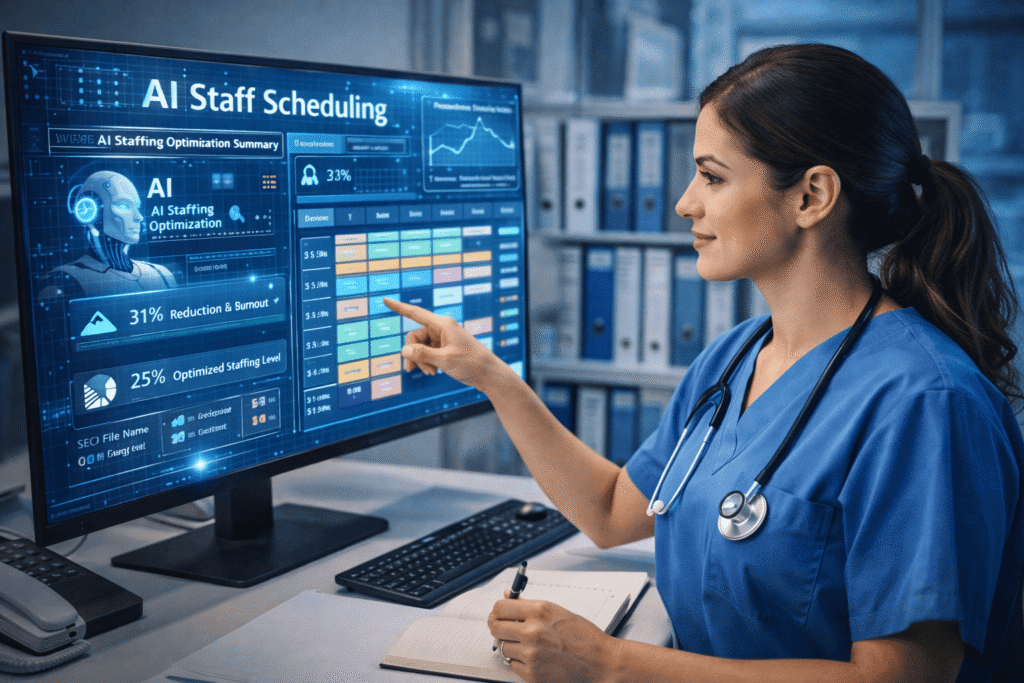
Solving One of Nursing’s Biggest Problems: Staffing Shortages
One of the most difficult issues in nurse management is staffing. Insufficient staffing results in: •
• Burnout among nurses
• A rise in mistakes
• Reduced satisfaction among patients
• A greater rate of employee turnover
AI aids nursing supervisors in more precise staffing planning.
AI-Based Staff Scheduling
AI-powered scheduling programs:
• Examine the number and acuity of patients.
• Forecast peak times
• Align staff competencies with patient requirements
• Cut down on last-minute roster adjustments
Nurse managers can use AI data to make safe and equitable staffing decisions rather than depending on intuition.
Reducing Nurse Burnout
AI assists in balancing workloads:
• Avoid nurse exhaustion
• Cut down on overtime
• Enhance work-life equilibrium
Employee morale and retention are directly enhanced by this.
Enhancing Patient Safety and Quality of Care
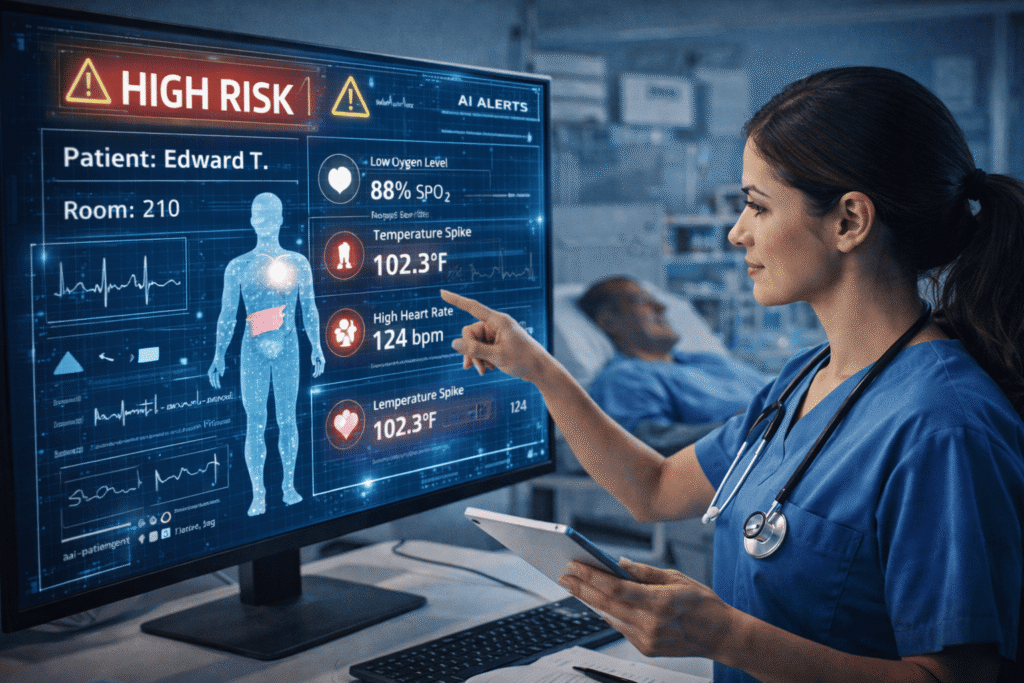
Early Detection of Patient Deterioration
AI programs are able to keep an eye on:
• Vital indicators
• Laboratory findings
• Clinical records
When patients exhibit early indicators of decline, they notify nursing management and staff. This makes it possible for:
• Quicker actions
• A decrease in adverse events
• Reduced death rates
Supporting Evidence-Based Nursing Decisions
Real-time insights are provided by AI tools based on:
• Clinical recommendations
• Previous patient results
• Standards for best practices
This aids nurse supervisors in maintaining evidence-based, safe, and consistent care throughout all shifts.
Improving Workflow Efficiency and Time Management
Reducing Administrative Burden
A lot of time is spent by nurse supervisors on:
• Reports
• The rosters
• Examinations
• Records
Many of these jobs can be automated by AI, freeing up nurse leaders to concentrate on:
• Employee assistance
• Enhancement of quality
• Patient-centered management
Faster Decision-Making
AI dashboards provide instant access to:
- Staffing gaps
- Patient flow issues
- Resource shortages
This reduces delays and improves overall unit performance.
Smarter Resource and Budget Management
Managing Costs Without Compromising Care
Healthcare budgets are tight, and nurse managers must use resources wisely. AI helps by:
- Predicting supply needs
- Reducing waste
- Optimising staff allocation
Inventory and Equipment Management
AI systems can track:
- Equipment usage
- Medication stock levels
- Supply expiration dates
This prevents shortages and reduces unnecessary spending.
Supporting Leadership and Performance Management
Monitoring Staff Performance Fairly
AI tools can track:
- Attendance patterns
- Skill mix
- Training needs
This allows nurse managers to:
- Identify learning gaps
- Support professional development
- Promote fairness and transparency
Identifying Training and Education Needs
AI helps highlight:
- Areas where staff need more support
- Skills required for future roles
This supports continuous learning and leadership development in nursing teams.
Enhancing Communication and Team Coordination
Better Shift Handover and Information Sharing
AI systems centralise information so that:
- Nurses receive accurate handovers
- Managers track unit performance easily
This improves teamwork and reduces miscommunication.
Supporting Multidisciplinary Collaboration
AI tools help nurse managers coordinate with:
- Doctors
- Allied health professionals
- Administration teams
This leads to smoother patient care pathways.
Ethical and Professional Benefits of AI in Nursing Management
Supporting Safe and Ethical Practice
AI helps ensure:
- Compliance with policies
- Adherence to clinical standards
- Consistent patient care
However, nurse managers remain ethically responsible for decisions.
Maintaining Human-Centred Care
AI supports management tasks but cannot replace compassion, leadership, or professional judgment. Nurse managers must balance technology with human values.
The Role of Nurse Managers in an AI-Driven Healthcare System
Nurses Remain Decision-Makers
AI provides recommendations, not commands. Nurse managers:
- Interpret data
- Apply clinical judgment
- Make final decisions
New Skills for Future Nurse Leaders
Modern nurse managers need skills in:
- Digital literacy
- Data interpretation
- Ethical decision-making
These skills are increasingly taught in nursing education.
Benefits of AI for Nursing Students and Future Leaders
For nursing students, AI:
- Reduces workload stress
- Improves learning through data feedback
- Supports safer clinical environments
Understanding AI prepares students for leadership roles in modern healthcare systems.
People Also Ask (FAQs)
How does AI help nurse managers?
AI helps nurse managers with staffing, scheduling, patient safety monitoring, reporting, and decision support.
Can AI replace nurse managers?
No. AI supports decision-making but cannot replace leadership, ethics, and human judgment.
Is AI safe to use in nursing management?
Yes, when used responsibly and combined with professional oversight.
Do nurses need training to use AI tools?
Yes. Digital and data literacy are becoming essential nursing skills.
Will AI reduce nurse burnout?
AI can reduce workload stress by improving staffing and workflow efficiency.
Conclusion: The Future of Nursing Management with AI
Modern nursing administration is undergoing significant change due to artificial intelligence. Through improved staffing choices, increased patient safety, less administrative work, and better resource use, it helps nurse leaders.
AI cannot, however, take the position of nurses or nurse supervisors. Rather, it is a tool that makes nursing leadership stronger. Nurse managers who can integrate technology, empathy, and sound professional judgment are essential to the future of healthcare.
Understanding AI now will help nursing students be ready to lead in the future.
Useful Documents for every Nursing Student
CV Section Template for Nursing students
AHPRA – NMBA Registration Document Checklist (International Students-Graduates)
Clinical Placement Reflection Template (NMBA-aligned)
Cover Letter Template for Nursing Students
Disclaimer: “I researched this information on the internet; please use it as a guide and also reach out to a professional for assistance and advice.This information is not medical advice, so seek your medical professional’s assistance.”