

Healthcare is changing faster than ever before, and one of the biggest reasons for this change is Artificial Intelligence (AI). From hospitals and clinics to aged care facilities and community health services, AI is now being used to support patient care in many different ways. Nurses, who are at the centre of patient care, are directly affected by this shift.
For nursing students, AI can feel confusing, exciting, and sometimes frightening. Many students wonder whether AI will replace nurses, change nursing roles, or make patient care less human. Others are curious about how AI can reduce workload, improve safety, and support better health outcomes.
This article explains the future of patient care with AI and nursing in a clear and realistic way. It focuses on what AI means for nurses, patients, and healthcare systems, and what students should know to prepare for their future careers. The goal is not to promote AI blindly, but to help students understand how AI and nursing will work together.
Artificial Intelligence in Modern Patient Care
Artificial Intelligence refers to computer systems that can analyse data, recognise patterns, and make predictions. In healthcare, AI uses patient information such as vital signs, medical history, test results, and clinical notes to support decision-making.
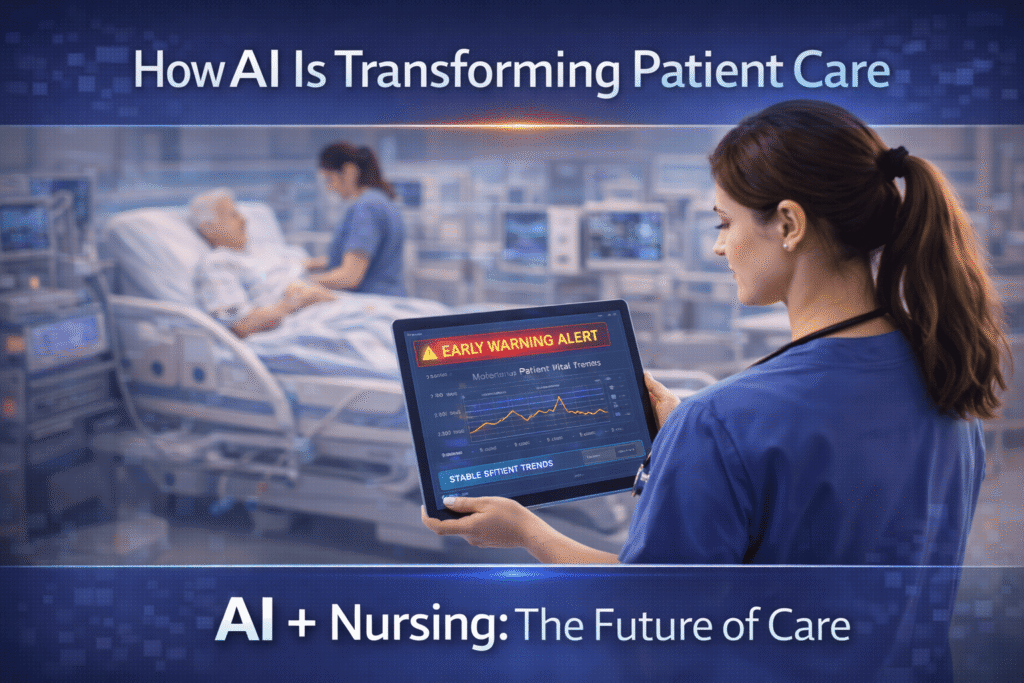
Today, AI is already part of everyday patient care in many hospitals. It helps monitor heart rate, oxygen levels, and blood pressure. It supports early warning systems that detect patient deterioration. It assists with scheduling, documentation, and even predicting hospital readmissions.
However, AI does not replace clinical responsibility. Nurses are still accountable for patient care, safety, and ethical decision-making. AI provides information, but nurses decide how to act on it.
For students, understanding this distinction is critical. AI is a tool, not a nurse. It supports care, but it cannot replace human judgment, empathy, and professional accountability.
How AI Is Transforming Patient Care
AI is changing patient care by making it more predictive, personalised, and preventive. Traditional healthcare often reacts to problems after they occur. AI aims to identify risks earlier and support timely intervention.
Early Detection and Prevention
AI systems can analyse patient data continuously and identify small changes that humans might miss. For example, subtle changes in vital signs can signal deterioration hours before visible symptoms appear. This allows nurses to intervene earlier, improving patient outcomes.
Personalised Care Planning
AI can help tailor care plans based on individual patient needs. By analysing large datasets, AI can suggest interventions that work best for patients with similar conditions, ages, or medical histories. Nurses then adjust these suggestions based on patient preferences and clinical context.
Improved Continuity of Care
AI supports smoother communication between healthcare teams. Patient data can be shared accurately and efficiently, reducing information gaps during handovers and transfers.
Despite these advantages, nurses must remain actively involved. AI does not understand patient emotions, cultural values, or personal fears. Nurses bridge this gap.
The Evolving Role of Nurses in an AI-Driven Healthcare System
As AI becomes more common, the role of nurses will not disappear—but it will evolve. Nurses will increasingly work alongside technology while maintaining their core responsibilities.
Nurses as Clinical Decision-Makers
AI provides recommendations, but nurses interpret and apply them. Clinical judgment remains essential. Nurses must question AI outputs, consider patient context, and make safe decisions.
Nurses as Patient Advocates
Patients may not understand AI-based decisions. Nurses explain care plans, protect patient rights, and ensure informed consent. Advocacy becomes even more important in a technology-driven environment.
Nurses as Ethical Guardians
AI raises ethical questions about privacy, consent, and fairness. Nurses play a key role in identifying ethical concerns and speaking up when patient interests are at risk.
Benefits of AI for Patient Care and Nursing Practice
AI offers many benefits when implemented correctly and ethically.
Improved Patient Safety
AI can reduce medication errors, identify clinical risks early, and support accurate documentation. These tools help nurses provide safer care.
Reduced Administrative Burden
Documentation takes up a large portion of nursing time. AI-assisted charting and voice recognition tools can reduce paperwork, allowing nurses to spend more time with patients.
Better Use of Nursing Skills
By handling repetitive tasks, AI allows nurses to focus on complex care, critical thinking, and emotional support.
Support for Overworked Health Systems
In settings with staff shortages, AI can help manage workload and prioritise care needs.
Challenges and Ethical Concerns in AI-Based Patient Care
Despite its benefits, AI also presents serious challenges that nurses must understand.
Over-Reliance on Technology
If nurses trust AI blindly, critical thinking may decline. AI can be wrong, incomplete, or biased. Nurses must always verify information.
Loss of Human Connection
Healthcare is not only about data. Patients need empathy, reassurance, and emotional care. Excessive screen time can reduce meaningful patient interaction.
Bias and Inequality
AI systems may reflect biases present in the data they are trained on. This can lead to unequal care for certain populations.
Privacy and Confidentiality Risks
Large amounts of patient data are stored digitally. Nurses must ensure confidentiality is maintained and ethical standards are followed.
Preparing Nursing Students for the AI-Driven Future
The future of patient care requires nurses who are confident, informed, and adaptable.
Digital Literacy
Nurses must understand how AI tools work, their limitations, and how to use them safely.
Critical Thinking Skills
AI does not replace reasoning. Nurses must evaluate information, ask questions, and make independent decisions.
Ethical Awareness
Understanding privacy, consent, and bias is essential. Nurses must protect patient dignity in a digital environment.
Lifelong Learning
AI will continue to evolve. Nurses must commit to ongoing education to stay current.
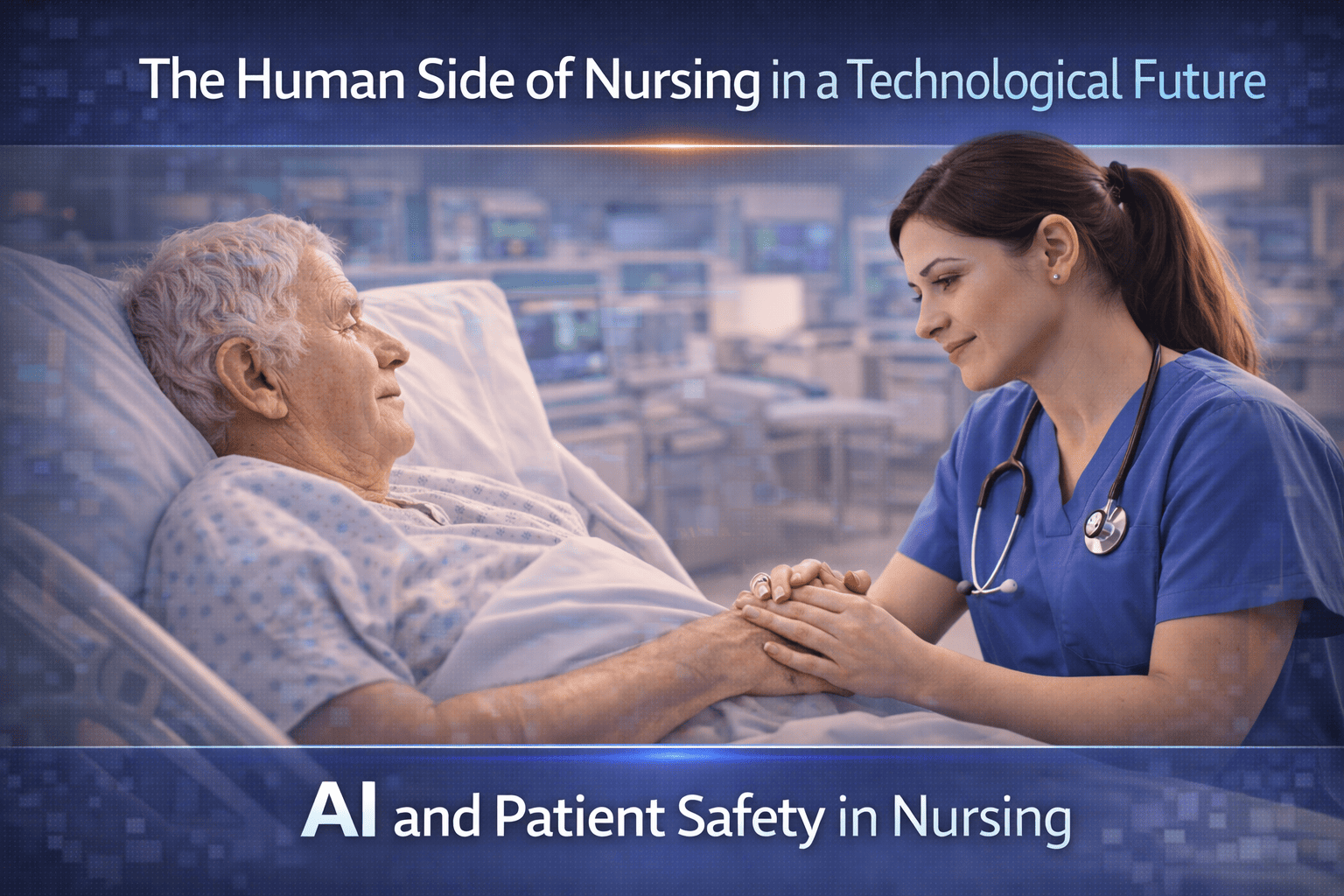
The Human Side of Nursing in a Technological Future
No matter how advanced AI becomes, nursing will always involve human connection. Compassion, communication, and trust cannot be programmed.
Patients remember how nurses make them feel not how advanced the technology was. AI can support care, but it cannot replace kindness, empathy, or presence.
The future of patient care depends on balance using AI to improve safety and efficiency while preserving the heart of nursing.
People Also Ask
Will AI replace nurses in the future?
No. AI supports tasks but cannot replace human care, judgment, and empathy.
How does AI improve patient care?
AI helps detect risks early, reduce errors, and support personalised care.
Do nurses need to learn AI skills?
Yes. Basic digital literacy and understanding AI tools are essential.
Is AI safe for patient care?
AI is safe when used responsibly with human oversight.
What should nursing students focus on now?
Critical thinking, ethics, communication, and adaptability.
Conclusion
The future of patient care with AI and nursing is not about machines replacing humans. It is about partnership. AI can analyse data faster than humans, but nurses provide judgment, compassion, and ethical care.
For nursing students, the key is not to fear AI but to understand it. By learning how to use AI safely and thoughtfully, nurses can shape a future where technology enhances care rather than diminishes it.
The nurse of the future will be both technologically skilled and deeply human and that balance will define high-quality patient care in the years ahead.
Useful Documents for every Nursing Student
CV Section Template for Nursing students
AHPRA – NMBA Registration Document Checklist (International Students-Graduates)
Clinical Placement Reflection Template (NMBA-aligned)
Cover Letter Template for Nursing Students
Disclaimer: “I researched this information on the internet; please use it as a guide and also reach out to a professional for assistance and advice.This information is not medical advice, so seek your medical professional’s assistance.”