

One of the most crucial aspects of becoming a nurse in Australia is completing a clinical placement. It is the time when nursing students start working with real patients, real healthcare teams, and real responsibilities instead of just classrooms and textbooks. Clinical assignments give students the opportunity to experience what nursing is like in hospital wards, assisted living institutions, community clinics, and mental health facilities, while lectures and lab simulations aid in their understanding of nursing theory. The first day of placement may be both thrilling and daunting for a lot of students. When you enter a new setting with professionals all around you, everything abruptly becomes genuine and serious. This is typical. This is where all nurses start. Understanding how clinical placement operates and how to get ready for success are crucial.
1. Understand What Clinical Placements Are and How They Work in Australia

Clinical placements are a prerequisite for nursing schools in Australia. In order to be eligible for RN registration through the NMBA and AHPRA, each student must fulfill a minimum amount of supervised hours. Depending on the university, these hours often fall between 800 and more than 1,000. In your second and third years, placements may be focused in longer blocks or dispersed across the degree.
Your university, not the student, arranges placements. You have no control over your timetable or hospital. Some pupils are placed in remote areas or even in small towns. Although this system may seem inconvenient, it has a purpose. The goal of clinical placements is to build a variety of abilities rather than only exposing participants to one type of healthcare setting. Aged care, acute care, mental health units, rural clinics, and rehabilitation institutions are all possible rotations for students. Hospital placements teach processes and teamwork, mental health placements teach empathy and behavior control, and aged care fosters patience and communication skills.
Students need to realize that academic knowledge does not equate to professional ability. Everything becomes useful during clinical placements. You put infection control, drug safety, person-centered care, and team communication into practice rather than just as theories. This shift might occasionally feel slow or painful. This is typical. Early on in a clinical placement, the goal is to observe, learn, and progressively gain confidence rather than to achieve perfection.
2. Prepare Yourself Before Placement: Skills, Mindset, and Professional Expectations
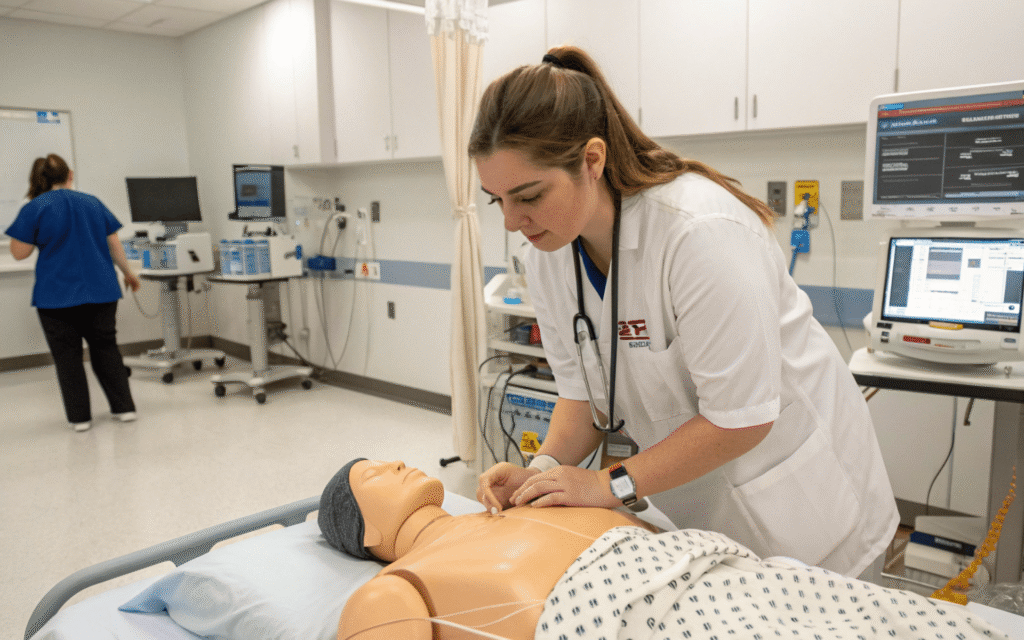
In the hopes of “learning everything on the first day,” many students arrive at placement unprepared. This is among the most serious errors. A teaching classroom is not a hospital or an assisted living institution. Patient demands are urgent, and nurses are busy. You could feel confused or nervous if you begin a placement without doing some basic preparation. Being well-prepared boosts your self-confidence and increases your supervisors’ trust.
Study core skills before your first shift
Before placement begins, review essential nursing skills from your lab sessions:
- Hand hygiene
- Manual handling
- Pressure injury prevention
- Vital signs (BP, temperature, pulse, respirations)
- Communication etiquette
- Infection control
- Charting basics
You do not need to be perfect, but you should know what equipment looks like, how to introduce yourself to a patient, and how to ask for help safely.
Prepare mentally
Making an impression on people is not the goal of clinical placements. They advocate for gradual learning. Many students experience pressure to be quick or self-sufficient. Avoid comparing yourself to more seasoned nurses or other students. Rather, concentrate on making little daily improvements. While some shifts will feel productive, others will be demanding and draining. This is a portion of the trip. Patience, fortitude, and emotional restraint are skills that nursing students need to acquire.
Clean uniform and professional behaviour
Appearance matters because it reflects your mindset and respect for the workplace. A nursing student in Australia should:
- Wear the correct uniform
- Keep hair tied back
- Use minimal or no jewellery
- Wear closed, comfortable shoes
- Maintain tidy nails (no long nails or coloured polish)
- Carry a watch with a second hand
- Bring a notebook and pen
Professional presentation helps you feel confident and shows that you take the placement seriously.
3. What to Expect During Placement: Your Role, Team Culture, and Daily Responsibilities

Although many students think they would “just observe” while on placement, this is not the case. At first, you will just watch, but eventually you have to take part. Your responsibilities might begin modestly and increase as you gain skill and self-assurance.
You are a learner—not an employee
It is your responsibility to learn safely. You don’t swap out employees. Clinical facilitators or registered nurses will oversee you. Every activity you perform needs to be overseen or authorized. Ask questions if you don’t know something. It is a sign of duty to ask inquiries, not a sign of weakness.
Workload culture
Australia’s healthcare system is busy. Nurses are continuously multitasking and moving swiftly. Sometimes you could think that everyone is too busy to explain things. Remain composed. Hold off till the appropriate time. Communicate with courtesy. Ask questions during handovers or breaks by writing them down in your notepad.
Interaction with patients
You will have several conversations with patients. Your clarity, tone, and body language are important. “Hello, I am a nursing student working with the team,” is a clear way to introduce yourself. Do you mind if I help you today?
Before doing any duties or touching a patient, always get their permission. Respect cultural differences, privacy, and dignity.
Documentation and charting
Early on, you might not be able to chart on your own, but you still need to understand how documentation operates. See how nurses document nursing assessments, prescriptions, and vital signs. Both nurses and patients are protected by documentation. Never make up or speculate about values. Always verify.
4. Build Strong Relationships With Nurses, Mentors, and Supervisors

Building strong relationships is one of the most effective clinical placement strategies for Australian nursing students. Five days with your preceptor will teach you more than a semester of theory. Students who are sincere, modest, enthusiastic, and eager to assist are respected by nurses. They take note of pupils who genuinely show interest and pose meaningful inquiries.
Communication habits that earn respect
- Say hello to every staff member
- Ask permission before moving equipment
- Listen carefully during handover
- Volunteer for small tasks
- Thank staff at the end of the day
Simple behaviours can change how people treat you.
How to ask for help
Instead of saying:
“I don’t know anything.”
Say:
“I am not confident with this yet. Could you please show me how to do it safely?”
This language shows professionalism and responsibility.
Learn from mistakes
You will misinterpret instructions or make mistakes. The way you react is what counts. Don’t conceal mistakes. Report them. Since patient safety comes before ego, nurses value honesty..
5. Develop Practical Skills and Critical Thinking on Placement

Clinical assignments are about thinking and behaving like a nurse, not about learning procedures by heart. When taking vital signs for a real patient, many students freeze, even though they can do so in a lab. This is typical. Emotions, pressure, and unpredictability are introduced in the clinical setting.
Observe first, then practice
Observe how nurses interact with patients. Pay attention to the tone of their voice. Observe how they address a person who is in suffering. Watch how they verify prescriptions. Observe how they arrange their work. Nursing is human, ethical, and emotional in addition to being technical.
Document your learning
A small notebook is your secret weapon. Write down:
- Procedures you learned
- Terminology you heard
- Equipment names
- Common abbreviations
- Questions for your facilitator
Do not rely on memory alone.
Understand why—not just how
For every skill, ask yourself:
- Why is this necessary?
- What risk does it reduce?
- How does it protect the patient?
When you understand the WHY, you become safer and more competent.
6. Handle Stress, Fatigue, and Emotional Challenges During Placement

The nursing profession is emotionally taxing. There will be terrible days. For the first time, you may witness illness, trauma, or patient death. You could be concerned about making errors. You might experience fatigue, anxiety, or overload.
Talk to someone
Universities provide counseling, mentorship, and assistance for students. Your facilitators anticipate emotional responses since they are aware that you are learning. It’s also beneficial to share your experience with your peers. Because you are human, you are not weak for experiencing stress.
Rest, hydrate, and sleep
The majority of placements need lengthy shifts. You could spend hours standing. You will find it difficult to study if you don’t get enough sleep, eat healthily, or drink enough water. Physical endurance is necessary for nursing. Stretching, carrying snacks, and meal preparation are examples of small habits that have a huge impact.
Never push beyond your safety
If you are unsure, ask. If you are exhausted, say so. If you made an error, report it. Safety is more important than pride.
7. Reflect on Your Experience and Grow Professionally
Reflection is one of the most important habits of a successful nursing student. After each shift, think about what you learned, what challenged you, and what you can improve.
Ask yourself
- What went well today?
- What skill did I improve?
- What mistake did I avoid next time?
- Which patient interaction taught me something?
- What is one thing I will do better tomorrow?
Reflection makes you a stronger nurse each week.
Be patient with yourself
No student is an expert when they begin their clinical placement. Over time, nursing confidence is developed. Small victories like a patient’s grin, a proper procedure, or a day of positive staff cooperation will help you progress. Even if progress is slow, it is still progress.
Conclusion
In Australia, nursing students become practicing nurses through clinical placement. Although it is powerful and transformative, it is not always simple. You will deal with human emotions, enter fast-paced situations, and use knowledge in ways that textbooks cannot. You will succeed if you are well-prepared, behave professionally, show respect for your instructors, and learn consistently. Every nurse you look up to once stood where you are now, so don’t freak out if you’re feeling anxious. Clinical placement is a journey to mold you, not a test to punish you.
Disclaimer: “I researched this information on the internet; please use it as a guide and also reach out to a professional for assistance and advice.This information is not medical advice, so seek your medical professional’s assistance.”