

One of the most important choices for anyone hoping to start a career in nursing in Australia is whether to seek a Bachelor of Nursing or a Diploma of Nursing. Although both programs lead to fulfilling careers in healthcare, they differ in terms of duties, study durations, pay scales, and long-term prospects. Many students are perplexed, particularly those from outside who also have to think about job requirements, talent evaluations, and visas.
Everything will be easy with this comprehensive guide. You will learn about the key distinctions, prerequisites for admission, career prospects, and which choice best fits your objectives, financial constraints, and long-term residency intentions below. The explanations are designed specifically for new students who are attempting to choose between the two possibilities, and they are simple and easy to understand.
1. Understanding the Two Nursing Pathways in Australia
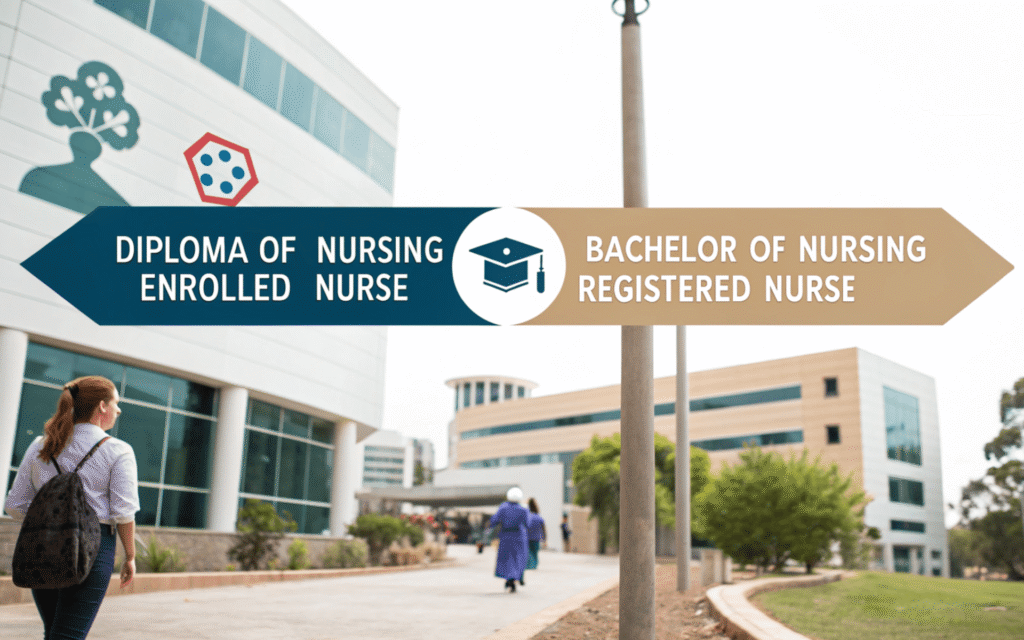
The first step in comparing Australian bachelor’s and diploma nursing degrees is to determine what each degree enables you to achieve. Both programs train students for significantly different levels of professional responsibility, despite being a part of the Australian nursing school system.
You can become an Enrolled Nurse (EN) by completing the Diploma in Nursing (HLT54121). Enrolled nurses undertake critical patient care duties under the direction of registered nurses, but they are not allowed to conduct sophisticated evaluations or make final nursing decisions. In the meanwhile, earning a Bachelor of Nursing degree entitles you to work as a Registered Nurse (RN), a position with additional career options, enhanced abilities, and greater authority.
These differences matter because they not only affect your job responsibilities but also your salary, work visa, and future growth in the Australian health system.
2. Study Duration and Workload: How Long Does Each Program Take?
The length of study is one significant distinction between a diploma and a bachelor’s degree. The diploma is typically chosen by students who wish to enter the job fast, whereas the bachelor’s degree is preferred by those who want long-term career stability.
It typically takes 18 to 24 months of full-time education to earn a diploma in nursing. It involves hands-on training in hospitals or assisted living facilities, where students pick up fundamental nursing skills including wound care, medication administration, and patient monitoring. Students can finish their coursework more quickly than university students since the workload is moderate.
In contrast, three years of full-time university study are needed for the Bachelor of Nursing. Students learn advanced healthcare theory, clinical decision-making, leadership, and specialized nursing abilities, which adds to the workload. Bachelor students complete over 800 hours of clinical placement, which gives them strong preparation for real hospital settings.
If you want a quicker pathway into nursing, the diploma is faster, but if you want the highest level of nursing training, the bachelor provides a deeper and broader education.
3. Entry Requirements: Which Program Is Easier to Get Into?
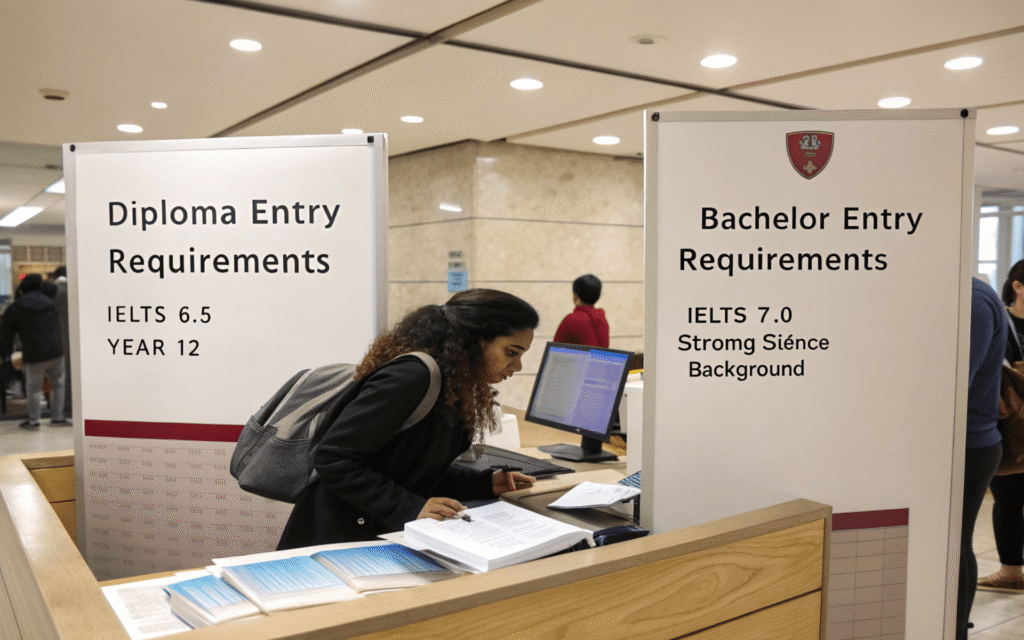
The entry requirements for these programs are very different, especially for international students. This is a key point when comparing Bachelor vs diploma nursing Australia.
Most colleges offering the Diploma of Nursing require:
- Completion of Year 12 (or equivalent)
- English language tests such as IELTS 6.5 (no band less than 6.0)
- Basic science and health knowledge
- A police check and immunisation record for clinical placement
These requirements are simpler and easier for many international students to meet.
On the other hand, the Bachelor of Nursing requires:
- Year 12 with strong results in English, Biology, Chemistry, or similar subjects
- IELTS 7.0 (no band less than 7.0), because AHPRA requires this for RN registration
- University-level academic readiness
- Additional health and safety checks
Bachelor entry requires a higher English score and more academic preparation. Students who are not confident in English often begin with a diploma, then move to the bachelor later.
4. Career Roles and Responsibilities: What Jobs Can You Do?

The kinds of professions that graduates of the two programs can pursue may be the most significant distinction between them. Knowing your responsibilities will help you make the best decision for your job.
After registering with AHPRA, graduates of the Diploma in Nursing program are eligible to work as Enrolled Nurses. In hospitals, assisted living facilities, and clinics, ENs complement RNs by helping with daily patient care, documenting observations, and administering certain prescriptions. Although their job is crucial, it is more constrained because of monitoring.
The area of practice for Registered Nurses, who are graduates of the Bachelor of Nursing program, is far broader. In addition to performing sophisticated assessments, RNs can lead teams, develop care plans, deliver cutting-edge drugs, and specialize in ICU, emergency, pediatrics, or mental health. They have the highest level of responsibility in nursing outside of specialist postgraduate roles.
If you want more authority and long-term growth, the bachelor gives you significantly more options.
5. Salary Comparison: Which Qualification Leads to Higher Pay?

Another important factor when comparing Australian bachelor’s and diploma nursing degrees is salary. The pay of ENs and RNs differ due to differences in responsibilities.
Depending on their expertise and place of employment, enrolled nurses (diploma holders) typically make between AUD $55,000 and $70,000 annually. While elderly care institutions often offer stable but moderate pay, hospitals may pay slightly more.
Bachelor’s degree-holding registered nurses make between AUD $75,000 and $100,000+ a year. Due to skill shortages and high demand, RNs working in specialized units or rural locations may make even more money.
In the long run, this pay disparity becomes significant, particularly for students who intend to remain in Australia permanently. Bachelor’s degree holders make significantly more money over time and have easier access to higher-level positions.
6. Job Demand in Australia: Which Nurses Are Needed More?
Both ENs and RNs are required in Australia’s healthcare system, which has been experiencing a nurse shortage for many years. However, because RNs carry out crucial duties that ENs cannot, the demand for RNs is constantly growing.
RNs are needed in the majority of hospitals, emergency rooms, and specialized units. Because AHPRA prohibits ENs from carrying out specific high-level clinical responsibilities, diploma holders alone cannot occupy these positions. University enrollment in bachelor’s programs is high because there is a steady and long-term need for registered nurses.
Skilled migration is also impacted by this trend. Registered nurses are more common than enrolled nurses on the lists of skilled occupations. For international students hoping to pursue a career in public relations, this makes the bachelor’s degree a more appealing choice.
7. PR and Visa Opportunities: Which Is Better for Migration?
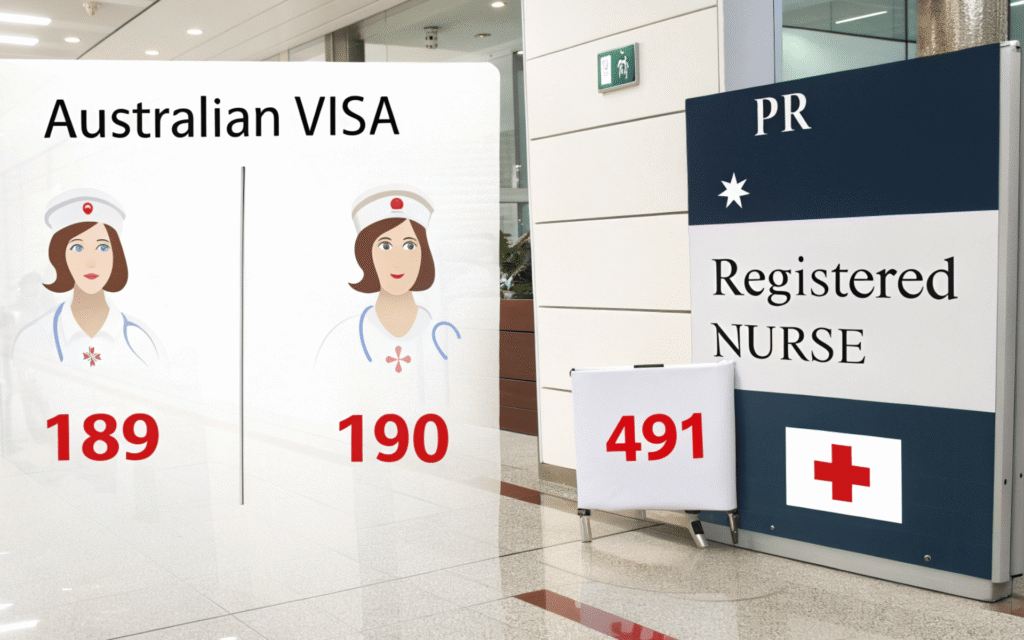
When comparing these two nursing degrees, many candidates have permanent residency as a top priority. The bachelor offers an easier method to migrate to Australia.
Only enrolled nurses are eligible to work as Diploma in Nursing graduates, and long-term skilled visa listings do not typically include this profession. Opportunities may exist in some states, but they are competitive and scarce. Finding regional sponsorship or obtaining sufficient migration points may be difficult for EN grads.
However, those with a bachelor’s degree go on to become registered nurses, one of Australia’s most sought-after professions. This opens strong visa pathways such as:
- Skilled Independent Visa
- Skilled Nominated Visa
- Skilled Work Regional Visa
- Employer sponsorship pathways
- State and territory nomination options
Because of the high demand for RNs, students with a bachelor degree often find it easier to secure job offers, meet visa criteria, and build long-term career stability.
8. Cost of Study: Which Option Fits Your Budget Better?

For overseas students, cost is a significant consideration. The Diploma in Nursing is less expensive, with tuition typically ranging from AUD $12,000 to $25,000, depending on the city and college.
Depending on the university, the cost of a bachelor’s degree in nursing can range from AUD $32,000 to $45,000 annually. Better employment options, greater pay, and more robust immigration procedures, however, offset the additional expense.
The diploma is frequently chosen by students looking for a low-cost starting point, who then enroll in a bachelor’s program with credit transfers. For people who wish to spread their costs over time, this is a typical route.
9. Pathway Opportunities: Can You Move from Diploma to Bachelor?
The diploma can serve as a stepping stone to the bachelor’s degree, which is one benefit of selecting it. EN graduates are sometimes granted enhanced status in the Bachelor of Nursing program (Enrolled Nurse to Registered Nurse track). Because your diploma subjects contribute toward credit, you can shorten the duration of your bachelor’s degree by up to a year.
Students who wish to start working early as ENs and eventually upgrade to RN certifications while making money are drawn to this course. It enables students to obtain real-world experience, boost their self-esteem, and finish their RN coursework on a more flexible schedule.
10. Final Decision: Which Qualification Should You Choose?
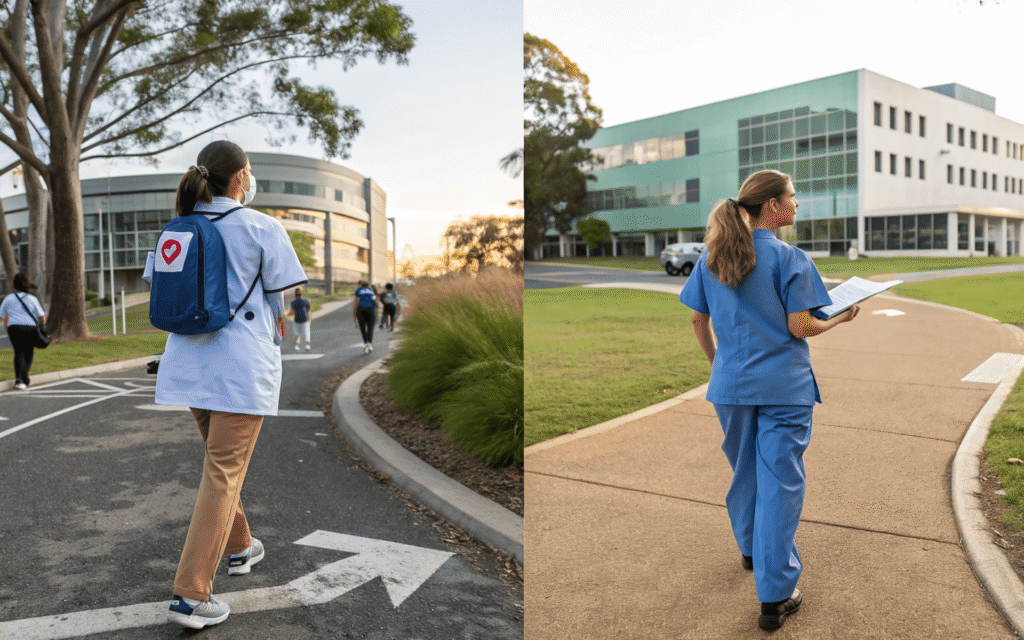
Your long-term objectives will determine which of the two solutions you choose. The diploma is a sensible option if you wish to enter the Australian healthcare industry quickly and affordably. It gives you useful experience and gets you functioning fast.
However, the Bachelor of Nursing is a better choice if you want to advance your profession over the long term, earn more money, take on leadership roles, and have an easier time getting permanent residency. It opens you the most options in Australia’s healthcare system and prepares you for the greatest level of nursing proficiency.
In simple words:
- Diploma = faster, cheaper, basic nursing role
- Bachelor = advanced, higher-paying, long-term career and PR pathway
Understanding your goals will help you choose the qualification that fits your future in Australia.
Disclaimer: “I researched this information on the internet; please use it as a guide and also reach out to a professional for assistance and advice.This information is not medical advice, so seek your medical professional’s assistance.”